

Medicare Drug Price Negotiation Act This bill makes a series of changes relating to the prices of prescription drugs under the Medicare prescription drug benefit and Medicare Advantage (MA) prescription drug plans (PDPs). Under current law, the Centers for Medicare & Medicaid Services (CMS) may neither negotiate the prices of covered drugs nor establish a formulary. The bill repeals these restrictions and instead specifically requires the CMS to (1) negotiate the prices of covered drugs; and (2) either establish a formulary for covered drugs, or require changes to PDP formularies that take into account CMS negotiations. If the CMS is unable to negotiate an appropriate price for a drug in accordance with certain criteria, the price must be the lowest of three specified options (e.g., the median price in other countries). The CMS must identify drugs that are subject to negotiation, with priority given to certain categories of drugs based on usage and cost. Additionally, drug manufacturers must issue rebates to the CMS for drugs dispensed to eligible low-income individuals. Subject to civil monetary penalties, a Medicare or MA PDP sponsor must report, both to drug manufacturers and to the CMS, specified information related to the determination and payment of such rebates.
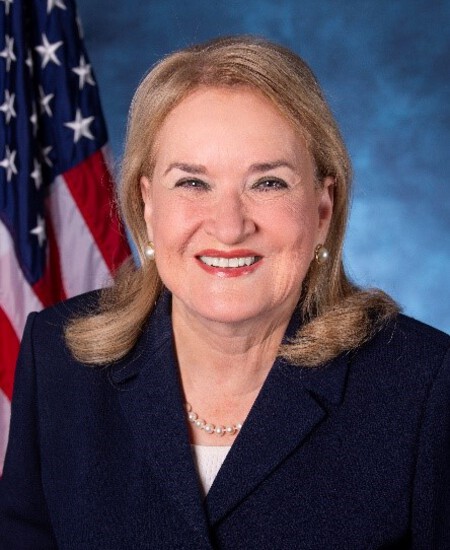
Rep. Sylvia R. Garcia
Sponsored bills
Minority Diabetes Initiative Act This bill authorizes grants for diabetes-related health care services in minority communities. The Department of Health and Human Services may make these grants to public and nonprofit health care providers.
Affordable Insulin for the COVID-19 Emergency Act This bill eliminates cost-sharing under the Medicare prescription drug benefit and Medicare Advantage for insulin and associated medical supplies during the public health emergency relating to COVID-19 (i.e., coronavirus disease 2019). The bill also allows beneficiaries to receive their insulin and supplies via mail order during the emergency period.
This resolution recognizes the disparity between wages paid to men and women, and its impact on women, families, and the nation and reaffirms Congress' commitment to supporting equal pay and to narrowing the gender wage gap.
This joint resolution eliminates the deadline for the ratification of the Equal Rights Amendment, which prohibits discrimination based on sex. The amendment was proposed to the states in House Joint Resolution 208 of the 92nd Congress, as agreed to in the Senate on March 22, 1972. The amendment shall be part of the Constitution whenever ratified by the legislatures of three-fourths of the states.
Farm Workforce Modernization Act of 2021 This bill contains provisions related to alien farmworkers, including provisions establishing a certified agricultural worker (CAW) status and changing the H-2A temporary worker program. The Department of Homeland Security (DHS) may grant CAW status to an applying alien who (1) performed at least 1,035 hours of agricultural labor during the two-year period prior to March 8, 2021; (2) on that date was inadmissible, deportable, or under a grant of deferred enforced departure or temporary protected status; and (3) has been continuously present in the United States from that date until receiving CAW status. The bill imposes additional crime-related inadmissibility grounds on CAW applicants and makes some other grounds inapplicable. CAW status shall be valid for 5.5 years and may be extended. DHS may grant dependent status to the spouse or children of a principal alien. An alien with a pending application may not be detained or removed by DHS and shall be authorized for employment until DHS makes a final decision on the application. A CAW alien (and dependents) may apply for lawful permanent resident status after meeting various requirements, including performing a certain amount of agricultural labor for a number of years. DHS shall create an electronic platform for (1) filing H-2A petitions, (2) facilitating the processing of H-2A cases, and (3) providing agencies a single tool for obtaining H-2A-related case information. The bill makes various changes to the H-2A program, such as (1) modifying the method for calculating and making adjustments to the H-2A worker minimum wage, (2) specifying how an employer may satisfy requirements that it attempted to recruit U.S. workers, (3) requiring H-2A employers to guarantee certain minimum work hours, (4) making the program available for agricultural work that is not temporary or seasonal, and (5) reserving a visa allocation for the dairy industry. DHS shall establish a pilot program allowing certain H-2A workers to apply for portable status, which gives the worker 60 days after leaving a position to secure new employment with a registered H-2A employer. DHS shall establish an electronic system patterned on the E-Verify Program for employers to verify an individual's identity and employment authorization. Employers hiring individuals for agricultural employment must use the system. This bill permanently establishes the Housing Preservation and Revitalization Program, which provides financing assistance for rural rental housing and off-farm labor housing and rental assistance for qualified tenants of such housing. It also authorizes the Department of Agriculture to provide various assistance, including funding for insuring loans and grants for new farmworker housing.
Ethan's Law This bill establishes a framework to regulate the storage of firearms on residential premises at the federal, state, and tribal levels. At the federal level, the bill establishes statutory requirements for firearms on residential premises to be safely stored if a minor is likely to gain access without permission or if a resident is ineligible to possess a firearm. An individual who violates the requirements is subject to criminal penalties. A firearm stored in violation of the requirements is subject to seizure and forfeiture. At the state and tribal levels, the bill requires the Department of Justice to award grants to implement functionally identical requirements for the safe storage of firearms.
National Office of New Americans Act This bill establishes the National Office of New Americans (NONA) within the Executive Office of the President to promote and support the integration of immigrants and refugees into the social, cultural, economic, and civic life of the United States. The NONA shall also establish the Federal Initiative on New Americans. The initiative shall establish a coordinated federal program to respond effectively to immigrant and refugee integration issues such as language learning, adult education and workforce training, health care, and naturalization.
Wise Investment in Children Act of 2021 or the WIC Act of 20 21 This bill expands eligibility for children to receive benefits under the Special Supplemental Nutrition Program for Women, Infants, and Children (WIC). The bill authorizes the Department of Agriculture to grant a waiver to a state, on request, that waives certification deadline requirements under the program if such state demonstrates there are unusual technological barriers to implementation, operational costs are not affordable within the nutrition services and administration grant of the state, or it is in the best interest of the program. If a waiver is granted, the bill extends eligibility for the program until the period that ends on the earlier of the sixth birthday of a child or when the child enters kindergarten; extends the certification period under the program for infants to up to two years, instead of the current one year; and increases the certification time under the program for postpartum women to a period of up to two years.
American Dream Employment Act of 2021 This bill establishes that, for the purposes of eligibility to be an officer or employee of an office of Congress, an individual shall be treated as a U.S. citizen if that individual has (1) employment authorization under the Deferred Action for Childhood Arrivals program, (2) employment authorization under a grant of deferred enforced departure, or (3) temporary protected status. (Generally, these programs and statuses allow eligible aliens to remain and work in the United States.)