

Fairness for Farm Workers Act This bill extends overtime pay protections to agricultural workers. The bill requires employers, beginning in 2022, to compensate agricultural workers for hours worked in excess of their regular hours (i.e., 55 hours in 2022, 50 hours in 2023, 45 hours in 2024, and 40 hours in 2025) at not less than one and one-half times the employee's regular rate. For employers with 25 or fewer employees, the overtime pay requirements begin in 2025. These overtime pay requirements do not apply, as under current law, to employees who are the parent, spouse, child, or other member of the employer's immediate family. The bill also repeals the exemption from overtime pay requirements for employers in various agriculture-related industries, including certain small farms, irrigation projects, sugar processing, and cotton ginning and compressing.
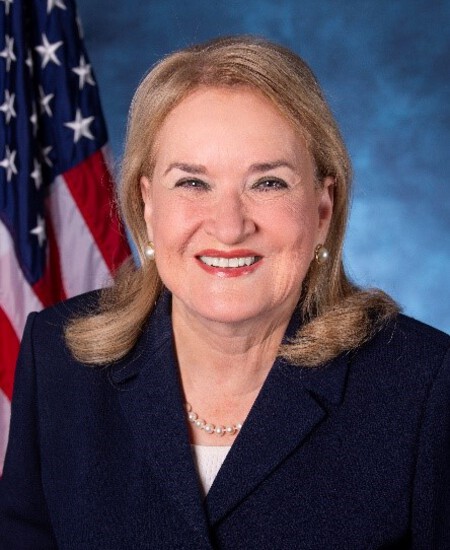
Rep. Sylvia R. Garcia
Sponsored bills
I am Vanessa Guillén Act of 2021 This bill addresses the policies and procedures of the Department of Defense (DOD) for cases or allegations of sex-related offenses.
Hot Cars Act of 2021 This bill requires safety measures in passenger cars to reduce injuries or deaths from heatstroke and other harms to occupants of unattended vehicles. Specifically, the National Highway Traffic Safety Administration (NHTSA) must issue a motor vehicle safety standard that requires certain new passenger motor vehicles to include a system that detects and warns of the presence of an unattended occupant in the passenger compartment. The NHTSA must issue the final rule prescribing the safety standard within two years after the enactment of this bill, with full compliance with the standard required not later than two years after the rule is issued. After the standard is issued, the Department of Transportation must periodically contract with an independent third party to study retrofitting passenger motor vehicles with technologies and products that detect and warn when there is an unattended occupant in the passenger compartment. The study must identify relevant technologies and products to retrofit vehicles and provide recommendations about testing such technologies and products. Information about the performance of the technologies and products must be published on the NHTSA's website.
Health Equity and Access under the Law for Immigrant Women and Families Act of 2021 or the HEAL Immigrant Women and Families Act of 20 21 This bill extends Medicaid and Children's Health Insurance Program coverage to individuals lawfully present in the United States who otherwise meet eligibility requirements. Individuals granted federally authorized presence also are required to maintain minimum essential health insurance coverage and are eligible for health insurance exchanges, reduced cost sharing, premium subsidies, and premium tax credits.
Enhance Access To SNAP Act of 2021 or the EATS Act of 20 21 This bill expands eligibility for the Supplemental Nutrition Assistance Program to students attending institutions of higher education.
Mental Health Services for Students Act of 2021 This bill provides specific statutory authority for the Project AWARE (Advancing Wellness and Resiliency in Education) State Educational Agency Grant Program that is administered by the Substance Abuse and Mental Health Services Administration. The program supports school-based mental health services, including screening, treatment, and outreach programs.
21st Century Federal Writers' Project Act This bill creates a grant program in the Department of Labor to provide eligible entities with funds to assist individuals who are unemployed or underemployed in order to document in writing and images American society and the broad impacts and effects of the COVID-19 pandemic in the United States. In addition, Labor must (1) establish a repository of works developed through the grant program in which grantees submit completed works from subgrantees, including giving credit to each writer or artist, and make such works available to the public; and (2) forward the completed work to the Library of Congress to archive such material. The Library must establish an archive program in its American Folklife Center for collection and public availability, in a digital format of such written and visual works.
Creating Opportunities Now for Necessary and Effective Care Technologies (CONNECT) for Health Act of 2021 or the CONNECT for Health Act of 2021 This bill expands coverage of telehealth services under Medicare. Among other provisions, the bill allows the Centers for Medicare & Medicaid Services (CMS) to waive certain restrictions, such as restrictions on the types of technology that may be used; permanently removes geographic restrictions on originating sites (i.e., the location of the beneficiary) and allows the home of the beneficiary to serve as the originating site for all services; permanently allows federally qualified health centers and rural health clinics to serve as the distant site (i.e., the location of the health care practitioner); and allows the CMS to generally waive coverage restrictions during any public health emergency. Additionally, the CMS must report on the effects of expanded telehealth services during the COVID-19 public health emergency, including with respect to the utilization, quality, and outcomes of services. The Center for Medicare and Medicaid Innovation may also test alternative payment models relating to expanded telehealth services.
Preventing Outages With Enhanced Resilience and Operations Nationwide Act of 2021 or the POWER ON Act of 2021 This bill provides incentives for enhancing the resilience of the electric power grid to natural disasters and strengthening the emergency response and management of the grid. Specifically, the bill requires the Department of Energy (DOE) to establish an electric grid resilience program. Under the program, DOE must provide grants to states and Indian tribes for projects that enhance the physical resilience of the electric grid to natural disasters. In addition, DOE must establish a research, development, demonstration, and commercial application program to enhance resilience and strengthen emergency response and management of the electric grid. Under the program, DOE must award grants to improve the resilience of the electric grid by developing technologies and capabilities to withstand and address the current and projected impact on electric grid infrastructure of natural disasters, such as wildfires.
This concurrent resolution (1) affirms, on the 400th anniversary of the arrival of the first slave ship, that the nation owes a debt of remembrance not only to those who lived through the injustices of slavery but also to their descendants; and (2) urges the establishment of a U.S. Commission on Truth, Racial Healing, and Transformation to properly acknowledge, memorialize, and be a catalyst for progress, including toward permanently eliminating persistent racial inequities.