

Maddy summaryThis bill removes a barrier for college students seeking food assistance by amending the SNAP program rules. It directly affects students enrolled at least half-time in recognized colleges or training programs, who were previously automatically ineligible unless they met separate requirements. The key change eliminates the prior restriction (in section 6(e)) that barred most higher education students from SNAP, allowing them to qualify under the new provision in section 3(m)(5)(F). The changes take effect January 2, 2024.
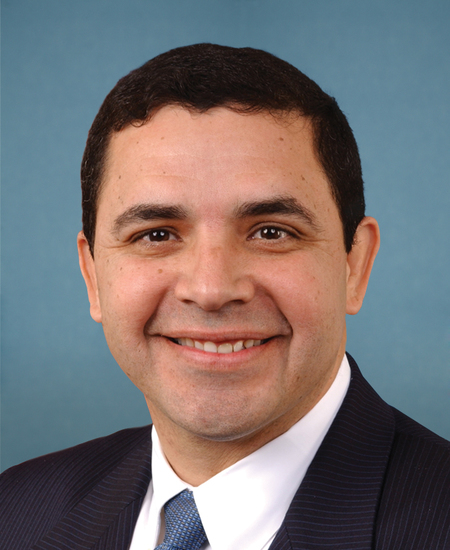
Rep. Henry Cuellar
Sponsored bills
This resolution condemns all manifestations of expressions of racism and anti-Asian, Native Hawaiian, and Pacific Islander or ethnic intolerance. The resolution calls on federal law enforcement officials, working with state and local officials, to expeditiously and vigorously investigate all reports of hate crimes and threats against Asian Americans, Native Hawaiians, and Pacific Islanders in the United States; work to improve the reporting of such hate crimes; and hold the perpetrators of those crimes, incidents, or threats accountable and bring the perpetrators to justice.
Maddy summaryThe Essential Workers for Economic Advancement Act creates a new H-2C visa program for non-agricultural workers in jobs that remain unfilled after employers recruit U.S. workers. Employers must advertise positions for 30 days, pay prevailing wages, and register positions with the government before hiring H-2C workers, with a numerical cap of 65,000 positions in the first year. The bill includes worker protections against wage theft, prohibits treating workers as independent contractors, and requires employers to pay fees directly rather than deducting them from wages.
Maddy summaryHR 3640, the "Informed Lawmaking to Combat Inflation Act," requires the Congressional Budget Office (CBO) to analyze the potential inflation impact of "major legislation" before Congress can consider it. Major legislation is defined as bills or resolutions projected to affect at least 0.25% of U.S. GDP annually (excluding emergency relief, national security, or treaty-related measures). Committees must submit such bills to the CBO for an inflation forecast, and Congress cannot proceed without this analysis, creating a procedural point of order in both chambers. This bill does not change spending or tax policy but mandates a specific analytical step for major bills. It is purely procedural, focusing on requiring CBO input before legislative action.
Maddy summaryHR 3408, the DRIVE Safe Integrity Act of 2023, establishes reporting requirements for a pilot program allowing 18- to 20-year-old drivers to gain experience in interstate trucking. The bill requires the Transportation Secretary to provide quarterly reports to Congress on program participation, including numbers of applicants, approved participants, and reasons for removals or withdrawals. It outlines specific apprenticeship requirements including 120-hour and 280-hour probationary periods with performance benchmarks for driving skills, and mandates that apprentices drive vehicles equipped with specific safety technologies while accompanied by experienced drivers. The bill ensures employers cannot allow drivers under 21 to operate commercial vehicles in interstate commerce without participating in the approved apprenticeship program. This legislation aims to address the truck driver shortage by creating a structured pathway for younger drivers while maintaining safety standards.
Tribal Gaming Regulatory Compliance Act This bill allows the Ysleta del Sur Pueblo and Alabama-Coushatta tribes to conduct gaming activities on their land in Texas if certain conditions are met. Currently, the Ysleta del Sur Pueblo and Alabama-Coushatta Indian Tribes of Texas Restoration Act prohibits the tribes from conducting gaming activities on their land if those activities are prohibited by Texas law. The bill repeals those provisions and instead applies the Indian Gaming Regulatory Act (IGRA) to gaming activities on Indian lands of the tribes.
Maddy summaryThis bill establishes federal standards for labor-management cooperation between public safety employers (state and local governments) and public safety workers (law enforcement officers, firefighters, and emergency medical services personnel). It requires the Federal Labor Relations Authority to determine if states substantially provide rights like collective bargaining, union representation, and binding arbitration for these workers. States found lacking would need to follow federal bargaining procedures after a two-year transition period or following the next legislative session. The bill explicitly respects existing state laws that provide comparable or better rights to public safety workers. It also prohibits strikes or work stoppages that would disrupt emergency services.
Cut Red Tape For Online Sales Act This bill modifies requirements for third party settlement organizations to eliminate their reporting requirement with respect to the transactions of their participating payees unless they have earned $5,000 or more. A third party settlement organization is the central organization that has the contractual obligation to make payments to participating payees (generally, a merchant or business) in a third party payment network. The bill also requires entities that report income to to issue a plain-language description of the taxability of income reported on Form 1099-K.
Ritchie Boys Congressional Gold Medal Act This bill provides for the award of a Congressional Gold Medal to the military intelligence professionals at Camp Ritchie, commonly known as the "Ritchie Boys," in recognition of their contributions to the field of human intelligence and their service during World War II.
Affordable Homeownership Access Act This bill exempts from certain mortgage licensing and registration requirements a person (other than a depository institution) who engages in owner financing. Owner financers (1) originate a limited number of residential mortgage loans in a year, and (2) only originate residential mortgages with respect to property owned by the owner financer.