

Maddy summaryThis bill establishes a competitive grant program to improve recycling access in underserved communities - defined as areas lacking full recycling services due to cost, distance, or insufficient processing capacity. It allocates $30 million annually (2023-2027) for grants to eligible entities like states, local governments, tribes, or public-private partnerships to fund projects such as expanding transfer stations, adding curbside collection, or creating hub-and-spoke infrastructure networks. Grants range from $500,000 to $15 million per project, with 70% of funds reserved for single or multiple underserved communities, and require 90% federal cost coverage (with possible waivers for financial hardship). The program prohibits grant use for education and mandates a congressional report on implementation and outcomes within two years.
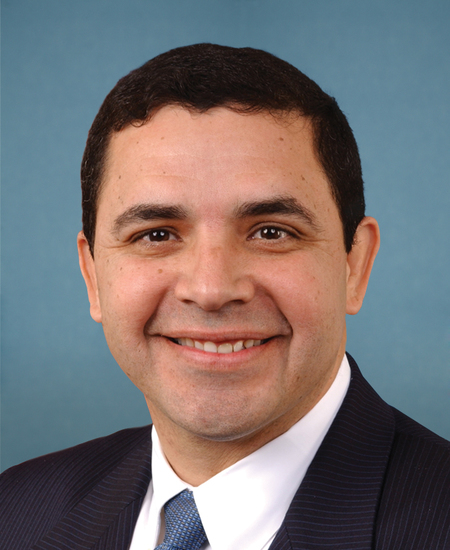
Rep. Henry Cuellar
Sponsored bills
This resolution honors the service, sacrifice, and contributions of Texas veterans and their families. The resolution also expresses that the House of Representatives commits to working with the Department of Veterans Affairs to ensure that veterans are provided timely care and applicable benefits and compensation as a result of their service.
Maddy summaryThis resolution designates the week beginning November 13, 2023, as "National Apprenticeship Week" through symbolic congressional support. It does not create new laws or programs but formally recognizes the value of registered apprenticeships in providing paid on-the-job training, industry credentials, and career pathways. The resolution highlights apprenticeships' role in developing skilled workers, supporting high-wage sectors like healthcare and green energy, and promoting diversity in training opportunities. It aims to increase public awareness of apprenticeships as an effective "earn-and-learn" model for workers and employers.
Maddy summaryHJRES 99 would exempt "premium cigars" from federal tobacco regulations under the Federal Food, Drug, and Cosmetic Act. It defines premium cigars by eight specific criteria, including being handmade, containing only tobacco/water/gum, having no filters, and meeting weight requirements. This exemption directly affects manufacturers of cigars meeting this definition, primarily small family-owned businesses. The bill cites a 2022 National Academies report finding premium cigars are used by only 1% of U.S. adults, mainly by non-daily adult users with lower health risks than other tobacco products. If enacted, it would remove federal FDA oversight for these cigars, shifting regulation to states.
Maddy summaryThis resolution (HRES 859) is a ceremonial House measure honoring U.S. veterans on Veterans Day 2023. It formally recognizes veterans' service and sacrifice, calling on the American public to observe Veterans Day to acknowledge their role in protecting U.S. freedoms. The resolution does not create new policies, allocate funds, or affect specific groups - it is purely symbolic. It was introduced by 33 bipartisan House members and passed by the House without committee action.
Maddy summaryHR 6240 adds Zapata County to an existing commercial transportation zone in Texas that includes Cameron, Hidalgo, Starr, and Willacy Counties. This change affects commercial motor vehicle operators and safety regulations for traffic moving within this expanded zone. The bill requires Texas to submit a traffic monitoring and safety enforcement plan to the Transportation Secretary within three months of enactment, with the zone modification taking effect six months after the bill becomes law. The change specifically applies to transportation of property under federal law (49 U.S.C. § 13506(b)).
Maddy summaryThis bill would authorize the U.S. government to confiscate Russian sovereign assets held in U.S. jurisdiction and use those funds to support Ukraine's reconstruction and humanitarian needs following Russia's invasion. It prohibits releasing these blocked assets until Russia fully compensates Ukraine or agrees to an international compensation mechanism. The bill establishes a "Ukraine Support Fund" to hold confiscated assets and requires regular congressional reporting on how these funds are allocated for Ukraine's recovery. It also includes provisions for international coordination with allies on sanctions and asset management related to Russia's invasion of Ukraine.
Maddy summaryHRES 798 is a House resolution condemning support for Hamas, Hezbollah, and other terrorist organizations at colleges and universities. It states such support may create a hostile environment for Jewish students, faculty, and staff, citing incidents like blaming Israel for the October 7 Hamas attack. The resolution urges the Secretary of Education to direct the Office for Civil Rights to investigate and take action where appropriate. This non-binding resolution expresses the House's position but does not create new law or policy changes.
Maddy summaryHR 6201, the Iranian Sanctions Enforcement Act of 2023, creates the Iran Sanctions Enforcement Fund to cover costs related to seizing and forfeiting property from Iran or its designated proxies (like Hezbollah or the Revolutionary Guard Corps) that violate U.S. sanctions. The fund, initially $150 million, pays for investigative costs, property management, informant rewards, and equipment for federal, state, and local agencies involved in enforcement. It also establishes an Export Enforcement Coordination Center within Homeland Security to improve interagency cooperation on enforcing export controls targeting Iran. The bill requires annual reports on fund usage and mandates repayment of the initial $150 million by 2034, unless waived for national security reasons.
Maddy summaryHR 6067, the Early Childhood Nutrition Improvement Act, amends the National School Lunch Act to improve nutrition programs for young children in child care settings. It requires annual eligibility reviews for proprietary child care centers (Section 2) and directs the Secretary to streamline the "serious deficiency" process, clarifying what constitutes serious noncompliance versus minor errors and establishing formal appeals procedures (Section 3). The bill also adjusts meal reimbursement limits for child care programs and mandates a study on third-meal reimbursement, while creating an advisory committee to reduce paperwork burdens for child care centers, family day care homes, and parents (Sections 4, 6). These changes aim to modernize program administration, reduce administrative complexity, and ensure fairer treatment for participating providers and families.