

Maddy summaryThis bill, HR 8117 (HEIR Act of 2024), modifies HUD's Community Development Block Grant (CDBG) disaster recovery and mitigation programs to help specific property owners access aid after disasters. It requires HUD to create a standardized affidavit of ownership form (replacing traditional deed requirements) for "heir property" owners - those inheriting residential property without a will through intestacy, often affecting Black and rural communities. Grantees must provide this form in multiple languages at application, prohibit notarization, and accept it alongside other documents like school or benefit letters. The change directly helps people who lack standard deeds to prove ownership and receive housing repair or mitigation assistance after a declared disaster.
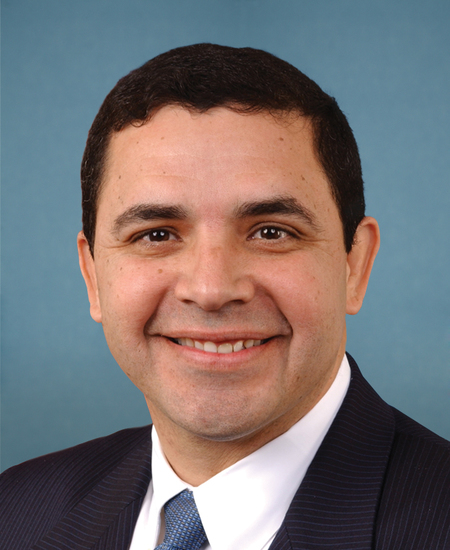
Rep. Henry Cuellar
Sponsored bills
Maddy summaryHR 8041, the Driving Forward Act, extends a temporary exemption from pre-trip safety checks for school bus drivers operating within states until November 2027. This directly affects school bus drivers and state transportation agencies responsible for implementing the exemption. The bill requires the Transportation Secretary to seek public input on making the exemption permanent after 120 days and allows states to use existing highway funds to cover associated costs. It makes no changes to driver qualification standards but delays a requirement that would have otherwise taken effect.
Maddy summaryHCONRES 104 authorizes the use of the U.S. Capitol rotunda for a lying in state ceremony of Ralph Puckett, Jr.'s remains on April 29, 2024. The resolution recognizes Puckett as the last Medal of Honor recipient for actions during the Korean War (1950-1953) and honors over 5.7 million service members who served in that conflict, often called the "Forgotten War." The Architect of the Capitol will implement the arrangements under the direction of the House Speaker and Senate President pro tempore.
Maddy summaryHCONRES 103 authorizes the use of the U.S. Capitol rotunda for a "lying in honor" ceremony for the remains of Army Colonel Ralph Puckett, Jr., the last Medal of Honor recipient for actions during the Korean War (1950-1953). The resolution directs the Architect of the Capitol to arrange this ceremony on April 29, 2024, to honor Puckett and recognize the service of over 5.7 million U.S. military personnel who served in the Korean conflict, often called the "Forgotten War." This is a ceremonial resolution with no policy changes, solely granting permission for a specific honorific event.
Maddy summaryThis bill (HR 7963) is procedural and does not change regulations affecting small businesses. It requires the Director to submit quarterly reports to specific congressional committees starting in 2024, detailing how many companies reported beneficial ownership data under existing rules. The reports will track compliance with current requirements, not reduce regulatory burdens. The bill’s title ("Red Tape Relief") is misleading, as it creates a new reporting obligation rather than eliminating any existing rules.
Maddy summaryHR 7921, the Countering Antisemitism Act, establishes a National Coordinator to Counter Antisemitism within the Executive Office of the President and creates an Interagency Task Force to coordinate federal efforts against antisemitism across multiple agencies. The bill requires federal agencies to report on implementing the U.S. National Strategy to Counter Antisemitism, mandates annual threat assessments of antisemitic violent extremism from the FBI, DHS, and National Counterterrorism Center, and addresses antisemitic discrimination in higher education through a designated Office for Civil Rights Designee. It also includes provisions for a study on Holocaust education by the U.S. Holocaust Memorial Museum, a study on online antisemitism with recommendations for Congress, and amendments to the Nonprofit Security Grant Program to require public reporting on grant applications and awards.
Maddy summaryHR 7770, the Rosie the Riveter Commemorative Coin Act, authorizes the U.S. Mint to produce and sell three commemorative coins honoring women who worked on the U.S. home front during World War II. It specifies $5 gold coins (max 50,000), $1 silver coins (max 400,000), and half-dollar coins (max 750,000), all to be issued between January 1, 2025, and December 31, 2025. Each coin sale includes a surcharge ($35 for gold, $10 for silver, $5 for half-dollar), with all surcharge funds directed to the Rosie the Riveter Trust for maintaining the Rosie the Riveter WWII Home Front National Historical Park and educational programs. The coins will feature designs reflecting the legacy of diverse women workers and must meet specific weight, diameter, and composition standards.
Maddy summaryHR 6814 allows offshore oil and gas platforms and pipelines (called "idle structures") to be repurposed as artificial reefs instead of being fully removed during decommissioning. It requires the Secretary of the Interior to delay removal until NOAA assesses whether the structure supports an "established reef ecosystem" (identified reef-associated species). Operators can request "reef in place" status within 5 years of filing decommissioning plans, subject to safety and environmental checks, and states can manage these structures using funds covering up to 50% of removal costs. The bill also mandates a public dashboard tracking Gulf of Mexico infrastructure and requires annual reports on reef assessments.
Maddy summaryHR 6727 establishes the United States Foundation for International Conservation, a nonprofit organization that will provide grants to support long-term management of protected and conserved areas in eligible countries. The Foundation requires a 2:1 cost match from other sources, demands host country and community consent through binding agreements, and prioritizes areas with high biodiversity or species of significant importance. It will be governed by a Board of Directors including government officials and private sector experts, operate for 10 years with $1 million authorized for 2024 and $100 million annually from 2025-2035, and must follow international conservation standards while prohibiting funding for countries supporting terrorism or violating human rights.
Maddy summaryThe GO Ag Act (HR 7731) creates a federal grant program to fund new agricultural education programs in secondary schools. It provides competitive grants of up to $100,000 per applicant for 5 years, requiring schools to demonstrate how programs will serve all students - including special populations - and align with existing career education standards. Grants cover curriculum development, equipment, and materials but cannot fund programs already operating or prepare students exclusively for one employer. The bill authorizes $5 million through fiscal year 2027 to support these new initiatives.