

Maddy summary# Summary of Proposed Digital Assets and Financial Technology Legislation This comprehensive legislation establishes a new regulatory framework for digital assets and financial technology in the United States, creating a balanced approach that promotes innovation while protecting consumers and maintaining market integrity. Key components include: 1. **Digital Asset Regulatory Structure**: - New requirements for digital commodity exchanges, including transparency standards, customer asset protection, and operational safeguards - Qualified digital commodity custodians with specific regulatory requirements - Digital commodity brokers and dealers with registration and operational standards 2. **New Regulatory Bodies**: - FinHub (Strategic Hub for Innovation and Financial Technology) within the SEC to foster responsible innovation - LabCFTC within the CFTC to serve as an information platform for financial technology innovation - CFTC-SEC Joint Advisory Committee on Digital Assets to promote regulatory harmonization 3. **Mandatory Studies**: - Study on decentralized finance (DeFi) examining its nature, risks, benefits, and integration with traditional markets - Study on non-fungible digital assets (NFTs) analyzing their market structure, benefits, and risks - Study on financial market infrastructure improvements to facilitate tokenized securities and derivatives 4. **Modernization of Regulatory Approach**: - Updates to SEC's mission to explicitly include "innovation" alongside "efficiency" - Enhanced information sharing between agencies - Clearer definitions of ancillary activities that don't require full regulatory registration The legislation aims to create a regulatory environment that encourages responsible innovation in digital assets while maintaining market integrity, consumer protection, and financial stability. It establishes a comprehensive framework for regulating digital commodities as a distinct asset class with specific requirements for market participants.
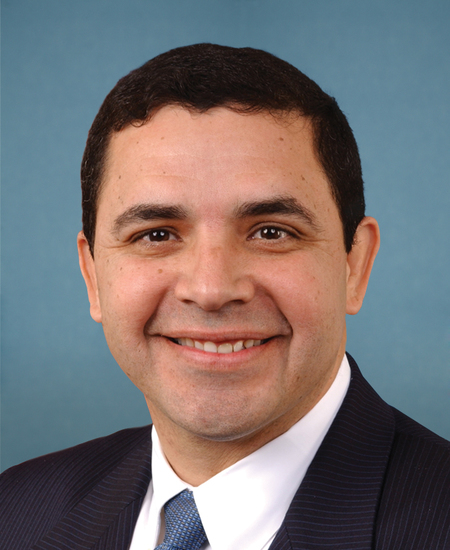
Rep. Henry Cuellar
Sponsored bills
Maddy summaryThis bill creates a one-year conservation program providing payments to farmers and ranchers in 31 specific Texas counties along the southern border. It directly affects agricultural producers in counties like Cameron, Hidalgo, and Webb, who can use funds to repair damage to farmland and infrastructure caused by natural resource issues. The key provision allows the Secretary of Agriculture to offer annual contracts for implementing conservation practices on eligible land in these border counties. The program focuses on addressing environmental concerns on agricultural land, not border security or immigration. It amends existing conservation law to establish this targeted initiative.
Maddy summaryHR 9274, the SHAWL Act, establishes two new Smithsonian museums: the National Museum of the American Latino and the American Women’s History Museum. It authorizes both museums to be located within the National Mall’s "Reserve" area, overriding prior restrictions, and requires federal agencies managing potential sites to transfer jurisdiction to the Smithsonian after notifying congressional committees. The bill mandates that both museums accurately represent diverse cultures, histories, and viewpoints within Latino and women’s communities through exhibits and programs, requiring input from a broad range of community experts. It also requires the Smithsonian to submit biennial reports to Congress detailing compliance with these representation requirements.
Maddy summaryThis bill designates the U.S. Postal Service facility at 4650 East Rosedale Street in Fort Worth, Texas, as the "Dionne Phillips Bagsby Post Office Building." It updates all official references (in laws, maps, documents, etc.) to this specific location to reflect the new name. The bill has no policy provisions or direct impact on constituents beyond renaming the post office facility.
Maddy summaryHR 7053, the Orphan Well Grant Flexibility Act of 2024, modifies a 2005 law to give states more flexibility in using federal grants to plug abandoned oil and gas wells (called "orphaned wells"). It removes the requirement for states to measure methane emissions or conduct specific activities to qualify for these grants, allowing states to choose whether to use pre-plugging data for estimates. The bill also directs the Interior Secretary to commission a National Academies study, within 18 months, examining how plugging these wells affects local economic development, housing, and water quality in communities with many plugged sites. This study will involve input from at least one state per U.S. region and consult with agencies like HUD and the oil and gas compact commission.
Maddy summaryThis bill requires chemical manufacturers and importers to provide safety data sheets in both English and Spanish to employers and make them accessible to employees exposed to chemical hazards. It directly affects businesses handling chemicals, employers who receive these materials, and workers who need to understand safety information. The key provision amends the Occupational Safety and Health Act to mandate bilingual labeling and safety information, applying to all relevant rules after a 60-day implementation period following enactment. The change aims to improve workplace safety communication for Spanish-speaking workers without altering existing safety standards.
Maddy summaryThis bill reauthorizes the United States Commission on International Religious Freedom (USCIRF) through fiscal year 2026. It extends the commission's funding authorization from 2023-2024 to 2025-2026 and delays the expiration date of its statutory authorization from September 30, 2024, to September 30, 2026. The bill directly affects USCIRF by ensuring its continued operation and funding without altering its existing mandate or reporting requirements. It is a procedural extension, not a policy change.
Maddy summaryThis resolution recognizes June 19, 2024, as Juneteenth Independence Day, acknowledging its historical significance as the anniversary of the end of slavery in the U.S. (specifically referencing Union soldiers' announcement in Galveston, Texas, on June 19, 1865). It does not create new policy but formally encourages all Americans to observe the day through ceremonies and educational activities. The resolution emphasizes Juneteenth's role in honoring African American freedom and its importance to U.S. history and cultural heritage. It follows the 2022 law that established Juneteenth as a federal holiday, focusing solely on symbolic recognition and annual observance.
Maddy summaryHRES 965 is a non-binding resolution calling for the immediate release of Ryan Corbett, a U.S. citizen wrongfully detained by the Taliban in Afghanistan since August 2022. It directly affects Corbett (held in poor conditions without charges) and other Americans detained by the Taliban. The resolution demands the Taliban release Corbett unconditionally, urges respect for his human rights, commends Qatar’s role as U.S. protecting power, and condemns the Taliban’s practice of detaining U.S. citizens. It does not create new law but formally expresses congressional support for Corbett and other wrongfully detained Americans.
Maddy summaryThis bill delays a Medicare policy that would have restricted coverage to only intravenous drugs for managing phosphate levels in kidney failure patients. It specifically postpones the implementation of the "oral-only" policy under Medicare's ESRD payment system until January 1, 2033, or until an intravenous drug for phosphate control receives FDA approval - whichever comes first. The bill directly affects Medicare beneficiaries with end-stage renal disease (ESRD) who rely on oral medications for phosphate management. It ensures continued Medicare coverage for these oral drugs during the extended timeline, without changing the underlying payment structure.