

Maddy summaryHRES 227 is a non-binding resolution expressing the House of Representatives' support for designating March 18, 2025, as "National Agriculture Day" to honor agriculture's role as a vital U.S. industry. It does not create new laws, allocate funds, or impose requirements on any group. The resolution serves as a symbolic gesture to highlight agriculture's economic impact and contributions to the nation. As a procedural resolution, it has no direct policy effect beyond raising awareness.
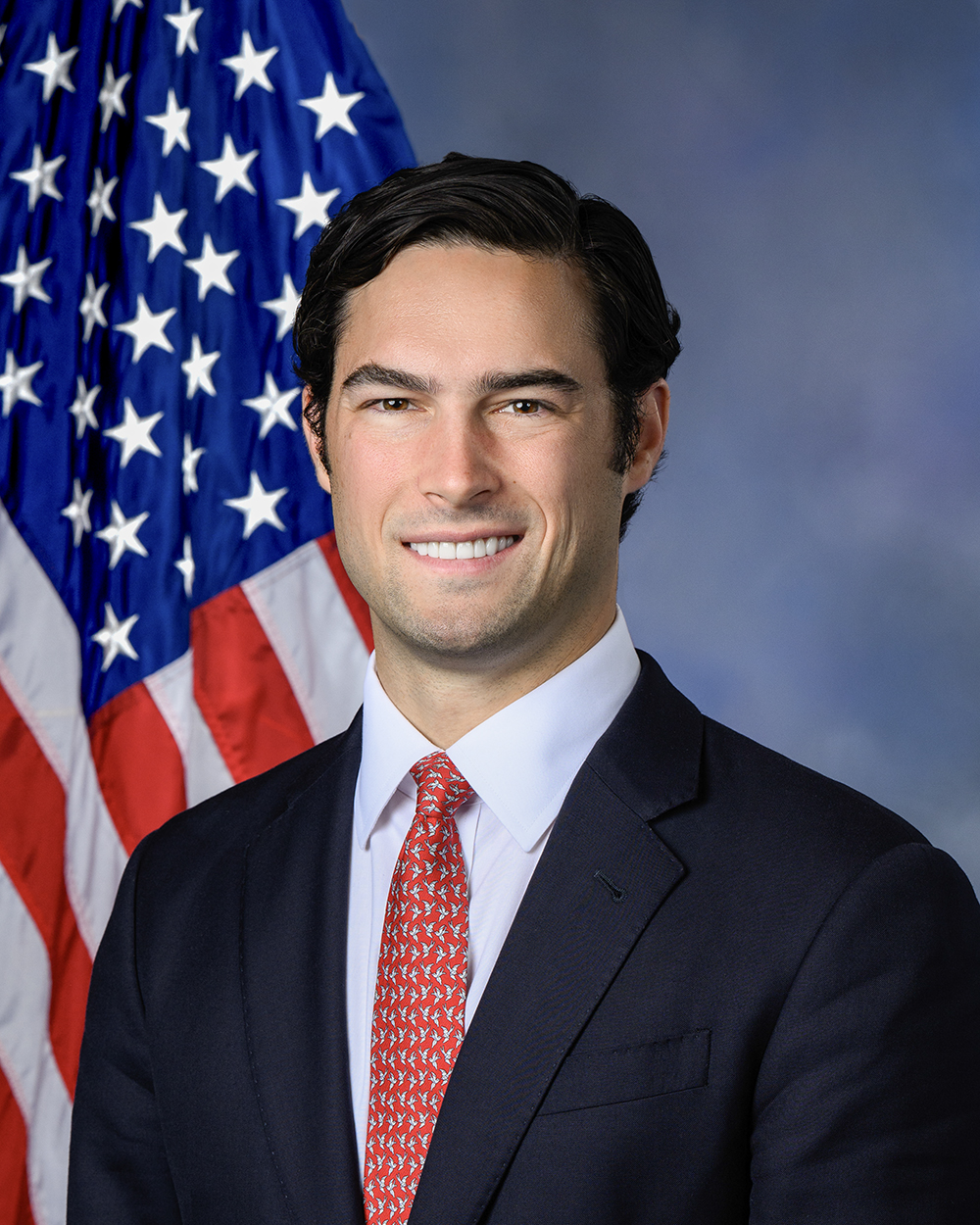
Rep. Brandon Gill
Sponsored bills
Maddy summaryHR 2202 prohibits federal funds from being used for gender transition procedures or health plans covering them in federal programs like Medicaid and the Affordable Care Act. It does not ban these procedures but restricts federal subsidies, requiring individuals to pay for such coverage using non-federal funds (e.g., out-of-pocket or private insurance not tied to federal programs). The bill defines gender transition procedures broadly to include hormonal treatments and surgeries (e.g., mastectomy, hysterectomy), with exceptions for medically necessary treatments related to disorders of sex development or complications from such procedures. It also clarifies that ACA premium tax credits and cost-sharing reductions cannot apply to plans covering these procedures, though separate non-federal-funded coverage remains an option.
Maddy summaryHR 2204 requires U.S. universities to immediately report international students on F-1 or J-1 visas who support designated foreign terrorist organizations to the government's Student and Exchange Visitor Information System (SEVIS). If verified, the State Department would revoke the student's visa, and Homeland Security would begin removal proceedings. This bill directly affects international students holding F-1 or J-1 visas who endorse or support groups designated as foreign terrorist organizations under U.S. law. The key mechanism is a mandatory reporting requirement for universities, triggering visa revocation and potential deportation for affected students.
Maddy summaryHR 2187 amends U.S. tax law to disallow key federal tax credits for offshore wind facilities located in inland navigable waters or coastal waters of the United States. Specifically, it removes eligibility for the investment tax credit (Section 48), production tax credit (Section 45), and clean electricity production tax credit (Section 45Y) for projects in these water areas. The bill defines "disqualified offshore wind facilities" as those situated in the specified waters, preventing them from qualifying for these financial incentives. This change applies to energy produced and property placed in service after December 31, 2025, directly affecting developers planning offshore wind projects in U.S. coastal or inland waterways.
Maddy summaryThe Stop CCP VISAs Act of 2025 would prohibit U.S. visas for Chinese citizens seeking to study or conduct research in the United States. It specifically blocks the issuance of F-1 (academic student), J-1 (exchange visitor), and M-1 (vocational student) visas for these purposes. This bill directly affects Chinese nationals who otherwise qualify for these student visa categories at U.S. educational institutions. The policy change would amend immigration law to implement this visa ban.
Maddy summaryHR 2128, the Reimbursing Border Communities Act of 2025, creates a federal grant program to reimburse eligible local governments within 200 miles of the U.S.-Mexico land border for costs related to border security measures, such as additional law enforcement wages. To qualify, communities must be local governments (not sanctuary jurisdictions), submit applications to the DHS Secretary, and cannot use funds for legal aid, housing, healthcare, or other services for immigrants. Grants are capped at $500,000 per community per year, with $25 million authorized annually from 2026-2036. The program requires annual reports to Congress detailing grant usage and implementation, including recommendations for future funding adjustments.
Maddy summaryThe FOCA Act of 2025 prohibits federal agencies from requiring or banning contractors from using union agreements in construction project bids or contracts. It directly affects federal agencies, contractors, and subcontractors working on federally funded or assisted construction projects (like buildings or infrastructure). The law requires bid documents to not favor or penalize contractors based on whether they have union agreements, aiming to promote open competition and prevent discrimination. This changes how agencies structure bids but does not affect union agreements themselves. The bill applies to all new contracts and subcontracts after enactment, with limited exemptions only for public health/safety emergencies or national security.
Maddy summaryHR 1116, the REAL Meat Act of 2025, prohibits federal funding for cell-cultured meat (lab-produced meat) by banning government support for its research, production, promotion, or inclusion in USDA programs. It directly affects federal agencies like the Department of Agriculture and research programs by blocking funds for any activity related to cell-cultured meat, except for NASA's space-related use. The bill defines cell-cultured meat as meat grown from animal cells in a lab, ensuring the funding restriction applies specifically to this method. The sole exception allows NASA to fund cell-cultured meat intended for consumption off-planet. This policy change restricts government financial support but does not ban the sale or consumption of cell-cultured meat products.
Maddy summaryHR 2054, the VOTE Act, would prevent states from receiving federal funds for administering federal elections if they provide ballots in any language other than English. It amends the Voting Rights Act by removing current requirements that allow states to provide bilingual ballots in certain areas, eliminating the prohibition on English-only ballots for federal elections. This directly affects states that currently offer ballots in non-English languages to comply with federal language access rules. The bill changes the policy by making federal election funding contingent solely on using English ballots, without requiring multilingual options.
Maddy summaryHR 2065, the Unmasking Hamas Act of 2025, would make it a federal crime to injure, threaten, or intimidate someone while wearing a disguise (including a mask) in order to interfere with their exercise of constitutional or legal rights. It would impose fines or up to 15 years in prison for such acts, and add a mandatory 2-year prison term for property destruction committed while masked. The bill directly affects individuals who wear masks during protests or demonstrations that disrupt protected rights or damage property, applying to all locations under federal jurisdiction. The law focuses on criminalizing masked conduct that interferes with rights or property, not on the specific content of protests.