

Continuing Robust and Uninhibited Drilling and Exporting Act or the CRUDE Act This bill limits the President's authority to restrict the export of crude oil from the United States. Currently, the President may restrict the export of oil for up to a year if the President declares a national emergency; the restrictions apply to countries, persons, or organizations for reasons of national security; or the Department of Commerce finds and reports to the President that the export of crude oil has caused sustained material oil supply shortages or sustained oil prices significantly above world market levels and those shortages or price increases have caused or are likely to cause sustained material adverse employment effects. However, this bill only allows the President to make such restrictions if the restrictions apply to countries, persons, or organizations for reasons of national security; or the Department of Defense, the Department of Energy, and Commerce jointly make those findings and report them to the President and Congress.
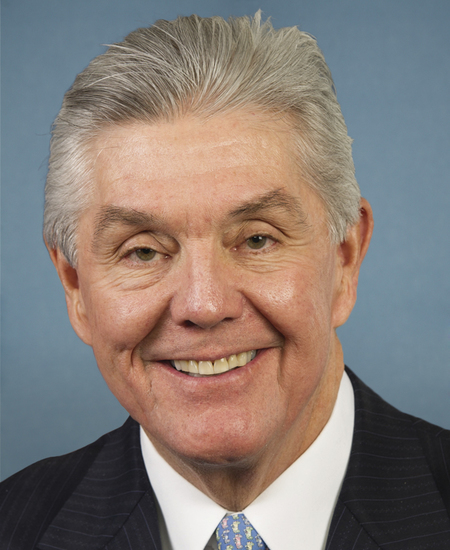
Rep. Roger Williams
Sponsored bills
Conscience Protection Act of 2021 This bill provides statutory authority for certain protections for health care providers that refuse to participate in abortions based on religious beliefs or other convictions. Health care providers include individual professionals, medical facilities, health insurance organizations, and social services providers that refer clients to health care services. The federal government and entities that receive federal funding for health-related activities, including state and local governments, may not discriminate against a health care provider that refuses to be involved in, or provide coverage for, abortions. Currently, similar requirements apply to various related activities, including certain employment or personnel decisions (the Church Amendments), abortion services training (the Coats-Snowe Amendment), qualified health plans offered through health insurance exchanges, and annual appropriations bills for the Department of Health and Human Services (HHS) and other federal agencies (the Weldon Amendment). The HHS Office for Civil Rights must investigate complaints of this kind of discrimination. Furthermore, HHS may terminate or reduce HHS funding for health-related activities if a person or entity fails to comply with nondiscrimination requirements. Additionally, the Department of Justice or any entity adversely affected by such discrimination may bring a civil action to obtain appropriate relief. A plaintiff does not need to seek or exhaust administrative remedies before bringing the action. A plaintiff may also bring an action, including one for money damages, against a governmental entity. In many cases, principles of sovereign immunity shield states and some localities from these kinds of actions.
Maddy summaryHRES 815 is a symbolic resolution introduced in the U.S. House of Representatives on November 18, 2021. It expresses congressional support for National Rural Health Day, which recognizes the importance of rural health care and celebrates providers serving rural communities. The resolution highlights challenges like hospital closures and access barriers faced by rural health facilities but does not create new laws or funding. It simply affirms commitment to improving rural health care accessibility through policy, without specifying concrete changes. As a procedural resolution, it has no binding effect on legislation or funding.
Housing Promotes Livelihood and Ultimate Success Act of 2021 or the Housing PLUS Act of 2021 This bill modifies the requirements under which the Department of Housing and Urban Development (HUD) must award grants under the Continuum of Care Program, which provides funding for nonprofit providers and state and local governments to quickly rehouse homeless individuals and families. Specifically, the bill bars HUD from prohibiting, limiting, or restricting Continuum of Care grants to recipients that (1) require program participants to receive supportive services, (2) require program participants to be sober or drug-free, or (3) are faith-based organizations. The bill also requires that 30% of Continuum of Care grant funds be set aside for eligible grant recipients that provide or offer access to wraparound services.
This bill prohibits the Small Business Administration from directly making a loan under the 7(a) Program, which authorizes loans and loan guaranties to small businesses that meet certain requirements.
Bureau of Consumer Financial Protection-Inspector General Reform Act of 2021 or the CFPB-IG Act of 2021 This bill establishes a separate Office of Inspector General for the Consumer Financial Protection Bureau (CFPB). Currently, such oversight of the CFPB is combined with the Office of Inspector General for the Board of Governors of the Federal Reserve System.
Science-Based Emissions Standards Act of 2021 This bill prohibits the Environmental Protection Agency (EPA) from finalizing any rule to amend the new source performance standards for stationary sources under the Clean Air Act to reduce methane emissions from new and modified oil and natural gas facilities until the Department of Energy takes specified actions. Specifically, the Department of Energy must first (1) complete and publish the results of the study titled Quantification of Methane Emissions from Marginal (Small Producing) Oil and Gas Wells, and (2) provide a period of at least 90 days for public comment on the application of the study's results. The EPA must take the results of the study into consideration when finalizing the rule.
This joint resolution nullifies a Department of Labor emergency temporary standard for preventing the transmission of COVID-19 in employment settings. Under the standard issued on November 5, 2021, employers with 100 or more employees must require their onsite employees to either be fully vaccinated against COVID-19 or undergo weekly COVID-19 testing.
This resolution expresses the sentiments of the House of Representatives that every job that delivers a paycheck to cover living expenses is essential and that no federal, state, or local government should deem what businesses have the right to operate and which must close.
This concurrent resolution declares that Congress should not impose any new performance fee, tax, royalty, or other charge relating to the public performance of sound recordings on a local radio station for broadcasting sound recordings over the air, or on any business for such public performance of sound recordings.