

Public Service Reform Act This bill establishes all employees of the executive branch as at-will employees who may be subject to any adverse personnel action with or without cause and without the right to appeal such actions. The bill also establishes specialized removal procedures for career employees (i.e., nonpolitical employees), abolishes the Merit Systems Protection Board, and provides certain allowances for whistleblowers and appeals to the Equal Employment Opportunity Commission.
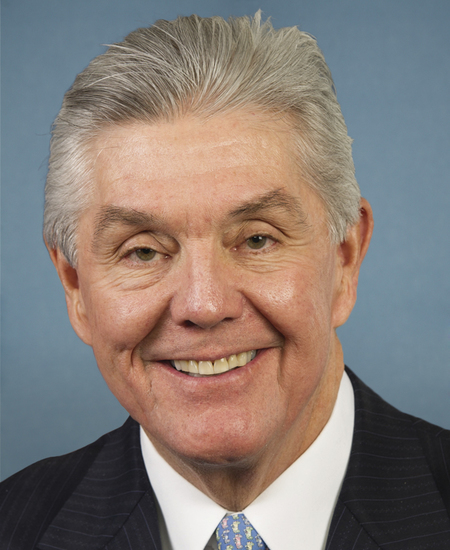
Rep. Roger Williams
Sponsored bills
Securing and Enabling Commerce Using Remote and Electronic Notarization Act of 2022 or the SECURE Notarization Act of 2022 This bill allows a notary public commissioned under state law to remotely notarize electronic records and perform notarizations for remotely located individuals. The bill provides technical requirements for such notarizations, including the creation and retention of video and audio recordings and the use of communication technologies (i.e., video chat). Additionally, the bill requires U.S. courts and states to recognize notarizations—including remote notarizations of electronic records and notarizations of remotely-located individuals—that occur in or affect interstate commerce and are performed by a notary public commissioned under the laws of other states. The bill also allows a notary public to remotely notarize electronic records involving an individual located outside of the United States, subject to certain requirements.
This resolution expresses support for U.S. Border Patrol agents, denounces the politicization and falsification of claims against agents in Del Rio, Texas, and calls on the Biden administration to support front line agents.
Transparency and Honesty in Energy Regulations Act of 2022 This bill prohibits specified federal entities (e.g., the Department of Energy) from considering the social cost of carbon, methane, nitrous oxide, or greenhouse gas as part of any cost-benefit analysis required under any law or specified Executive Orders. In addition, such social costs must not be considered by such entities (1) in rulemaking, (2) in the issuance of guidance, (3) in taking other agency action, (4) or as a justification for any rulemaking, guidance document, or agency action.
Registration for Index-Linked Annuities Act This bill requires the Securities and Exchange Commission (SEC) to create a new form for the registration of index-linked annuities to ensure that a purchaser can make a knowledgeable decision. The bill defines a registered index-linked annuity as an annuity that is deemed a security, that must be registered with the SEC, and that is issued by an insurance company subject to state supervision. Furthermore, the returns of these annuities (1) are based on the performance of a specified benchmark index or rate, and (2) may be subject to a market value adjustment if amounts are withdrawn early.
Scope 3 Act This bill prohibits any requirement that an issuer of securities must disclose the greenhouse gas emissions of its value chain (i.e., scope 3 emissions).
Protecting Life on Federal Lands Act This bill prohibits a federal agency or department from leasing federal property to an abortion providing organization.
Citizen Ballot Protection Act This bill allows a state to include on its mail voter registration application form a requirement that the applicant provide proof of U.S. citizenship.
This resolution sets forth the rule for consideration of H.R. 1011 (Life at Conception Act), which declares that the right to life guaranteed by the Constitution is vested in each human being at all stages of life, including the moment of fertilization, cloning, or other moment at which an individual comes into being.
Maddy summaryThe National Flood Insurance Program Extension Act of 2022 extends the federal flood insurance program until December 31, 2023, instead of ending on September 30, 2022. This directly affects homeowners, renters, and businesses in communities participating in the National Flood Insurance Program (NFIP), ensuring continued access to flood coverage. The bill amends two key sections of the 1968 law to update the program's expiration dates and includes a retroactive provision covering the period from September 30, 2022, through the new end date.