

Maddy summaryThis bill prohibits U.S. federal funds from being provided to international financial institutions (like the World Bank) if those funds could finance foreign shrimp farming, processing, or shrimp exports. It directly affects international financial institutions receiving U.S. funding, requiring them to avoid supporting foreign shrimp operations. The bill also mandates an annual report from the Government Accountability Office (GAO) to Congress on whether U.S. representatives at these institutions are following this restriction. The key mechanism is conditioning U.S. financial support on the institutions' adherence to this prohibition.
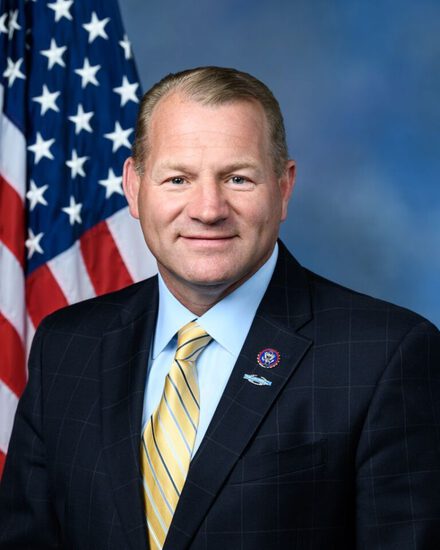
Rep. Troy E. Nehls
Sponsored bills
Maddy summaryThis resolution condemns Mexican President López Obrador's March 24, 2024, comments on "60 Minutes" where he linked U.S. immigration policy to demands for $20 billion in aid, lifted sanctions, and amnesty. It calls on Mexico to secure its southern border, restart the Migrant Protection Protocols (MPP), and establish a Safe Third Country Agreement with the U.S. The resolution does not create new laws but expresses the House's position on Mexico's role in addressing migration. It directly addresses the Mexican government as the entity urged to take specific actions.
Maddy summaryHR 661, "Sarah’s Law," requires U.S. immigration authorities to detain certain immigrants charged with crimes causing death or serious injury. It applies to immigrants who entered without proper inspection, held revoked temporary visas, or fall under specific deportation categories, and who face charges for violent crimes. The bill mandates that immigration officials notify victims or their families (like parents or spouses) about the immigrant’s identity, immigration status, custody details, and removal efforts. This law does not change existing victim rights but adds specific notification requirements for these cases.
Maddy summaryHR 7845 would rename Washington Dulles International Airport in Virginia as "Donald J. Trump International Airport" upon enactment. The bill requires all federal laws, regulations, maps, and official documents to reference the airport by its new name. This is a purely procedural designation affecting the airport's official title and federal record-keeping, with no associated policy changes or funding. The bill directly impacts how the airport is identified in government communications and records.
Maddy summaryHR 7801, the Sultana Steamboat Disaster Commemorative Coin Act of 2024, authorizes the U.S. Mint to produce commemorative coins honoring the 1865 Sultana steamboat disaster - the worst maritime disaster in U.S. history, which killed nearly 1,200 people. The bill specifies three coin types ($5 gold, $1 silver, and half-dollar clad) to be minted between January 1, 2027, and December 31, 2027, with surcharges from sales directed to the Sultana Historical Preservation Society for museum development and artifact preservation. The coins will be sold at face value plus surcharges ($5-$35 per coin), and the funds must support constructing a museum, exhibits, and preserving disaster-related history. This bill does not create new laws but enables commemorative coin sales to fund a specific historical preservation effort.
Child Tax Credit Integrity Act This bill requires an individual taxpayer to provide social security account numbers to claim the child tax credit. The social security number must be that of the taxpayer and the taxpayer's spouse (for joint returns) and the child named on the tax return.
Maddy summaryHRES 987 is a symbolic resolution introduced in the U.S. House of Representatives on January 31, 2024, by multiple Republican members. It formally denounces the Biden administration’s energy policies as "harmful" and "anti-American," citing specific actions like canceling the Keystone XL pipeline, restricting federal land leasing for oil and gas, blocking LNG exports, and implementing mineral extraction rules. The resolution does not create new laws or affect any group directly; it serves only as a formal expression of disapproval by the House. It has no legal effect and is intended to convey political opposition to the administration’s approach to energy development.
Maddy summaryHR 6009, the Restoring American Energy Dominance Act, requires the Bureau of Land Management (BLM) to withdraw a specific proposed rule (88 Fed. Reg. 47562, July 24, 2023) concerning fluid mineral leases and leasing processes on public lands. The bill directly affects the BLM’s regulatory authority over oil and gas leasing by prohibiting the agency from finalizing, implementing, or enforcing that rule or any substantially similar rule. This is a procedural bill focused solely on reversing a specific regulatory action, with no new policy provisions or direct impact on energy producers beyond halting the proposed rule.
Maddy summaryThis bill prohibits the interstate transport, sale, breeding, or possession of captive American mink raised for fur production (including parts or offspring), directly affecting mink fur farmers and the fur industry. It includes a limited exception for entities covered under the Lacey Act and establishes a buy-out program where the government may purchase mink farms. The buy-out amount is based on the farmer's average mink count over three years and the farm's infrastructure value. Funding for the buy-out depends on available appropriations. The bill does not apply to mink not raised for fur or to certain wildlife management activities.
Maddy summaryThe Laken Riley Act (HR 7511) would require federal authorities to detain non-citizens charged with or convicted of burglary, theft, larceny, or shoplifting offenses. It also creates new legal standing for state attorneys general to sue federal immigration officials in federal court if they believe immigration enforcement decisions (like releasing aliens or granting parole) cause financial harm exceeding $100 to the state or its residents. The bill amends immigration laws to expand detention requirements for certain property crimes and allows states to seek court orders to enforce immigration policies. It does not create new criminal penalties but modifies existing immigration enforcement procedures. The bill’s findings and political language about the Laken Riley case are not part of its policy provisions.