

Maddy summaryThe Elizabeth Dole Home Care Act of 2023 increases the expenditure cap for home- and community-based care for veterans from 65% to 100% of costs, with exceptions for certain cases based on clinical need and geographic factors. It establishes new programs including Veteran-Directed Care, which allows veterans to select and manage their own in-home care services, and Home-Based Primary Care, which provides in-home health care overseen by VA providers. The bill requires improved coordination with existing programs like the Program of All-Inclusive Care for the Elderly (PACE) and mandates a centralized website with information about available services. It specifically targets veterans who would otherwise require nursing home care or face increased risk of hospitalization, and includes provisions to address home health aide shortages through pilot programs.
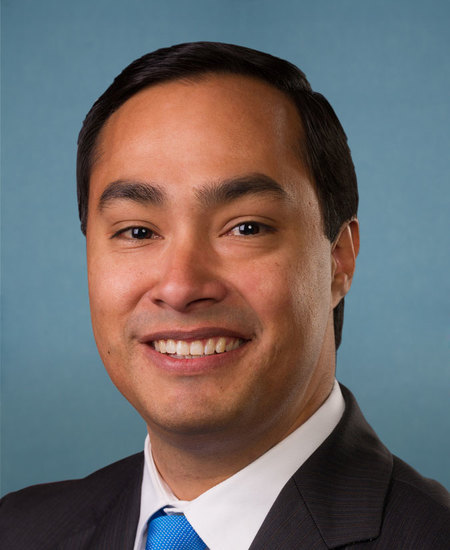
Rep. Joaquin Castro
Sponsored bills
Maddy summaryHR 6592, the Fight Book Bans Act, provides federal grants to reimburse public school districts for legal costs when they choose to keep instructional or library materials after parental objections. It directly affects school districts (covered local educational agencies) that select materials for students and handle challenges to their removal. The bill authorizes up to $100,000 per case in grants to cover attorney fees and court costs, provided the district didn’t remove the materials and wasn’t reimbursed by the state. Funding of $15 million is authorized for fiscal years 2024-2028. The grants are strictly for legal challenges to decisions not to remove materials, not for the content of the materials themselves.
Maddy summaryHRES 793 is a resolution passed by the U.S. House of Representatives calling on Hamas to immediately release all 199 hostages taken during Hamas' October 7, 2023 attack on Israel. The resolution condemns Hamas for the attack, the taking of hostages, and threats against hostages, while stating that holding hostages violates international humanitarian law under the Geneva Conventions. It demands the immediate release of all hostages and expresses sympathy for victims and their families. As a symbolic resolution, it does not create legal obligations but formally expresses the House's position.
Maddy summaryHRES 683 is a non-binding resolution expressing the House's support for diplomatic efforts to encourage Mexico to fulfill annual water delivery commitments under the 1944 U.S.-Mexico treaty. The treaty requires Mexico to deliver an average of 350,000 acre-feet of water annually (over a 5-year cycle) to the U.S., but Mexico has historically delayed deliveries until the cycle ends. The resolution specifically acknowledges water shortages faced by South Texas farmers and urges Mexico to meet its annual obligations, while supporting negotiations for more reliable water agreements. It does not create new legal requirements but formally encourages diplomatic action to address the delivery delays.
Maddy summaryThe Climate Displaced Persons Act establishes a new admission pathway for individuals displaced by climate-related environmental disasters, defining "climate-displaced persons" as those compelled to leave their homes due to climate events like floods, droughts, or sea level rise who cannot safely return or integrate locally. The bill sets a minimum annual admission goal of 100,000 climate-displaced persons to the United States beginning in fiscal year 2024, requires the government to collect and analyze data on climate displacement, and mandates the creation of a Global Climate Change Resilience Strategy to address climate impacts on vulnerable populations. It also requires training for U.S. diplomats and immigration officers on climate displacement and establishes procedures for applications, including exemptions for unaccompanied children and cases of changed circumstances. The legislation aims to provide a structured humanitarian response to climate-driven displacement while acknowledging the U.S. historical responsibility for climate change.
Maddy summaryThis bill closes loopholes that allow domestic violence abusers to keep or buy firearms while under restraining orders. It requires courts to issue "firearm surrender orders" when domestic violence restraining orders are issued, mandating that abusers surrender all firearms within 24 hours. The law expands the definition of "intimate partner" to include dating partners and requires law enforcement to remove firearms if abusers don't comply. It also creates a federal grant program to help states implement these policies, directly affecting domestic violence survivors and abusers subject to restraining orders.
Maddy summaryHR 6404, the Disarming Cartels Act, requires the Department of Homeland Security to enhance border security efforts to disrupt the smuggling of U.S.-sourced firearms and related munitions into Mexico. Key provisions mandate increased collaboration between U.S. Customs and Border Protection, Immigration and Customs Enforcement, and Mexican authorities; establishing information-sharing mechanisms for firearm interdictions; analyzing recovered firearms in Mexico to trace U.S. sources; and expanding outbound inspections at the U.S.-Mexico border. The bill also requires annual reports to Congress detailing implementation progress, joint operations, and performance metrics for these efforts. This legislation directly affects DHS agencies, Mexican government partners, and aims to address cross-border firearm trafficking through concrete operational changes.
This resolution honors the service, sacrifice, and contributions of Texas veterans and their families. The resolution also expresses that the House of Representatives commits to working with the Department of Veterans Affairs to ensure that veterans are provided timely care and applicable benefits and compensation as a result of their service.
Maddy summaryThe Open Source Intelligence Availability Act requires the Director of National Intelligence to develop a plan within 180 days to make unclassified intelligence products derived from open-source intelligence (like publicly available news, social media, or translated foreign materials) available to non-intelligence federal employees who would benefit from them but lack security clearance. The plan must include secure sharing policies, improved access to translated foreign language materials, and compliance measures for intelligence community elements producing these products. It also mandates updating an existing intelligence directive to specifically address the production and dissemination of these unclassified products. This legislation aims to expand access to open-source intelligence for federal workers without security clearance while protecting intelligence sources and methods.
Maddy summaryThe Advanced Coursework Equity Act aims to increase access to advanced courses like AP, STEM programs, and Algebra I for students in under-resourced schools, particularly focusing on historically underrepresented groups including Black, Latino, Native American students, students with disabilities, English learners, and low-income students. The bill establishes a federal grant program requiring states and schools to implement either "open enrollment" (allowing any student to enroll in advanced courses without academic prerequisites) or "universal screening" (systematically screening all students for advanced courses based on objective measures) to improve equitable access. It mandates data collection and reporting on enrollment and performance by student subgroups (race, disability, socioeconomic status, etc.) and sets specific 3-year equity goals for each subgroup. The grant program provides funding to states and schools to support these changes, with requirements for staff training, advisory councils, and communication with families about advanced course opportunities.