

Maddy summaryHR 7725 would block federal funding for graduate medical schools that require students or staff to adopt specific statements about race, gender, or identity (like claiming systemic racism or collective guilt), use race-based distinctions in admissions or programs, maintain DEI offices, or mandate "diversity statements" for admission. It directly affects graduate medical schools at colleges/universities receiving federal financial aid, including student loans. The bill exempts medical education about race-related health needs, demographic data collection for reporting, and religious institutions from adhering to policies conflicting with their beliefs. Schools violating these rules would lose eligibility for federal funds, though they could still comply with anti-discrimination laws and provide general academic instruction.
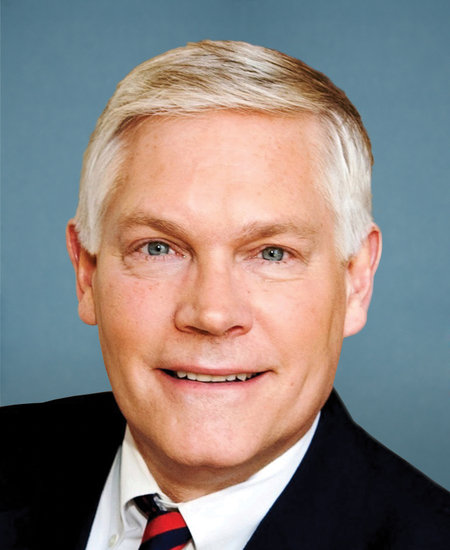
Rep. Pete Sessions
Sponsored bills
Maddy summaryThe Laken Riley Act (HR 7511) would require federal authorities to detain non-citizens charged with or convicted of burglary, theft, larceny, or shoplifting offenses. It also creates new legal standing for state attorneys general to sue federal immigration officials in federal court if they believe immigration enforcement decisions (like releasing aliens or granting parole) cause financial harm exceeding $100 to the state or its residents. The bill amends immigration laws to expand detention requirements for certain property crimes and allows states to seek court orders to enforce immigration policies. It does not create new criminal penalties but modifies existing immigration enforcement procedures. The bill’s findings and political language about the Laken Riley case are not part of its policy provisions.
Maddy summaryHRES 1064 is a resolution passed by the U.S. House of Representatives recognizing that Texas operates its own electricity grid through the Electric Reliability Council of Texas (ERCOT), which serves over 26 million Texans and manages 52,700 miles of transmission lines. The resolution explicitly condemns any congressional or federal government action attempting to "federalize" Texas' electricity markets, which operate under the Texas Public Utility Commission and state legislature. It emphasizes that ERCOT is not subject to federal jurisdiction and rejects efforts to force connections to neighboring grids, as seen in previous legislative proposals. This resolution does not change laws but formally states the House's position supporting Texas' control over its energy system.
Long-term Opportunities for Advancing New Studies for Biomedical Research Act or the LOANS for Biomedical Research Act This bill requires the Department of the Treasury to establish the BioBonds Program to support loans for clinical trials for eligible drugs and medical devices for unmet medical needs. Under the program, fiscal agents purchase loans (up to $25 million per recipient) and issue collateralized bonds that are sold to investors and that are guaranteed by Treasury. An eligible borrower under this program is one conducting (or seeking to conduct) research related to a drug or device that is (1) intended to meet an unmet medical need; and (2) under investigation in certain types of controlled clinical trials, including a trial to investigate the safety and effectiveness of the drug or device. The Government Accountability Office (GAO) and Treasury must report on the program; GAO must also study whether similar programs should be established for other biomedical research projects.
Maddy summaryThe Secure Payments Act of 2024 requires the Federal Reserve to study the impacts of the proposed "Reg II" rule (which would cap debit card interchange fees) on consumers, merchants, and small banks. Specifically, it mandates a study of how fee changes affect access to low-cost bank accounts, merchant costs, fraud mitigation, and the affordability of banking products in underserved communities. The Fed must also conduct a quantitative analysis of the rule's effects on small banks' capital and earnings. The Federal Reserve cannot finalize the Reg II rule until after it completes this study, issues a report to Congress, and considers the findings - including whether fee caps benefit low- and moderate-income customers. This bill delays the final rule to ensure the impacts are fully assessed before implementation.
Maddy summaryHR 7494, the Protect America’s Lands Act, prohibits national securities exchanges from processing transactions involving stocks issued by companies primarily managing land for conservation. It defines "natural asset companies" as those holding rights to ecological performance of specific land areas, with their core purpose being to conserve, restore, or sustainably manage natural assets without causing material harm. The bill directly affects securities exchanges and these specific companies by banning exchange-based trading of their securities. This is a regulatory change to the Securities Exchange Act of 1934, focusing on financial market rules rather than direct land management policies.
Maddy summaryThis bill directs the Secretary of State to actively use U.S. diplomatic resources, including the voice and influence of U.S. diplomats and officials at the International Boundary and Water Commission, to advance efforts ensuring Mexico complies with the 1944 water treaty. It requires U.S. officials to work toward establishing reliable water delivery agreements under the treaty for the Colorado, Tijuana, and Rio Grande rivers. The key mechanism is mandating diplomatic engagement to address Mexico's compliance with treaty obligations, aiming to secure predictable water flows for U.S. users. The bill affects U.S. diplomatic operations and water management coordination with Mexico, focusing on treaty implementation rather than new water infrastructure.
Maddy summaryHR 7450, the Protecting Privacy in Purchases Act, prohibits payment card networks and covered entities (like payment processors) from requiring or assigning merchant category codes that specifically identify firearms retailers as different from general stores or sporting goods retailers. This directly affects firearms retailers and payment networks by preventing them from using business classification codes that could flag firearm sales. The bill establishes an enforcement process where the Attorney General investigates complaints, issues remediation notices, and can seek court injunctions for non-compliance, while preempting state or local laws on this issue. It does not create private lawsuits for individuals.
Maddy summaryHR 7402, the Operation Lone Star Reimbursement Act, requires the federal government to reimburse the State of Texas for border security costs incurred between 2020 and 2024. The bill directly affects Texas, which spent over $800 million (2020-2021), $2.9 billion (2022-2023), and plans $4.6 billion (2024-2025) to address human trafficking, drug proliferation, and other border security threats. Key provisions mandate Texas to submit a detailed expense report to the Homeland Security and Treasury Secretaries, triggering a federal payment within 60 days for all documented costs. The legislation specifies no eligibility limits, requiring full reimbursement of the state’s documented border security expenditures.
Maddy summaryHR 7176, the "Unlocking our Domestic LNG Potential Act of 2024," streamlines approval processes for U.S. liquefied natural gas (LNG) export terminals. It grants the Federal Energy Regulatory Commission (FERC) exclusive authority to approve or deny LNG export facility projects, requiring FERC to deem such exports "consistent with the public interest" unless specific legal exceptions apply. The bill explicitly preserves the President’s authority to block LNG exports under sanctions laws targeting countries designated as state sponsors of terrorism. This directly affects LNG companies seeking export permits and FERC’s regulatory role, without altering existing environmental or safety regulations.