

Maddy summaryHR 7109, the Equal Representation Act, requires the U.S. Census Bureau to add a citizenship status checkbox to the 2030 and future decennial censuses, asking respondents to identify if they are U.S. citizens, U.S. nationals, lawful residents, or unlawful residents. It then mandates excluding noncitizens (both lawful and unlawful residents) from the population count used to determine each state's number of congressional seats and electoral votes starting with the 2030 census. This bill directly affects how states are apportioned representation in Congress and presidential electoral votes, based solely on the citizen population. The key change is shifting the apportionment base from total population to citizen population alone, using the new census data.
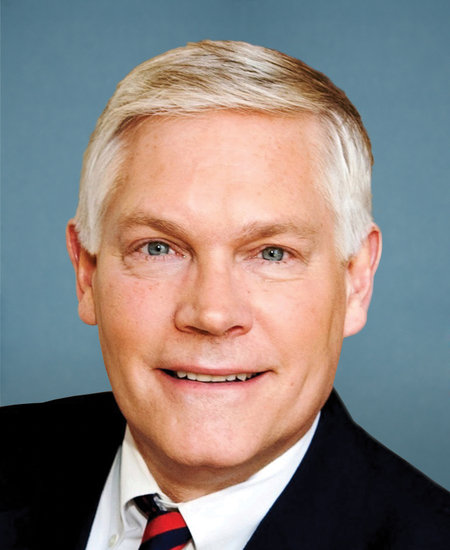
Rep. Pete Sessions
Sponsored bills
Maddy summaryThis bill amends federal law to simplify interstate firearm transfers. It replaces "rifle or shotgun" with "firearm" in transfer rules, allowing all firearms to be treated uniformly. The key change permits licensed dealers to sell firearms to other licensed dealers anywhere in the U.S., and lets licensed sellers transfer firearms to unlicensed buyers at temporary locations (like gun shows) in any state. It also updates residency definitions for military members and federal employees stationed across state lines, clarifying which state they're considered residents of for firearm purposes. The bill directly affects licensed firearm dealers, military personnel, and federal employees who travel between states.
Maddy summaryThis bill designates the U.S. Postal Service facility at 2395 East Del Mar Boulevard in Laredo, Texas, as the "Lance Corporal David Lee Espinoza, Lance Corporal Juan Rodrigo Rodriguez & Sergeant Roberto Arizola Jr. Post Office Building" to honor these three military service members. It changes the official name of the building for all government references, maps, and records, but does not alter postal services or create new policy. The bill was enacted on May 7, 2024, following passage by both the House and Senate.
Maddy summaryThis bill defines "State-based education loan programs" as state-run or nonprofit loan options that offer interest rates and fees at least as favorable as federal Direct PLUS loans. It requires colleges to inform students about federal loan options (including income-driven repayment and forgiveness) before they consider private loans, and to disclose the benefits of federal loans versus state-based programs. The bill directly affects students seeking education loans, colleges advising them, and state agencies running qualifying loan programs. Key provisions ensure students are aware of federal alternatives before taking out private loans, with state programs needing state authorization and better terms than federal loans.
Maddy summaryHJRES 131 seeks congressional disapproval of an EPA rule establishing emissions standards for light- and medium-duty vehicles model years 2027 and later. If passed, this resolution would block the EPA's rule from taking effect, preventing automakers from having to comply with those specific pollution requirements. The bill targets the EPA's April 18, 2024, rule published in the Federal Register (89 Fed. Reg. 27842). This is a procedural disapproval resolution under the Congressional Review Act, not a new policy.
Maddy summaryHR 8231, the James Earl Jones Congressional Gold Medal Act, authorizes a Congressional Gold Medal to be awarded to actor James Earl Jones in recognition of his distinguished career in theater and film, and his role in advancing inclusion and equal opportunities for people of all backgrounds in the entertainment industry. The Treasury will strike the medal with an image and inscription of Jones, and may produce and sell bronze duplicates to cover costs, with proceeds deposited into the U.S. Mint's public enterprise fund. This bill serves as a ceremonial honor with no new legal requirements or policy changes.
Maddy summaryThis bill creates a national network of State judicial threat intelligence and resource centers to enhance safety for State and local judges and court staff. It directs the State Justice Institute to fund eligible nonprofits with expertise in judicial security to establish these centers, which will provide safety training, conduct security assessments, monitor threats, coordinate with law enforcement, and develop standardized reporting systems. Centers must also create a shared database for tracking threats and incidents across jurisdictions. The bill requires an annual report to Congress detailing the number and types of threats faced by judges and court staff. It directly affects State and local courts, judges, and court personnel by strengthening security protocols and information sharing.
Maddy summaryThis House resolution condemns Iran's April 13, 2024 attack on Israel, which involved over 350 drones and missiles launched directly from Iran. It affirms support for Israel's right to self-defense, commends international efforts (including U.S., U.K., French, and Jordanian intercepts) that minimized damage, and calls for enforcing U.S. sanctions against Iran to disrupt its missile programs and support for proxies like Hamas and Hezbollah. As a non-binding resolution, it expresses congressional support without creating new laws or funding.
Maddy summaryHR 8061, the Crime Victims Fund Stabilization Act of 2024, ensures stable funding for the Crime Victims Fund by directing certain False Claims Act collections into it from 2024 through 2029. Specifically, it adds a provision requiring that amounts collected under the False Claims Act (excluding whistleblower rewards and government reimbursement for damages) be deposited into the fund during this period. This directly affects crime victims who rely on the fund for services like counseling and emergency aid, as it prevents potential shortfalls in funding. The bill makes a concrete policy change by redirecting specific federal civil penalties into the fund, rather than altering the fund's existing purposes or eligibility rules.
Maddy summaryHR 8041, the Driving Forward Act, extends a temporary exemption from pre-trip safety checks for school bus drivers operating within states until November 2027. This directly affects school bus drivers and state transportation agencies responsible for implementing the exemption. The bill requires the Transportation Secretary to seek public input on making the exemption permanent after 120 days and allows states to use existing highway funds to cover associated costs. It makes no changes to driver qualification standards but delays a requirement that would have otherwise taken effect.