

Maddy summaryThis bill (HR 6244) designates the U.S. Postal Service facility at 1535 East Los Ebanos Boulevard in Brownsville, Texas, as the "1st Lieutenant Andres Zermeno Post Office Building." It updates all federal references to the building to reflect this new name. The bill has no policy provisions or funding changes - it solely honors 1st Lieutenant Andres Zermeno through a commemorative name designation. The building will now be officially referred to by this name in all government documents and records.
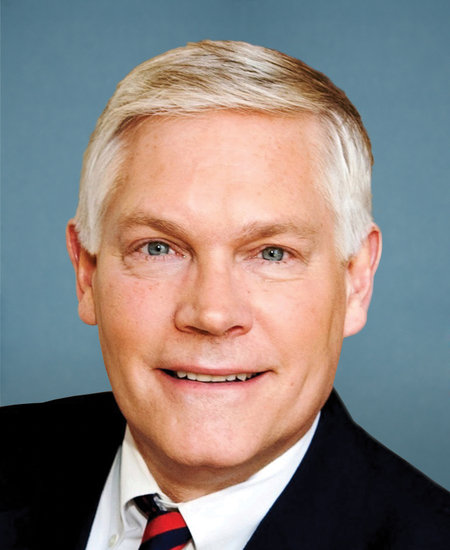
Rep. Pete Sessions
Sponsored bills
Maddy summaryThis bill names the Department of Veterans Affairs community-based outpatient clinic in Plano, Texas, as the "U.S. Congressman Sam Johnson Memorial VA Clinic." It changes the facility's official designation in all government documents, maps, and references, honoring the late Congressman Sam Johnson. The bill does not alter the clinic's services, funding, or operations - only its name. This is a ceremonial designation with no policy or programmatic impact.
Maddy summaryThe GSA Technology Accountability Act (HR 7524) requires the General Services Administration (GSA) to submit annual reports to Congress detailing how it spends funds on federal information technology programs. Specifically, it mandates that the GSA Administrator report on programs funded by the Federal Citizen Services Fund and Acquisition Services Fund, including program descriptions, funding amounts, project timelines, and reimbursement details. These reports must be submitted by September 30 each year and cover spending from the previous fiscal year or the past five years. The law directly affects GSA's management of federal IT spending by increasing transparency for Congress, without changing how funds are allocated or used.
Maddy summaryThe ELITE Vehicles Act (HR 10516) repeals three federal tax credits for electric vehicles: one for new clean vehicles (Section 30D), one for previously-owned clean vehicles (Section 25E), and one for commercial clean vehicles (Section 45W). It also removes tax credit eligibility for electric vehicle recharging infrastructure under Section 30C. These changes take effect 30 days after the bill’s enactment, eliminating tax benefits for individuals and businesses purchasing or contracting for eligible electric vehicles or charging equipment after that date. The bill directly affects consumers, dealers, and manufacturers who previously claimed these credits.
Maddy summaryThis bill requires federal financial regulators to coordinate with state insurance regulators before collecting data from insurance companies, ensuring they first check if the data is already available through state agencies or public sources. It strengthens confidentiality protections by preventing the sharing of nonpublic data with federal regulators from waiving existing privacy rights under federal or state law. Insurance companies and state regulators are directly affected, as the law governs how data is shared between federal financial regulators and state agencies. The bill modifies existing rules to streamline data collection while maintaining privacy safeguards.
Maddy summaryHR 10476, the "End Airline Extortion Act," prohibits airlines from giving financial incentives to employees or contractors for requiring passengers to pay extra fees (like for baggage, seating, or in-flight services) as a condition of boarding. It also bans airlines from charging different prices or fees for the same service based on protected characteristics, such as disability status or family situation. The bill defines "covered characteristics" using existing law and clarifies that policies allowing free or discounted travel for children do not violate these rules. This law directly affects airlines operating under U.S. Code Title 49 and passengers purchasing add-on services.
Maddy summaryHR 10498, the Mortgage Insurance Freedom Act, stops the collection of annual mortgage insurance premiums for homeowners with FHA-insured mortgages once the remaining loan balance (excluding the premium portion) falls to 78% or less of the home's original sales price or appraised value at purchase. This directly affects FHA mortgage borrowers who reach this 78% threshold, eliminating their annual insurance payments. The bill includes an exception if the Mutual Mortgage Insurance Fund's capital ratio drops below 2%, and requires the Secretary to create rules and provide outreach to help borrowers demonstrate eligibility for the premium halt. The change applies only to mortgages endorsed after the bill's enactment.
Maddy summaryHR 4428, the Guidance Clarity Act, requires federal agencies to include a specific statement on all guidance documents they issue. This statement must clearly state that the document has no legal force, does not bind the public or the agency, and is only for clarifying existing laws or policies. Agencies must display this statement prominently on the first page of such guidance, effective 30 days after the Office of Management and Budget issues implementing instructions. The bill directly affects federal agencies and the public receiving these documents, ensuring transparency about the non-binding nature of agency guidance.
Maddy summaryThis bill amends the Unfunded Mandates Reform Act of 1995 to strengthen requirements for federal agencies when creating regulations that impose costs on state, local, tribal governments or the private sector. It requires agencies to conduct detailed regulatory impact analyses for "major rules" (defined as rules with significant economic effects, such as annual costs of $100 million or more) before finalizing them, including analyzing costs and benefits of alternatives. The bill enhances consultation requirements with state, local, tribal governments and private sector entities, including small businesses, throughout the rulemaking process. Agencies must select the regulatory alternative that maximizes net benefits, and the Office of Information and Regulatory Affairs gains new oversight responsibilities to ensure compliance with these requirements.
Maddy summaryThe FOCA Act of 2023 requires federal agencies to stop mandating or banning contractor agreements with labor organizations (like union contracts) in construction project bids and contracts. It directly affects federal contractors, subcontractors, and agencies managing construction projects funded by the government. The bill prohibits favoring or penalizing contractors based on their labor affiliation status, aiming to promote fair competition and reduce costs. It also mandates updates to federal contracting rules within 60 days of enactment to implement these changes.