

Maddy summaryHR 2081, the Donut Dollies Congressional Gold Medal Act, authorizes a Congressional Gold Medal to honor the 627 women who served as Red Cross volunteers in the Supplemental Recreation Activities Overseas (SRAO) program during the Vietnam War. The bill directs the Treasury Secretary to design and strike the medal, which will be presented by Congress and then given to the Smithsonian Institution for display. It also allows the sale of bronze duplicates to cover costs, with proceeds going to the U.S. Mint fund. This commemorative act recognizes the volunteers' service supporting over 280,000 troops through recreation programs across Vietnam from 1965 to 1973.
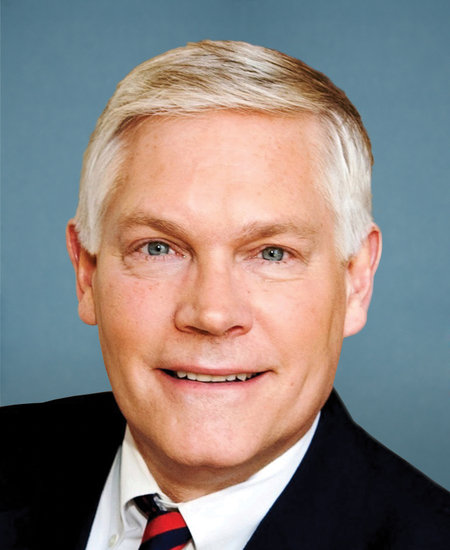
Rep. Pete Sessions
Sponsored bills
Maddy summaryThis bill changes how individual investors in mutual funds (regulated investment companies) are taxed on certain dividends. It allows investors to defer paying tax on capital gain dividends that are automatically reinvested in additional fund shares through a dividend reinvestment plan. The deferred tax is recognized later when the investor sells shares or upon their death. It also establishes that shares acquired through this reinvestment are treated as held for over one year from the start, potentially qualifying for long-term capital gains rates. The rule applies only to individual investors (not estates, trusts, or dependents claimed by others).
This bill designates the facility of the United States Postal Service located at 620 East Pecan Boulevard in McAllen, Texas, as the "Agent Raul H. Gonzalez Jr. Memorial Post Office Building".
Maddy summaryHR 471, the Fix Our Forests Act, establishes a new system for identifying and managing high-risk wildfire areas called "firesheds" and creates a centralized Fireshed Center to coordinate wildfire risk management across federal agencies. The bill streamlines environmental reviews for wildfire risk reduction projects, allowing for faster implementation of hazardous fuels management activities in designated areas. It includes provisions for community wildfire risk reduction programs, water source protection, and specific initiatives for restoring white oak forests. The legislation also includes litigation reforms to expedite forest management projects and reduce delays from legal challenges. These provisions aim to reduce wildfire risk and improve forest health through more coordinated, data-driven management approaches.
Maddy summaryThis bill expands Medicare's definition of "rural emergency hospital" to allow certain closed rural hospitals to rejoin the program. Specifically, it creates a new eligibility category for facilities that were critical access hospitals or rural hospitals (under Section 1886(d)) in rural counties, ceased operations between January 2014 and December 2020, and submit an application to become rural emergency hospitals. The bill modifies Medicare payment rules to provide specific adjustments for these reactivated facilities, including distance requirements (e.g., hospitals within 35 miles of another hospital won't receive immediate payment increases). The changes take effect January 1, 2027, directly affecting rural hospitals that closed during the specified period and wish to rejoin Medicare.
Maddy summaryThis bill nullifies specific Department of Housing and Urban Development (HUD) rules and notices related to "Affirmatively Furthering Fair Housing," including the 2015 final rule, 2021 interim rule, and 2023 proposed rule, as well as a 2015 notice about housing disparity assessments. It prohibits federal funding for a geospatial database tracking racial disparities in housing access or community housing inequities. The bill requires HUD to consult with state, local, and public housing agency officials to develop recommendations for fair housing implementation, mandating consensus-based reporting and public comment periods. This directly affects local governments, state housing officials, and public housing agencies by limiting federal oversight of local zoning decisions and housing policy enforcement.
Maddy summaryHR 1787 authorizes the U.S. Mint to produce commemorative coins honoring baseball legend Roberto Clemente, including $5 gold, $1 silver, and half-dollar coins, with specific specifications for weight, size, and metal content. The bill requires the coins to feature Clemente's image and commemorative inscriptions, and mandates a surcharge ($35 for gold, $10 for silver, $5 for half-dollar) paid to the Roberto Clemente Foundation for its educational, youth sports, and disaster relief programs. All coins must be minted in 2027, sold at face value plus surcharge and production costs, and will be legal tender. The bill focuses solely on the coin program, not broader policy changes.
Federal Firearms Licensee Protection Act of 2025 This bill modifies criminal penalties for an offense involving the theft of a firearm from a licensed importer, manufacturer, or dealer, or from their business premises. Specifically, the bill does the following: increases from 10 to 20 years the maximum prison term, and creates a 3- or 5-year mandatory minimum prison term for an offense that occurs during the commission of a burglary or robbery. An attempt to commit an offense is subject to the same penalties as a substantive offense.
Maddy summaryHR 1383 extends the Secure Rural Schools program, which provides payments to counties and states with federal land (like national forests) to support local schools and services. It reauthorizes these payments through fiscal year 2026, adding specific rules to ensure counties don’t receive duplicate payments for 2024 and 2025. The bill also extends related authorities for special projects on federal land and county fund expenditures through 2028-2029. This directly affects rural communities adjacent to federal lands that rely on these payments for education and infrastructure.
Maddy summaryHR 620, the FARM Act, expands the Committee on Foreign Investment in the United States (CFIUS) to review foreign investments in U.S. agriculture. It requires CFIUS to assess transactions where foreign entities gain control of U.S. agricultural businesses (including those using agricultural products defined under 7 U.S.C. 451) and adds agricultural supply chains to the list of critical infrastructure and critical technologies. The bill mandates annual reports from the Secretary of Agriculture and the Comptroller General to Congress, detailing foreign investments in U.S. agriculture, potential threats to supply chains, and espionage risks targeting agricultural research or data. This directly affects foreign investors seeking to acquire U.S. agricultural assets and reshapes CFIUS review processes for the sector.