

Maddy summaryHR 3230 raises asset thresholds for certain financial regulations, directly affecting mid-sized banks with assets between $10 billion and $50 billion. The bill increases the $10 billion asset limit to $50 billion for several key regulations, including Consumer Financial Protection Bureau supervision, Volcker Rule restrictions, Qualified Mortgage requirements, and leverage/risk-based capital rules. This change would exempt larger banks (those with $50 billion or more in assets) from these specific regulations, while smaller banks remain subject to the rules. The bill modifies existing provisions without creating new requirements, solely adjusting the asset-based triggers for regulatory applicability.
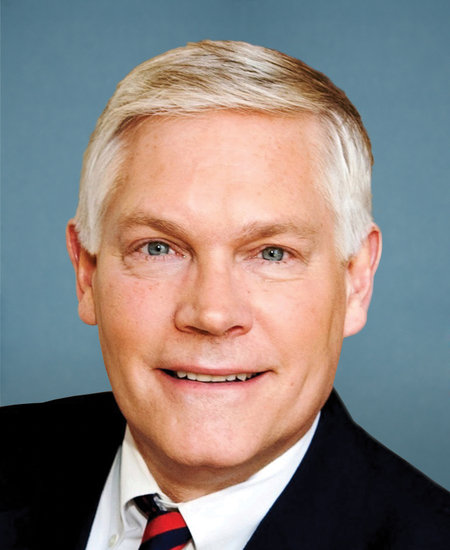
Rep. Pete Sessions
Sponsored bills
Maddy summaryThe FIRM Act (HR 2702) prohibits federal banking agencies from considering "reputational risk" in supervising banks and credit unions. It requires agencies to remove all references to reputational risk - defined as concerns about negative publicity affecting an institution's reputation - from regulations, examinations, and enforcement actions. The bill directly affects depository institutions (banks and credit unions) and federal regulators like the FDIC and CFPB, banning them from using reputational risk as a basis for supervision or enforcement. This policy change aims to limit regulatory actions based on subjective public opinion rather than financial safety and soundness.
Maddy summaryHR 3824, the Reducing Regulatory Burdens Act of 2025, removes a requirement for permits under the Clean Water Act for discharges of authorized pesticides into navigable waters. It amends the Federal Insecticide, Fungicide, and Rodenticide Act (FIFRA) and the Clean Water Act to state that EPA or states cannot mandate a permit for pesticide discharges resulting from legally authorized applications. The bill specifically exempts discharges from violations of pesticide law, stormwater, industrial manufacturing effluent, treatment works, and vessel operations. This directly affects pesticide users (like farmers) and regulatory agencies by eliminating a permitting step for routine pesticide applications already approved under FIFRA.
Maddy summaryH.J. Res. 87 (Public Law 119-15) is a congressional disapproval resolution that prevents an Environmental Protection Agency (EPA) rule from taking effect. The rule, submitted by the EPA on April 6, 2023 (88 Fed. Reg. 20688), related to California’s authority to enforce stricter vehicle emission standards, including for heavy-duty trucks, zero-emission airport shuttles, and advanced clean truck requirements. By disapproving this rule, Congress blocks California from implementing these specific pollution controls under its existing waiver authority. This directly affects California’s ability to regulate motor vehicle emissions independently, as the rule would have allowed the state to enforce its own standards beyond federal requirements.
Maddy summaryH.J.Res. 88 disapproves an Environmental Protection Agency (EPA) rule that would have allowed California to enforce its "Advanced Clean Cars II" vehicle emission standards. This rule, submitted by the EPA on January 6, 2025, sought to grant California a waiver to override federal preemption for its stricter vehicle pollution controls. The resolution, passed by Congress and signed into law on June 12, 2025, formally nullifies the EPA rule, preventing California from implementing its Advanced Clean Cars II program under this specific waiver. The bill directly affects California's ability to set its own vehicle emission standards for passenger cars and light trucks.
Maddy summaryHR 3981 would grant a federal charter to the Veterans Association of Real Estate Professionals (VAREP), a California-based nonprofit already recognized as a veterans service organization under IRS rules. This charter would formalize VAREP's status as a federally chartered entity under Title 36 of the U.S. Code, requiring it to maintain its tax-exempt status under the IRS Code to keep the charter. The bill outlines VAREP's purposes, including advocating for veterans' homeownership, providing financial literacy education, offering housing counseling, and connecting real estate professionals with veterans' needs, while prohibiting political activities, stock issuance, or profit distribution. This is a procedural bill focused on organizational structure, not policy changes.
Maddy summaryThis bill would make non-citizens deportable if they incite or participate in riots during civil unrest involving assaults on law enforcement or military personnel, or destruction of public property, and who were unlawfully present, had DACA, or were lawful permanent residents at the time of the offense. It permanently bars such individuals from reentering the U.S. or accessing any relief from deportation, including asylum, cancellation of removal, or future DACA benefits. During declared emergencies (such as national disasters or state emergencies), the law mandates expedited removal and mandatory detention for those covered, with no discretion for enforcement.
Maddy summaryThe SKIM Act (HR 3810) increases penalties for fraud involving counterfeit access devices like credit cards. It requires the U.S. Sentencing Commission to raise fraud offense levels by 4 points (minimum level 14) and count all unauthorized charges from 10+ counterfeit devices toward total losses. The bill also mandates a 90-day report to Congress from the Attorney General and DHS, detailing law enforcement coordination, fraud technologies, assistance requests, and recommendations for combating such fraud. This directly affects federal courts (through sentencing changes), law enforcement agencies, and businesses vulnerable to access device fraud.
Maddy summaryHRES 475 (June 4, 2025) is a non-binding resolution that formally recognizes "Family Month" and ends the House of Representatives' recognition of Pride Month. It directs the House to "recognize the benefit of marriage and family" while stating it "no longer recognizes Pride Month," citing the resolution's view that traditional nuclear families are essential to society. The resolution does not create new laws or policies but changes the House's official acknowledgment of months. It specifically targets the House's ceremonial recognition, not federal law or programs affecting citizens. This is a symbolic procedural action with no direct impact on legislation or constituents.
Maddy summaryThis bill amends the Ysleta del Sur Pueblo and Alabama-Coushatta Indian Tribes of Texas Restoration Act to align their gaming regulations with the standard Indian Gaming Regulatory Act (IGRA). It eliminates redundant language that previously created an exception for these two tribes, ensuring they are regulated identically to all other tribes operating gaming facilities on tribal lands. The key provision adds a "Rule of construction" requiring IGRA to fully apply to their gaming activities and removes two sections (107 and 207) that caused regulatory overlap. This directly affects the Ysleta del Sur Pueblo and Alabama-Coushatta tribes in Texas, removing their unique regulatory status. The change ensures consistent federal oversight for tribal gaming across all 28 states with regulated tribal casinos.