

John R. Lewis Voting Rights Advancement Act of 2021 This bill establishes new criteria for determining which states and political subdivisions must obtain preclearance before changes to voting practices may take effect. Preclearance is the process of receiving preapproval from the Department of Justice (DOJ) or the U.S. District Court for the District of Columbia before making legal changes that would affect voting rights. A state and all of its political subdivisions shall be subject to preclearance of voting practice changes for a 10-year period if 15 or more voting rights violations occurred in the state during the previous 25 years; 10 or more violations occurred during the previous 25 years, at least 1 of which was committed by the state itself; or 3 or more violations occurred during the previous 25 years and the state administers the elections. A political subdivision as a separate unit shall also be subject to preclearance for a 10-year period if three or more voting rights violations occurred there during the previous 25 years. States and political subdivisions that meet certain thresholds regarding minority groups must preclear covered practices before implementation, such as changes to methods of election and redistricting. Further, states and political subdivisions must notify the public of changes to voting practices. Next, the bill authorizes DOJ to require states or political subdivisions to provide certain documents or answers to questions for enforcing voting rights. The bill also outlines factors courts must consider when hearing challenges to voting practices, such as the extent of any history of official voting discrimination in the state or political subdivision.
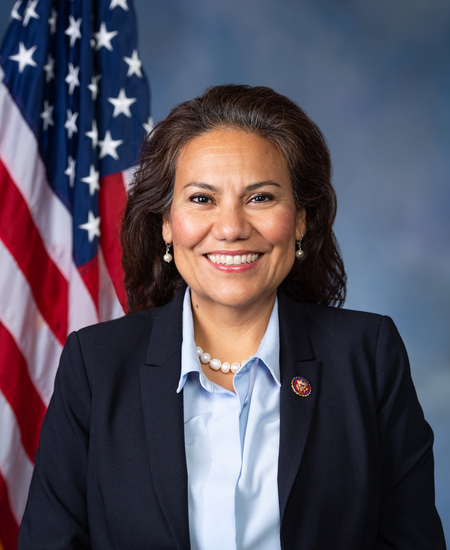
Rep. Veronica Escobar
Sponsored bills
This resolution expresses the sense of the House of Representatives that the United States shall recognize kind actions in our country, encourage kindness, spread love, and foster a culture of being kind to one another.
This resolution calls on all Americans to observe the 20th anniversary of the September 11 attacks and honor those who lost their lives.
Federal Acquisition E-Commerce Fairness and Competition Act This bill requires the General Services Administration (GSA) to expand the testing program for e-commerce portal models. Specifically, the GSA must (1) expand the proof-of-concept testing program by testing at least three commercial e-commerce portal models, including the E-Commerce Model, the E-Procurement Model, and the E-Marketplace Model (as described in a GSA implementation plan published in March 2018), to ensure that such program is representative of available commercial e-commerce portal models that qualify for the program; and (2) report to Congress. The GSA must ensure that a commercial e-commerce portal provider awarded a contract that is owned or controlled by a person or entity with a market capitalization greater than $600 billion at any time in the two years preceding this bill's enactment (e.g., Amazon) does not sell products through the commercial e-commerce portal that compete with products sold by any third-party supplier through such portal.
Protecting Benefits for Disabled Veterans Act of 2021 This bill provides statutory authority for the Department of Veterans Affairs (VA) to assign, for purposes of the disability compensation program, a disability rating of total to a veteran who meets certain parameters and is unable to secure or maintain substantially gainful employment due to a service-connected disability. Specifically, the VA may make such a disability determination if a veteran has a service-connected disability rated at least 60%, or has two or more service-connected disabilities with one being at least 40% and a combined total of at least 70%. The VA may also make a determination on the disability rating in circumstances where a veteran meeting the specified parameters maintains marginal employment (income is less than the poverty threshold), or if the veteran maintains substantially gainful employment (exceeds the poverty threshold) and the VA determines that the rating is appropriate. The bill prescribes what disabilities may be considered as one disability (e.g., disabilities incurred or aggravated as a prisoner of war). The VA may not consider the age of a veteran or eligibility for retirement benefits when making any determination related to disability rating.
Medicare Negotiation and Competitive Licensing Act of 2021 This bill establishes several requirements relating to the prices of prescription drugs. Specifically, the bill requires the Centers for Medicare & Medicaid Services (CMS) to negotiate with pharmaceutical companies regarding prices for drugs covered under Medicare. (Current law prohibits the CMS from doing so.) If the CMS is unable to negotiate the price of a drug, such drug is subject to competitive licensing in order to further its sale under health insurance programs, notwithstanding existing government-granted exclusivities. The negotiated prices also apply to other federal health care programs, private health insurance, and the uninsured; pharmacies that charge more than the negotiated price for uninsured individuals are subject to civil penalties. Manufacturers must also comply with specified reporting requirements relating to prices and licensing, subject to civil penalties. The bill also institutes an excise tax on drugs for which the price spikes beyond a certain limit, subject to specified exemptions, as well as on drugs for which the price exceeds the negotiated price.
This bill designates the community-based outpatient clinic of the Department of Veterans Affairs in San Angelo, Texas, as the Colonel Charles and JoAnne Powell VA Clinic.
Improving Medicare Coverage Act This bill temporarily expands eligibility for Medicare. It also temporarily establishes a premium and cost-sharing assistance program for low-income beneficiaries. Specifically, the bill lowers the age of eligibility for Medicare from 65 to 60. The Centers for Medicare & Medicaid Services must establish procedures to provide for automatic enrollment of qualifying individuals. Enrollment must be completed within 11 months of the bill's enactment. The bill also establishes a program under Medicare to assist low-income Medicare beneficiaries with premiums, coinsurance, deductibles, and other costs. Currently, such assistance is provided through Medicare Savings Programs, which are administered by state Medicaid programs. The bill also establishes a related special enrollment period under Medicare, expands eligibility for assistance to beneficiaries with income up to 200% of the federal poverty line, and provides for joint eligibility determinations with respect to the bill's program and the low-income subsidy program under the Medicare prescription drug benefit. The bill's provisions generally take effect six months after the bill's enactment and terminate five years later.
Prohibition of Medicaid Funding for Conversion Therapy Act This bill prohibits state Medicaid programs from covering conversion therapy. The bill defines conversion therapy as any practice or treatment that seeks to change a person's sexual orientation or gender identity in exchange for monetary compensation.
Military Justice Transparency Act This bill requires the Department of Defense (DOD) to take specified actions to further detect and address racial, ethnic, and gender disparities in the military justice system. Specifically, DOD must require each military department to record the race, ethnicity, and gender of the victim and the accused for each investigation of an offense under the Uniform Code of Military Justice (UCMJ); record the race ethnicity, and gender of each individual against whom non-judicial punishment is imposed under the UCMJ and set forth information separately for each type of non-judicial punishment imposed; record the race, ethnicity, and gender of each individual convicted in a court-martial and set forth such information separately by the type of court-martial, the offense involved, and the case outcome; and publish specified data in the annual military justice reports. Not later than 30 days after the date on which the annual military justice reports for FY2022 have been submitted, DOD must brief Congress on its strategy to detect and address racial, ethnic, and gender disparities in the military justice system. The Government Accountability Office (GAO) must report on its findings regarding racial disparities in the military justice system, any steps being taken by DOD to address such disparities, and the status of implementation by each military department of recommendations set forth in the GAO report titled Military Justice: DOD and the Coast Guard Need to Improve Their Capabilities to Assess Racial and Gender Disparities (GAO-19-344).