

American Families United Act This bill authorizes the Department of Homeland Security (DHS) or the Department of Justice (DOJ) to exercise discretion in certain immigration cases. The bill also removes certain requirements related to birthright citizenship. Under this bill, DOJ or DHS may, on a case-by-case basis, exercise discretion by declining to remove an alien or bar an alien from entering the United States to prevent hardship for the alien's U.S. citizen spouse, parent, or child. However, DOJ or DHS may not exercise this discretion if the alien is removable or inadmissible due to certain grounds, including specified crime- and security-related grounds. The bill also removes certain requirements related to birthright citizenship for a child born outside of the United States to one U.S. citizen parent and one alien parent. Specifically, the bill removes a provision that requires the U.S. citizen parent to be physically present in the United States for at least five years before the child's birth in order for the child to acquire U.S. citizenship at birth.
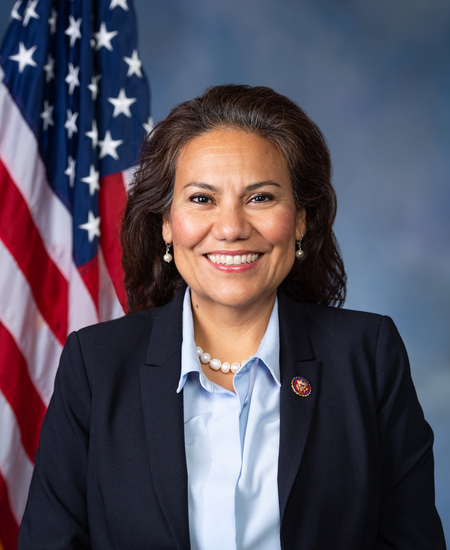
Rep. Veronica Escobar
Sponsored bills
Equal Access to Justice for Victims of Gun Violence Act of 2022 This bill removes limitations on the civil liability of gun manufacturers and the disclosure of gun trace data in civil actions. Specifically, the bill repeals the Protection of Lawful Commerce in Arms Act, which prohibits civil actions against a firearm or ammunition manufacturer, seller, importer, dealer, or trade association for damages resulting from the criminal or unlawful misuse of a firearm. Additionally, the bill states that firearms trace data maintained by the Bureau of Alcohol, Tobacco, Firearms and Explosives is not immune from legal process. Such data is subject to discovery; is admissible as evidence; and may be used, relied on, or disclosed in a civil action or administrative proceeding.
Right to Contraception Act This bill sets out statutory protections for an individual's right to access and a health care provider's right to provide contraception and related information. Contraception refers to an action taken to prevent pregnancy, including the use of contraceptives (i.e., a device or medication used to prevent pregnancy), fertility-awareness based methods, and sterilization procedures. Generally, the bill prohibits measures that single out and impede access to contraception and related information. However, a party may defend against a claim that a measure violates the bill's prohibitions by demonstrating, through clear and convincing evidence, that the measure significantly advances access to contraception and cannot be achieved through less restrictive means. The Department of Justice, individuals, or health care providers may bring a lawsuit to enforce this bill, and states are not immune from suits for violations.
Maddy summaryHRES 1235 is a non-binding resolution designating the third week of July as "Latino Conservation Week." It recognizes the Latino community's engagement with outdoor activities and conservation efforts, while highlighting statistics showing Latinos' strong support for protecting natural resources and public lands. The resolution does not create new policies or programs but formally supports this annual observance, which encourages community events like park cleanups and educational outings on public lands. It was introduced in the House on July 20, 2022, by Representatives Barragán, Espaillat, and others.
Reproductive Health Travel Fund Act of 2022 This bill authorizes the Department of Health and Human Services to award grants to pay for travel, childcare, and other expenses of an individual seeking access to abortion services. Eligible grant recipients must be nonprofit or community-based organizations that assist individuals seeking abortion services through programs that are unbiased and medically and factually accurate. The grants may not be used to pay for abortion procedures.
Ensuring Women's Right to Reproductive Freedom Act This bill prohibits anyone acting under state law from interfering with a person's ability to access out-of-state abortion services. ( Abortion services includes the use of any drugs that are approved to terminate pregnancies and any health care services related to an abortion, whether or not provided at the same time or on the same day.) Specifically, the bill prohibits any person acting under state law from preventing, restricting, impeding, or retaliating against health care providers who provide legal abortion services to out-of-state residents, any person or entity who helps health care providers to provide such services, any person who travels to another state to obtain such services, any person or entity who helps another person travel to another state to obtain such services, or the movement in interstate commerce of drugs that are approved to terminate pregnancies. The Department of Justice may enforce this bill through civil actions; the bill also establishes a private right of action for violations.
Women's Health Protection Act of 2022 This bill prohibits governmental restrictions on the provision of, and access to, abortion services. Specifically, governments may not limit a provider's ability to prescribe certain drugs, offer abortion services via telemedicine, or immediately provide abortion services when the provider determines a delay risks the patient's health. Furthermore, governments may not require a provider to perform unnecessary medical procedures, provide medically inaccurate information, comply with credentialing or other conditions that do not apply to providers whose services are medically comparable to abortions, or carry out all services connected to an abortion. In addition, governments may not (1) require patients to make medically unnecessary in-person visits before receiving abortion services or disclose their reasons for obtaining such services, or (2) prohibit abortion services before fetal viability or after fetal viability when a provider determines the pregnancy risks the patient's life or health. The bill also prohibits other governmental measures that are similar to the bill's specified restrictions or that otherwise single out and impede access to abortion services, unless a government demonstrates that the measure significantly advances the safety of abortion services or health of patients and cannot be achieved through less restrictive means. The Department of Justice, individuals, or providers may bring a lawsuit to enforce this bill, and states are not immune from suits for violations. The bill applies to restrictions imposed both prior and subsequent to the bill's enactment.
Active Shooter Alert Act of 2022 This bill requires a designated officer of the Department of Justice to act as the national coordinator of an Active Shooter Alert Communications Network regarding an emergency involving an active shooter. The bill sets forth duties of the coordinator, including to work with state, tribal, and local governments to encourage coordination of various elements of the network. The coordinator must also encourage federal, state, local, and tribal government agencies to establish procedures for responding to active shooters. Finally, the bill requires the Government Accountability Office to study and report on state and local responses to active shooters and situations requiring the issuance of a public alert or warning.
This resolution expresses support for the designation of Journeyman Lineworkers Recognition Day. (A journeyman lineworker is a person who builds and maintains electrical power systems.)
Break Free From Plastic Pollution Act of 2021 This bill sets forth requirements and incentives to reduce the production of a variety of products and materials, including plastics, and increase efforts to collect, recycle, or compost products and materials. The bill makes certain producers of products (e.g., packaging, paper, single-use products, beverage containers, or food service products) fiscally responsible for collecting, managing, and recycling or composting the products after consumer use. In addition, the bill establishes (1) minimum percentages of products that must be reused, recycled, or composted; and (2) an increasing percentage of recycled content that must be contained in beverage containers. Beginning on January 1, 2023, the bill phases out a variety of single-use products, such as plastic utensils. The bill also sets forth provisions to encourage the reduction of single-use products, including by establishing programs to refund consumers for returning beverage containers and by establishing a tax on carryout bags. The bill creates a temporary moratorium on new or expanded permits for certain facilities that manufacture plastics until regulations are updated to address pollution from the facilities. The Environmental Protection Agency (EPA) must publish guidelines for a national standardized labeling system for recycling and composting receptacles. Producers must include labels on their products that are easy to read and indicate whether the products are recyclable, compostable, or reusable. The EPA must also ensure that certain clothes washers have filtration units as required by this bill. Finally, the bill establishes limitations on the export of plastic waste to other countries.