

Maddy summaryHR 2584, the SAVE Act, creates a new federal criminal offense for assaulting or intimidating hospital employees while they're performing their duties, punishable by up to 10 years in prison, with enhanced penalties for using weapons, causing injury, or during public emergencies. The bill authorizes $25 million annually in federal grants to hospitals for violence prevention programs, including staff training, security technologies like panic buttons and video surveillance, and coordination with law enforcement. It defines "hospital" broadly to include various medical facilities such as long-term care hospitals, rehabilitation facilities, and critical access hospitals. The legislation directly affects hospital workers and medical facilities by establishing federal criminal penalties for violence against employees and providing funding to improve workplace safety. The law aims to address the rising problem of workplace violence against healthcare workers, which the bill states has increased since 2011.
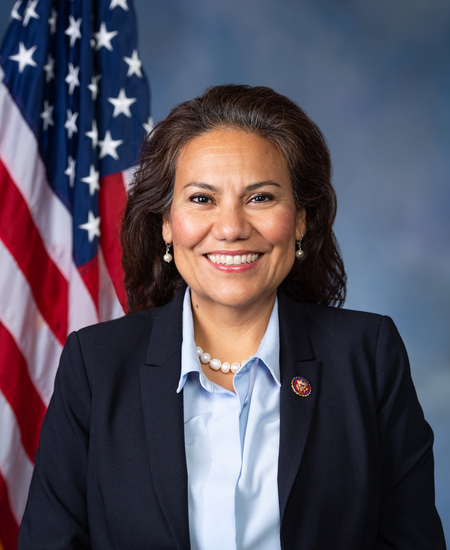
Rep. Veronica Escobar
Sponsored bills
Maddy summaryThe Family Violence Prevention and Services Improvement Act of 2023 amends the Family Violence Prevention and Services Act to improve services for victims of domestic violence, dating violence, and family violence. The bill authorizes $270 million annually for fiscal years 2024-2028, with specific allocations including 12.5% for Tribal grantees, 2.5% for culturally specific services, and funds for national hotlines and resource centers. It establishes a national domestic violence hotline, a National Indian Domestic Violence Hotline, and resource centers for Alaska Native and Native Hawaiian populations, requiring all services to be trauma-informed, culturally relevant, and accessible to underserved populations including racial and ethnic minorities, people with disabilities, and Tribal communities. The bill also mandates a study on financial stability support for survivors of domestic violence.
Maddy summaryHR 2439, the Ally’s Act, requires most private health insurance plans to cover hearing-related services and devices for qualifying individuals. It mandates coverage for cochlear implants, bone conduction devices, maintenance, upgrades every five years, hearing assessments, surgery, and rehabilitation, without separate cost-sharing or medical necessity reviews. This directly affects people with hearing loss who need implantable devices, as defined by a physician or audiologist. The law applies to group health plans under the Public Health Service Act, ERISA, and Internal Revenue Code, taking effect for plan years beginning January 1, 2025.
Resident Physician Shortage Reduction Act of 2023 This bill increases the number of residency positions eligible for graduate medical education payments under Medicare for qualifying hospitals, including hospitals in rural areas and health professional shortage areas. Current law provides for an increase of up to 200 positions per fiscal year beginning in FY2023, with a total increase of 1,000 positions; each hospital may receive up to 25 additional positions. Current law also provides for an additional increase of up to 200 positions for FY2026, with at least 100 of these positions for psychiatry or related specialties; each hospital may receive up to 10 additional positions. The bill provides for an additional increase of 2,000 positions per fiscal year from FY2025-FY2031; during this period, each hospital may receive up to 75 additional positions in total under the bill and current law. Additionally, one-third of the positions that are made available under the bill must be allocated to hospitals that are already operating above applicable resident limits. The bill also requires the Government Accountability Office to report on strategies to increase the diversity of the health professional workforce, including with respect to representation from rural, low-income, and minority communities.
Maddy summaryThe Women's Health Protection Act of 2023 would protect access to abortion services by prohibiting states from imposing restrictions that are more burdensome than those for comparable medical procedures. The bill would ensure people can obtain abortion services before fetal viability without unnecessary limitations like mandatory waiting periods or biased counseling, and after viability when necessary to protect the patient's life or health. It would preempt state laws that conflict with these protections and allow for civil enforcement actions to challenge restrictive state laws. This bill directly affects people seeking abortion services (including transgender and nonbinary individuals who can become pregnant), health care providers, and states that have implemented abortion restrictions.
Maddy summaryThis bill amends the law governing Basic Allowance for Housing (BAH) for uniformed service members stationed in the U.S. It changes the calculation method so that BAH amounts must equal the actual monthly cost of adequate housing in each location, as determined by the Secretary of Defense. This directly affects active-duty service members and their families who receive BAH for housing. The key provision replaces the previous formula with a requirement that BAH payments match local housing costs for members in the same pay grade and dependency status. The change ensures BAH reflects current housing expenses rather than an older calculation method.
Maddy summaryHR 1465, "Violet’s Law," requires federal research facilities to establish standards for placing eligible animals (dogs, cats, primates, guinea pigs, hamsters, rabbits) no longer needed for research with animal rescue organizations, sanctuaries, shelters, or individuals. Federal departments and agencies operating such facilities must create these placement standards within one year of the law's enactment. The law mandates that animals must be vet-certified as healthy (free of infectious disease or physical issues) before placement and prohibits facilities from using animals for commercial trade, breeding, or public exhibitions. This policy directly affects federal research facilities and aims to provide permanent homes for research animals through defined, safe pathways.
Maddy summaryHCONRES 32 is a symbolic resolution supporting International Transgender Day of Visibility, introduced in the U.S. House of Representatives on March 30, 2023. It encourages Americans to observe the day through ceremonies and activities, celebrates transgender achievements, and recognizes the community's fight for dignity amid ongoing discrimination and anti-trans legislation. The resolution does not create new laws or policies - it is a non-binding statement of support, referencing over 700 anti-trans bills introduced in 2021-2023 that target education, healthcare, and identity documents. It directly acknowledges transgender individuals and their contributions without altering any legal rights or obligations.
Maddy summaryHRES 271 designates March 30, 2023, as "National Beauty and Wellness Education Appreciation Day" to recognize educators who train students for licensed careers in the beauty and wellness industry, including cosmetologists, estheticians, nail technicians, and massage therapists. The resolution highlights that these educators prepare graduates for in-demand occupations projected to grow 11-22% by 2031, supporting an industry generating over $100 billion in annual sales and employing 2.3 million workers. It emphasizes the role of state-licensed training programs in meeting industry demand and ensuring professionals meet health, safety, and technical standards. This is a ceremonial resolution with no new legal requirements or funding.
Maddy summaryHRES 273 is a symbolic House resolution supporting National Women's History Month for March 2023. It expresses the House's recognition of the goals and ideals of this annual observance, which honors women's historical contributions and the women's suffrage movement. The resolution specifically acknowledges women and organizations that promote teaching women's history and the suffrage movement. As a non-binding resolution, it does not create new laws or policies but serves as a formal acknowledgment of historical achievements.