

Maddy summaryThe Homeland Security Improvement Act establishes a Department of Homeland Security Border Oversight Commission with 30 members representing border communities, law enforcement, civil rights advocates, tribal officials, and other stakeholders to develop recommendations on border enforcement policies. It creates an Ombudsman for Border and Immigration-Related Concerns to handle complaints, investigate issues, and improve accountability for border enforcement activities. The bill mandates new training for border personnel on community relations, use of force policies, cultural awareness, and requires data collection on border stops and searches to improve transparency. These provisions aim to balance border security with protection of civil rights, privacy, and community concerns while holding border enforcement agencies accountable.
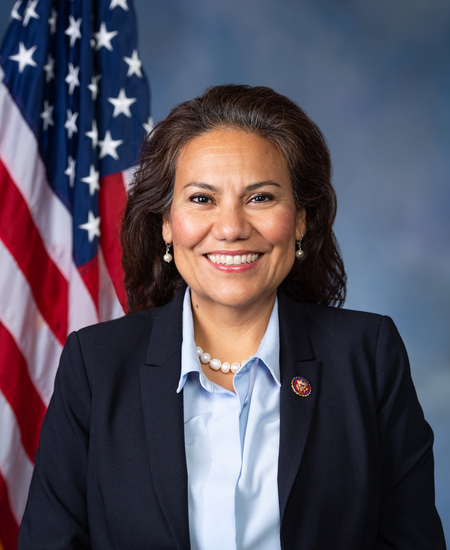
Rep. Veronica Escobar
Sponsored bills
Maddy summaryHR 10117 would authorize U.S. sanctions against foreign entities engaging in activities that worsen climate change or harm environmental defenders. It targets specific actions like building subcritical coal plants (defined as exceeding 880 kg CO2 per megawatt-hour), illegal deforestation, misrepresenting environmental impacts, or threatening environmental activists. Sanctions could include visa bans, asset freezes, and restrictions on financial transactions under existing Global Magnitsky authorities. The bill applies solely to foreign persons (not U.S. entities) and requires the President to use credible evidence before imposing penalties.
Maddy summaryThe Pharmacists Fight Back Act (HR 9096) sets new rules for Pharmacy Benefits Managers (PBMs) working with federal health care programs like Medicare Part D and Medicaid. It requires PBMs to reimburse in-network pharmacies at a rate covering the drug's actual cost plus a small fee (capped at $25), and to reduce patient cost-sharing by at least 80% of rebates received from drug manufacturers. The bill bans PBMs from steering patients to specific pharmacies, charging patients more than pharmacies are paid, or using rebates to lower pharmacy payments after claims are processed. It also mandates public reporting of drug pricing data to improve transparency, ensuring patients and pharmacies receive fairer treatment under federal health programs.
Maddy summaryHR 8796, the "Stop Comstock Act," removes outdated restrictions from federal law that previously banned the distribution of materials related to contraception and abortion as "obscene" or "indecent." The bill amends Title 18 and the Tariff Act by deleting references to "indecent," "immoral," "unlawful abortion," and "procuring abortion" from provisions governing obscene materials. It clarifies that the law only prohibits "obscene materials" in commerce, eliminating broad restrictions on reproductive health information. This directly affects internet platforms, healthcare providers, and individuals sharing reproductive health resources by removing legal barriers to their distribution.
Maddy summaryThe Climate Resilience Workforce Act establishes a coordinated federal system to build a workforce for climate resilience, directly affecting workers in climate-related sectors and prioritizing frontline communities (low-income, communities of color, Tribal communities) and populations facing employment barriers (undocumented individuals, formerly incarcerated people). Key mechanisms include grant programs for state and local climate resilience planning, job creation grants requiring 40% of jobs to go to frontline communities and populations facing barriers, and minimum labor standards including $15/hour wages (increasing annually), employer-paid health insurance, and protections against discrimination. The bill creates an Office of Climate Resilience, a Climate Resilience Equity Advisory Board, and a Center for the Climate Resilience Workforce to define climate resilience sectors and ensure equitable hiring practices. It also removes employment barriers through immigration status protections, criminal record reforms, and drug testing policy changes for climate resilience workers.
Maddy summaryThe Lowering Drug Costs for American Families Act expands Medicare's drug price negotiation program from 20 to 50 drugs, allowing the government to negotiate lower prices for these medications. It requires private health insurance plans and group health coverage to apply these negotiated prices to their members' cost-sharing for covered drugs, with plans able to opt out while publicly disclosing their decision. The bill also extends these negotiated prices to drugs covered by commercial insurance markets, not just Medicare. This would directly affect Medicare beneficiaries and people with private health insurance who take the negotiated drugs.
Maddy summaryThe Social Security 2100 Act would significantly enhance Social Security benefits for millions of Americans by increasing monthly payments for retirees, disabled workers, widows/widowers, and children. Key provisions include raising the minimum benefit for long-term low earners, improving cost-of-living adjustments using a more accurate index, eliminating the 5-month waiting period for disability benefits, and extending child benefits to age 26. The bill also changes how Social Security taxes are calculated by applying them to income above $400,000 and establishes a unified Social Security Trust Fund to manage program finances. Most provisions would apply to benefits payable from 2025 through 2034, affecting all current and future Social Security beneficiaries.
Maddy summaryThe Abortion Justice Act of 2023 would establish $350 million in federal grants to support abortion access, including coverage for transportation, lodging, childcare, and direct care services. It would require health care facilities receiving federal funds to provide abortion care and mandate comprehensive coverage for abortion services in all health insurance plans, including Medicaid, Medicare, and private insurance. The bill would also remove barriers for immigrants seeking abortion care, clarify privacy protections for reproductive health information under HIPAA, and prohibit immigration enforcement within 2,000 feet of health care facilities. These provisions would directly affect people seeking abortion care, health care providers, and immigrant communities across the United States.
Maddy summaryThe LIFT the BAR Act removes barriers preventing lawfully present noncitizens from accessing federal benefits like food assistance, Medicaid, and school meals. It repeals specific 1996 welfare law provisions that excluded noncitizens and updates terminology to replace "alien" with "noncitizen" throughout federal law. The bill expands eligibility to include noncitizens in categories such as Deferred Action for Childhood Arrivals (DACA) recipients, individuals with special immigrant juvenile status, and those with pending U-visa applications. This change ensures more noncitizens lawfully present in the U.S. can access essential services without being denied based on immigration status.
Maddy summaryThe Menstrual Equity For All Act of 2023 requires free menstrual products to be available at no cost in public schools, colleges, correctional facilities, and federal buildings. It makes menstrual products covered by Medicaid, prohibits taxes on these products, and provides funding through social services programs to help low-income individuals access menstrual products. The bill directly affects students (K-12 and college), incarcerated people, homeless individuals, employees (in businesses with 100+ workers), Medicaid beneficiaries, and people receiving Temporary Assistance for Needy Families (TANF). Key provisions include amending school funding to require free products, creating college grant programs for menstrual product distribution, and adding menstrual products to Medicaid coverage and social services programs.