

Maddy summaryThe Tax Fairness for Workers Act (HR 2671) would allow certain employees to deduct work-related expenses directly from their gross income. Specifically, it creates an above-the-line deduction for union dues (amending IRC Section 62(a)(1)) and reinstates a deduction for other out-of-pocket work costs like uniforms or tools (amending IRC Section 67(g)), effective for 2025 tax years. This directly affects union members and workers with significant job-related expenses who previously could not deduct these costs. The bill removes the prior limitation that barred these deductions, making them available without needing to itemize. The policy change simplifies tax filing for affected workers by treating these expenses as deductible business costs.
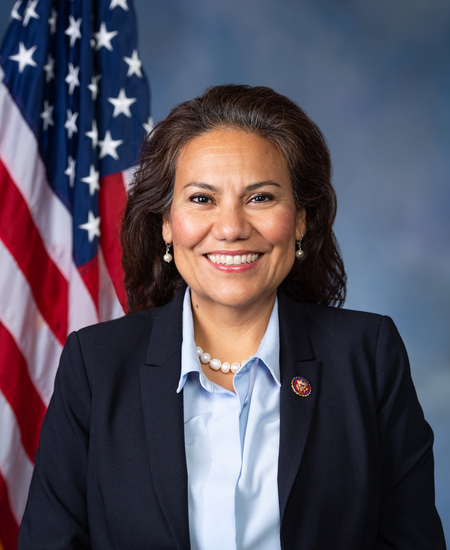
Rep. Veronica Escobar
Sponsored bills
Maddy summaryThis bill, HR 2253 (Puppy Protection Act of 2025), sets new federal standards for commercial dog dealers who sell puppies to the public. It requires specific housing sizes based on dog size (e.g., 12-30 square feet per dog), daily exercise in safe outdoor areas, clean water and nutritious food twice daily, and annual veterinary exams including dental checks. The bill also limits breeding frequency (max 2 litters in 25 months), sets age minimums for breeding (18 months for small dogs, 2 years for large dogs), and mandates health screenings to prevent genetic diseases. These requirements apply directly to commercial dealers, with final regulations to be issued within 18 months of enactment.
Maddy summaryThis bill, HR 2102 (Major Richard Star Act), allows veterans with combat-related disabilities to receive both full military retired pay and veterans' disability compensation simultaneously, without the previous offset that reduced retired pay. It directly affects veterans already eligible for both benefits due to combat-related injuries, removing the requirement that their retired pay be reduced by the disability compensation amount. The key provision amends Title 10 and Title 38 to eliminate the offset rule (sections 5304 and 5305 of Title 38) for these veterans. The change applies to payments starting after the bill’s enactment date, effective for all qualifying veterans. This is a policy change to increase financial support for affected veterans, not a new benefit.
Maddy summaryThe IDEA Full Funding Act (HR 2598) mandates specific annual federal funding levels for the Individuals with Disabilities Education Act (IDEA), directly affecting schools and students with disabilities nationwide. It requires the federal government to appropriate either a fixed dollar amount or a specified percentage (increasing annually from 4.5% to 40%) of a calculated total - based on the number of eligible students and average per-pupil costs - starting in fiscal year 2026 through 2035. The bill sets clear, escalating funding targets, with the higher of two calculated amounts (dollar figure or percentage) becoming available for obligation each fiscal year. This establishes a binding financial commitment to address long-standing underfunding of special education services under IDEA.
Maddy summaryHR 2587, the Youth Mental Health Research Act, establishes a new NIH research initiative to coordinate studies on youth mental health across federal health institutes. It focuses on two key areas: researching community resilience and early intervention strategies for at-risk youth, and improving how mental health services are delivered in schools, communities, and other settings where young people spend time. The bill authorizes $100 million annually for fiscal years 2025 through 2030 to fund this research. This initiative directly supports future evidence-based approaches to youth mental health, without altering current services or directly affecting individuals.
Maddy summaryThis symbolic resolution (HCONRES 23) expresses Congress's support for International Transgender Day of Visibility, observed annually on March 31. It encourages Americans to recognize and celebrate transgender community achievements while acknowledging ongoing challenges like discrimination in employment, healthcare, and public accommodations. The resolution does not create new laws or policies but formally endorses the day's purpose through non-binding statements of support and recognition. It directly affects the broader public by promoting awareness and respect for transgender individuals' rights and contributions.
Maddy summaryHJRES 83 is a joint resolution seeking congressional disapproval of a specific proposed U.S. military sale to Israel. It directly targets the sale of 35,529 MK 84 or BLU-117 general-purpose bomb bodies and 4,000 I-2000 Penetrator warheads, as detailed in a March 2025 government transmittal. If passed, the resolution would prohibit the U.S. government from proceeding with this particular foreign military sale under the Arms Export Control Act. The bill affects the executive branch's ability to authorize the sale and Israel as the intended recipient of these defense articles.
Maddy summaryHRES 275 is a non-binding resolution supporting Social Work Month and World Social Work Day on March 18, 2025. It recognizes the contributions of social workers - nearly 728,000 professionals nationwide - who provide critical services in healthcare, mental health, education, disaster response, and community support. The resolution does not create new policies or funding but formally acknowledges their role in advancing community well-being, social justice, and addressing issues like mental health, veteran care, and poverty. It encourages public awareness activities but has no direct impact on legislation or affected individuals.
Maddy summaryThe Heating and Cooling Relief Act (HR 2486) expands the Low-Income Home Energy Assistance Program (LIHEAP) to help low-income households struggling with energy costs. It increases funding to cover all eligible households (those with incomes up to 250% of poverty level or 80% of State median income), sets a goal that no household should spend more than 3% of income on energy, and requires states to operate assistance programs year-round. The bill includes new protections against utility shutoffs for 2 years after assistance is received, prohibits late fees during the 6 months following assistance, and mandates weatherization and energy efficiency improvements in low-income housing. It also requires states to develop extreme heat response plans and addresses the $21 billion in residential utility arrears as of September 2024.
Maddy summaryHR 2485, the Arts Education for All Act, requires states and school districts to integrate arts education into K-12 curricula and report on its availability. It mandates states to describe how they will support arts courses, increase certified arts educators (especially in high-need schools), and use arts to enhance teaching in core subjects like math and science (Section 202). Schools must track and report on arts course offerings, teacher qualifications, and student access - including disaggregated data by school poverty levels (Section 203). The bill also expands arts access in juvenile justice programs (Section 301) and funds research on effective arts education methods (Section 401). It directly affects public schools, arts educators, and youth in after-school and correctional settings.