

Maddy summaryThe Affordable Connectivity Program Extension Act of 2024 allocates $7 billion in funding for the Affordable Connectivity Program (ACP) during fiscal year 2024. The ACP provides subsidies to low-income households to help cover the cost of internet service and connected devices like laptops or tablets. This funding ensures the program can continue supporting eligible households throughout the year, with the money remaining available until fully spent. The bill extends existing program funding without changing eligibility criteria or service requirements.
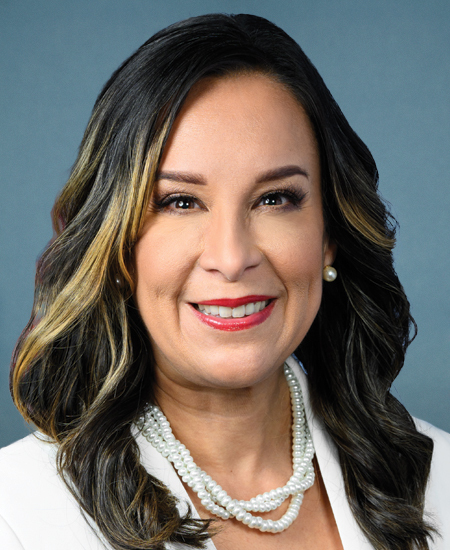
Rep. Monica De La Cruz
Sponsored bills
Maddy summaryHR 6941, the Criminalize Fleeing from Immigration Enforcement Act of 2024, would make it a federal crime for individuals to flee or evade law enforcement officers enforcing specific immigration laws, including unauthorized entry (INA §275), re-entry after deportation (INA §276), or document fraud (INA §274). It directly affects people who flee officers identified as enforcing these immigration provisions or flee immigration checkpoints. The bill would impose penalties of up to five years in prison or fines for fleeing, with up to eight years for fleeing in a vehicle exceeding the speed limit. This amendment to Title 18, U.S. Code, creates a new criminal offense without changing existing immigration enforcement procedures.
Maddy summaryHR 1147, the Whole Milk for Healthy Kids Act of 2023, allows schools participating in the National School Lunch Program to offer whole milk as an option during lunch. It amends the school lunch law to explicitly permit schools to serve flavored and unflavored whole milk alongside reduced-fat, low-fat, and fat-free milk choices for students. The bill also requires the Secretary of Agriculture to adjust meal regulations to account for saturated fat from whole milk, ensuring it doesn't count against meal fat limits. This change directly affects participating schools and the students who receive school lunches, expanding their milk beverage options.
Maddy summaryThis bill clarifies the Consumer Financial Protection Bureau's (CFPB) authority to enforce rules against "unfair, deceptive, or abusive acts or practices" (UDAAP) affecting consumers. It defines "abusive" acts as those intentionally interfering with consumer understanding or taking unreasonable advantage of consumer vulnerabilities, requiring the CFPB to provide a clear definition within 180 days. Financial institutions must now receive written notice and 180 days to correct potential violations before penalties are imposed, and the CFPB must conduct cost-benefit analyses for new rules. The bill also prohibits the CFPB from treating discrimination as part of UDAAP enforcement and limits penalties for past conduct to the most recent compliance rating period.
Maddy summaryHR 6734 prohibits the use of federal funds to finalize, implement, or enforce the Bureau of Alcohol, Tobacco, Firearms, and Explosives' (ATF) proposed rule (2022R-17) defining "engaged in the business as a dealer in firearms." This bill directly affects the ATF by blocking funding for this specific regulatory rule, which was proposed in August 2023. The legislation does not create new requirements but prevents federal resources from being used to advance this particular ATF regulation.
Maddy summaryHR 6600, "Tyler’s Law," requires the Secretary of Health and Human Services to study how often hospital emergency departments test for fentanyl during overdose cases, along with the costs, benefits, risks, and patient privacy impacts. The study must be completed within one year of the bill’s enactment, followed by guidance issued within six months on whether fentanyl testing should become routine. This guidance will address how hospitals can inform clinicians about testing protocols and how fentanyl testing might affect future overdose risks and patient health outcomes. The bill directly affects hospitals and emergency departments treating overdose patients, focusing on improving data-driven practices for fentanyl detection.
Maddy summaryHR 6588, the International Financial Institution Counter Terrorism Accountability Act, requires the U.S. Treasury Secretary to submit a detailed report to Congress within 180 days of enactment. The report must list countries supported by the World Bank and IMF, detail their anti-terrorism financing and money laundering programs, disclose spending on these efforts (including U.S. government funds over 10 years), and evaluate program effectiveness. Within 90 days of the report, the Treasury must develop recommendations to improve these efforts and direct U.S. representatives at the World Bank and IMF to advocate for their implementation. The bill directly affects the World Bank and IMF by mandating transparency and accountability in their counter-terrorism financing work.
Maddy summaryHR 6589, the "Prevent the Financing of Terrorism Through the Drug Trade Act," requires the Treasury Secretary to submit a detailed report to Congress within 180 days of enactment. The report must analyze Hamas and Hezbollah's money sources, funds held, links to drug trafficking, and U.S. efforts to disrupt their financing in Mexico, Central America, South America, and the Caribbean. It also mandates that the next National Terrorist Financing Risk Assessment report identify Hamas as a "Primary Threat" and describe its financing activities. The bill directly affects U.S. financial intelligence and counterterrorism reporting mechanisms, focusing on terrorist financing in the Americas. This is a procedural requirement for federal reporting, not a direct policy change for the public.
Maddy summaryThis bill requires the President to block transactions involving "covered Iranian funds" processed by foreign or international financial institutions. These funds refer specifically to money transferred from South Korea to Qatar under certain Iran sanctions waivers. The law imposes sanctions under existing U.S. authorities to block all U.S.-related transactions with institutions handling these funds. Sanctions can be lifted if Iran stops supporting terrorism and dismantles its weapons programs, as certified by the President. The bill directly affects global financial institutions processing these specific Iranian-linked transfers.
Maddy summaryThis bill requires U.S. Customs and Border Protection (CBP) to obtain fingerprints from noncitizen children under 14 years old if officers suspect they are trafficking victims upon entering the U.S. It also creates a new federal crime for adults (18+) who knowingly use a minor for entry without being a relative or guardian, punishable by fines or up to 10 years in prison. The bill mandates sharing fingerprints collected under this provision with the Department of Health and Human Services for unaccompanied minors and requires CBP to report monthly data on trafficking-related apprehensions and annual data on fingerprinting to Congress. These provisions directly affect CBP officers, unaccompanied children, and individuals suspected of exploiting minors for entry.