

Maddy summaryThe Essential Workers for Economic Advancement Act creates a new H-2C nonimmigrant visa category for foreign workers in non-agricultural jobs requiring little or moderate preparation (classified as zone 1-3 occupations), directly affecting employers in full employment areas (where unemployment is ≤7.9%) and workers in those occupations. To hire an H-2C worker, employers must first recruit U.S. workers through specific methods (advertising for 30 days and using at least 3 recruiting activities), pay a 5% "scarcity recruitment fee" if they can't find a U.S. worker, and register with the government. The bill sets an annual limit of 65,000 H-2C positions for the first year, with potential increases based on how quickly positions are filled, and includes worker protections like minimum wage requirements, prohibitions on treating workers as independent contractors, and whistleblower protections. Employers must also use E-Verify and participate in an electronic monitoring system to track H-2C workers' employment status.
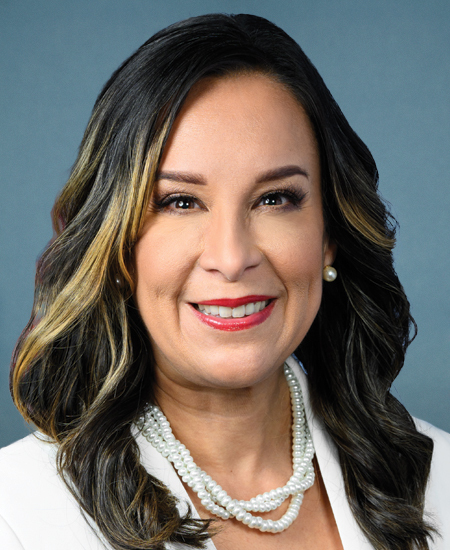
Rep. Monica De La Cruz
Sponsored bills
Maddy summaryThe Food Farmacy Act of 2025 authorizes $10 million annually (2026-2030) in federal grants to fund "healthy food pharmacies" that provide free nutritious food and nutrition guidance from qualified health professionals to low-income, rural, or food-insecure communities. These pharmacies must serve Medicaid/SNAP recipients at no cost and align with the Department of Health and Human Services' "Food is Medicine" initiative. Grants cover construction, equipment, staffing, and food acquisition, with recipients required to report annual data on patrons served, health outcomes, and program effectiveness. The bill directly supports communities facing food insecurity by integrating grocery access with healthcare services, targeting non-profits, local governments, and tribal organizations.
Maddy summaryHR 5401, the Pay Our Troops Act of 2026, ensures military personnel, civilian Defense workers, and supporting contractors receive pay during government funding gaps in fiscal year 2026. It appropriates emergency funds for active-duty service members, reserves, and their supporting personnel (including Coast Guard staff under DHS) if regular appropriations aren't enacted by the end of the fiscal year. The bill provides necessary pay and allowances during any period when full-year funding is unavailable, covering both active service and support roles. Funding expires when regular appropriations are passed, a funding resolution is enacted, or January 1, 2027, whichever comes first. This is a procedural measure to prevent pay delays for military and support staff during fiscal year 2026 funding lapses.
Maddy summaryHR 5352 prohibits federal funding for any entity employing individuals who condone or celebrate political violence and domestic terrorism, as defined under 18 U.S.C. §2331. This applies to all federal funds - grants, contracts, or other disbursements - to organizations that hire such individuals. The bill directly affects federal grant recipients and contractors, requiring them to ensure their employees do not engage in these activities to maintain funding eligibility. The policy change is a direct funding restriction based on employee conduct, with no additional mechanisms or exceptions specified in the text.
Maddy summaryThis bill ensures U.S. Border Patrol Agents and Customs and Border Protection officers who continue working during a government shutdown receive their salaries. It authorizes funding from the Treasury for fiscal year 2026 to cover their salaries and expenses during any lapse in discretionary appropriations. The measure specifically applies to employees "excepted from furlough," meaning those required to work during shutdowns. It does not change eligibility for pay but guarantees funding for these personnel during funding gaps.
Maddy summaryHR 2808, the Homebuyers Privacy Protection Act, restricts how consumer reporting agencies share credit reports during mortgage applications. It prevents agencies from sending these reports to third parties unless the request is tied to a firm credit offer and the recipient has either the homebuyer’s explicit written consent or is directly involved in the mortgage (like the lender, loan servicer, or the homebuyer’s bank holding an active account). This directly affects homebuyers applying for residential mortgages by limiting unsolicited sharing of their credit information. The law amends the Fair Credit Reporting Act to strengthen privacy protections around mortgage-related credit data.
Maddy summaryHR 5145, the Bipartisan Premium Tax Credit Extension Act, extends enhanced federal subsidies for health insurance premiums through 2026. It directly affects individuals purchasing coverage through health insurance marketplaces who qualify for premium tax credits. The bill extends the period for increased credit amounts (through 2026 instead of 2025) and maintains the rule allowing tax credits for households earning above 400% of the federal poverty level. These changes apply to tax years beginning after December 31, 2025.
Maddy summaryHRES 670 is a symbolic resolution (not a law) expressing congressional support for designating September 22 as "National Military and Veterans Suicide Awareness Day." It aims to raise public awareness about mental health challenges and suicide prevention within military service members and veterans, acknowledging their sacrifices and the need to reduce stigma around seeking help. The resolution does not create new programs, allocate funding, or change existing policies - it simply encourages national attention during Suicide Prevention Awareness Month in September. This designation directly affects the military and veteran communities by promoting dialogue about their mental health needs.
Maddy summaryHR 4989, the Streamlining Rural Housing Act of 2025, requires the Departments of Housing and Urban Development (HUD) and Agriculture (USDA) to simplify coordination for rural housing projects funded by both agencies. Within 180 days, they must create a memorandum of understanding to evaluate environmental review processes, designate a lead agency for efficiency, and maintain existing environmental standards. The bill establishes an advisory group with housing stakeholders - including nonprofits, developers, and residents - to guide implementation. It mandates a report within one year with recommendations to improve project efficiency without reducing resident safety, shifting long-term costs, or undermining environmental standards. This bill directly affects rural housing projects funded by HUD or USDA by targeting bureaucratic delays in approvals.
Maddy summaryThis bill requires local governments receiving federal housing funds to track and report on zoning rules that limit housing supply. It mandates annual plans detailing current policies and future steps to adopt specific reforms, such as allowing duplexes in single-family zones, reducing parking requirements, or streamlining permits. The focus is on gathering data to identify barriers - like restrictive zoning - rather than forcing immediate changes. Localities must submit these reports every five years, but the information cannot be used for enforcement or to mandate policy shifts.