

Maddy summaryThis bill amends federal law to allow qualified active and retired law enforcement officers who already meet specific certification standards (under sections 926B and 926C) to carry concealed firearms in school zones while on duty. It removes the existing prohibition that prevented such officers from carrying concealed weapons in school areas, but only for those already authorized under current law. The change applies solely to officers with pre-existing authorization, not to all police or new categories of personnel. It does not alter school safety requirements for other individuals or create new exceptions.
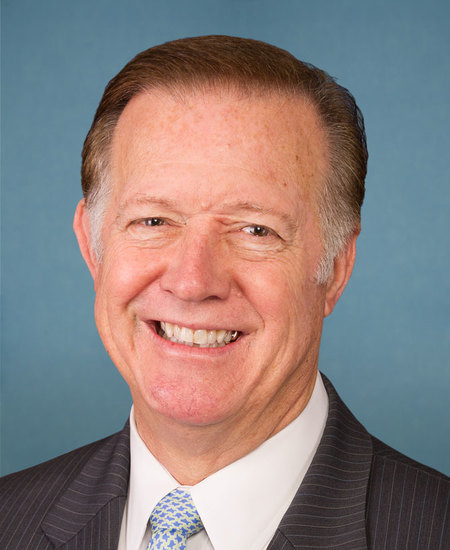
Rep. Randy K. Weber, Sr.
Sponsored bills
Maddy summaryThe BRIDGE Production Act of 2025 requires the Secretary of the Interior to hold 26 offshore oil and gas lease sales over 10 years (20 in the Gulf of America, 6 in Cook Inlet), with specific timing and acreage requirements for each sale. It lowers the minimum royalty rate from 16.67% to 12.5% and creates a pilot program offering 10% royalties for the first 7 years of production for qualifying leaseholders who achieve first production within 3 years. The bill streamlines environmental compliance by deeming existing reviews sufficient for meeting National Environmental Policy Act and Endangered Species Act requirements. This legislation directly affects oil and gas companies seeking leases on the Outer Continental Shelf and the Bureau of Ocean Energy Management responsible for administering lease sales.
Maddy summaryThe Next Generation Pipelines Research and Development Act establishes a new demonstration initiative that will award competitive grants to eligible entities - including universities, research organizations, and private companies - for projects developing advanced pipeline technologies. The bill focuses on improving pipeline safety, efficiency, and environmental performance through research on leak detection, novel materials, sensor technologies, and cybersecurity for pipelines and associated infrastructure. It authorizes $45 million for fiscal year 2026 (increasing to $50 million annually through 2030) for demonstration projects and creates a National Pipeline Modernization Center to coordinate research and development efforts. The program specifically prioritizes projects that reduce environmental impacts, leverage existing infrastructure, and involve diverse geographic and technological approaches to pipeline innovation.
Maddy summaryHR 3033, the "Protecting the Mailing of Firearms Act," repeals a federal law (18 U.S.C. §1715) that previously prohibited mailing firearms and related items. This bill directly affects firearm sellers, buyers, and the U.S. Postal Service by removing the ban on mailing firearms, ammunition, and components. It also prohibits the Postmaster General from creating rules that would block firearm mailings or require disclosure of sales receipts, transaction records, or firearm serial numbers. The law takes effect immediately for pending cases and prevents new restrictions on firearm shipping through the postal system.
Maddy summaryThis bill amends federal laws governing short-barreled shotguns (SBS), which are shotguns with barrels under 18 inches or overall length under 26 inches. It removes state-level taxes, registration, or recordkeeping requirements for SBS owned legally under federal rules, preempts conflicting state laws, and requires the federal government to destroy existing SBS registration records within one year. The bill directly affects lawful owners of SBS who previously registered under the National Firearms Act, simplifying their compliance with federal standards. Key changes include updating definitions to better align with sporting use and eliminating state-level barriers for legally owned SBS.
Maddy summaryHRES 343 is a ceremonial resolution commemorating the Battle of San Jacinto on April 21, 1836, where Texan forces defeated Mexican troops to secure Texas independence. It does not create new laws or affect any individuals or policies; it is a symbolic gesture recognizing this historical event. The resolution supports San Jacinto Day, honors the bravery of those who fought for Texas independence, and encourages reflection on freedom. As a commemorative measure, it has no legislative or binding effect.
Maddy summaryHRES 339 is a non-binding House resolution supporting the Second Amendment and criticizing the Biden administration's firearm-related policies. It does not create new laws or directly affect anyone; instead, it formally disapproves of specific Biden-era actions by the Bureau of Alcohol, Tobacco, Firearms, and Explosives (ATF) and Bureau of Industry and Security (BIS) that the resolution claims restricted constitutional rights. Key provisions include condemning ATF rules limiting firearm access, BIS policies restricting firearm exports, and the Biden administration's "gun control agenda," while commending former President Trump for seeking to reverse these policies. The resolution reaffirms the constitutional right to bear arms but has no legal effect, as it is a symbolic statement of legislative opinion.
Maddy summaryHR 2930, the PROTECT the Second Amendment Act, prevents landlords and housing authorities from banning or imposing extra restrictions on lawfully possessed firearms in specific federally assisted housing. It directly affects tenants living in properties covered by HUD or USDA housing programs, including public housing, Section 8 voucher recipients, and other subsidized rental units. The bill explicitly allows residents to possess firearms within their own dwelling units or while moving through common areas to reach their unit, without additional prohibitions. This changes existing policies in these housing programs by mandating that firearm possession cannot be restricted solely based on housing type.
Maddy summaryThe Housing Supply Frameworks Act (HR 2840) directs the Department of Housing and Urban Development (HUD) to create federal guidelines and best practices for state and local governments to reform zoning rules that restrict housing supply. It focuses on practical changes like reducing parking minimums, allowing more housing types (e.g., duplexes, accessory dwellings), streamlining approval processes, and increasing density near transit - aiming to address a nationwide housing shortage affecting cost-burdened households. The guidelines, developed with public input from planners, developers, and community groups, are intended to help states and localities voluntarily adopt reforms that increase housing availability across income levels. States and localities that adopt these recommendations must report progress to Congress within five years, though the bill does not mandate specific changes or provide direct housing construction funds.
Maddy summaryHR 2841, the "Putting Trust in Transparency Act," requires nonprofits receiving any federal funding to publicly disclose unredacted donor information (including name, zip code, and contribution amount) within 60 days of filing their annual IRS Form 990. This applies specifically to tax-exempt organizations that receive federal funds, making their major donors' details accessible to the public. Nonprofits failing to file the required Schedule B of Form 990 face automatic revocation of their tax-exempt status after a 60-day grace period. The bill aims to increase transparency around how federal funds are leveraged by nonprofits, requiring disclosure that was previously restricted under IRS rules. It amends tax code provisions to enforce this disclosure and maintain public access to donor information.