

QUEST Act of 2021 This bill directs the Department of Energy to establish and carry out a program (to be known as the Quantum User Expansion for Science and Technology program or the QUEST program) to encourage and facilitate access to U.S. quantum computing hardware and quantum computing clouds for research purposes in order to (1) enhance the quantum research enterprise of the United States, (2) educate the future quantum computing workforce, and (3) accelerate the advancement of U.S. quantum computing capabilities.
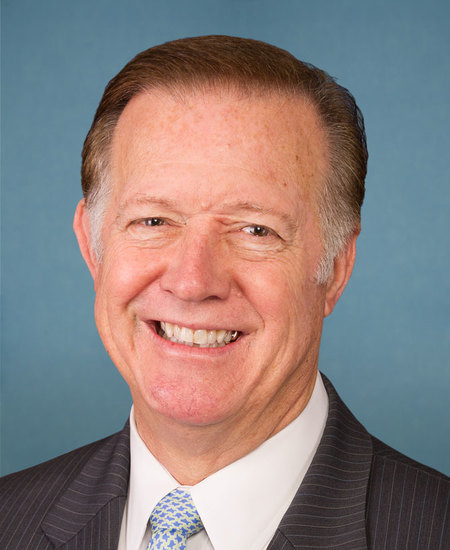
Rep. Randy K. Weber, Sr.
Sponsored bills
Quantum Network Infrastructure Act of 2021 This bill directs the Department of Energy (DOE) to carry out a research, development, and demonstration program to accelerate innovation in quantum network infrastructure in order to (1) facilitate the advancement of distributed quantum computing systems through the internet and intranet, (2) improve the precision of measurements of scientific phenomena and physical imaging technologies, and (3) develop secure national quantum communications technologies and strategies. DOE shall submit to Congress a four-year research plan that identifies and prioritizes basic research needs relating to quantum network infrastructure.
Guard Reimbursement for Unhealthy Bites Act or the GRUB Act This bill requires the Department of Defense to pay National Guard members a per diem for each day they performed duty between January 26, 2021, and March 15, 2021, in response to the attacks on January 6, 2021, on the U.S. Capitol building and grounds. The per diem rate must be equal to the proportional meal rate determined by the Defense Travel Management Office for the National Capital Region.
Child Welfare Provider Inclusion Act of 2021 This bill generally prohibits the federal government, states, tribal nations, or localities from discriminating or taking adverse action against a child welfare provider that declines to provide services due to the provider's sincerely held religious beliefs or moral convictions. However, government entities may still take adverse action against a provider that declines to provide adoption or foster care services based on race, color, or national origin. The Department of Health and Human Services must withhold a portion of federal funding for family services and child welfare activities from a government entity that discriminates against a child welfare provider in violation of this bill. Child welfare providers may also sue the government entity for such discrimination. A prevailing provider may recover reasonable attorney's fees and costs. Furthermore, government entities that accept certain federal funding for family services and child welfare activities must waive sovereign immunity as a defense to lawsuits brought under this bill. (In many cases, sovereign immunity shields states, territories, tribal nations, and some localities against private suits.)
This resolution supports the designation of a National FFA Week. It also (1) recognizes the important role of the National FFA Organization (Future Farmers of America) in developing the next generation of leaders who will change the world, and (2) celebrates 50 years of National FFA alumni and supporters.
Death Tax Repeal Act This bill repeals the estate and generation-skipping transfer taxes. It also makes conforming amendments related to the gift tax.
Updating Postal Data on Addresses for Trustworthy Elections Act or the UPDATE Act This bill requires the U.S. Postal Service (USPS) to regularly provide chief state election officials with change-of-address information. Specifically, the USPS must provide this information within 90 days and every 90 days thereafter. Additionally, the Election Assistance Commission must make payments to states to maintain their computerized voter registration lists.
Justice for Victims of Sanctuary Cities Act of 2021 This bill provides a private right of action against state and local jurisdictions with certain policies that limit cooperation with federal immigration enforcement efforts, and contains additional provisions related to such jurisdictions. Currently, such cooperation is generally not required. An individual (or certain relatives of such an individual) who is the victim of any felony for which an alien has been arrested, convicted, or sentenced to a prison term of at least one year may sue a state or local jurisdiction if the jurisdiction failed to comply with (1) certain Department of Homeland Security (DHS) requests related to arresting and detaining aliens, and (2) a DHS request to detain the alien in question or provide a notification about the release of the alien. A jurisdiction that accepts certain federal grants may not assert immunity in such a civil action. A jurisdiction (or employee of a jurisdiction) that complies with certain DHS detainer requests shall be deemed to be acting as an agent of DHS. A complying jurisdiction or employee of the jurisdiction shall not be liable in any lawsuit relating to compliance with such requests. In a lawsuit against an employee of the jurisdiction, the United States shall be substituted in as the defendant, and remedies shall be limited to provisions for bringing tort claims against the federal government.
Dismemberment Abortion Ban Act of 2021 This bill restricts the performance of dismemberment abortions. It defines the term dismemberment abortion . Specifically, the bill prohibits a physician from knowingly performing a dismemberment abortion. It provides an exception for a dismemberment abortion that is necessary to save the life of a mother whose life is endangered by a physical disorder, illness, or condition. The bill establishes criminal penalties—a fine, a prison term of up to two years, or both—for a physician who performs a prohibited dismemberment abortion. It also authorizes civil remedies for a woman or parent of a minor who undergoes a dismemberment abortion. A woman who undergoes a dismemberment abortion may not be prosecuted or held civilly liable.
Protecting Individuals with Down Syndrome Act This bill creates new federal crimes related to the performance of an abortion on an unborn child who has Down syndrome. It subjects a violator to criminal penalties—a fine, a prison term of up to five years, or both. It also authorizes civil remedies, including damages and injunctive relief. A woman who undergoes such an abortion may not be prosecuted or held civilly liable.