

American Energy Independence from Russia Act This bill addresses U.S. energy security, the production of oil and gas, and the importation and exportation of oil and gas. Specifically, the President must submit an energy security plan that (1) evaluates U.S. crude oil, petroleum products, and natural gas imports and exports; (2) assesses the energy security risks of such imports; and (3) includes strategies to encourage increased domestic production of crude oil, petroleum products, and natural gas to offset Russian imports. The bill also approves the TransCanada Keystone Pipeline in Phillips County, Montana for the import of oil from Canada to the United States. In addition, the bill grants the Federal Energy Regulatory Commission the authority to approve or deny applications for facilities to export natural gas from the United States to foreign countries or import natural gas from foreign countries. The President and federal agencies must obtain congressional approval before (1) prohibiting or substantially delaying certain new energy mineral leases or permits on federal lands, or (2) withdrawing certain federal lands from mineral and geothermal leasing activities. The Department of the Interior must resume issuing oil and gas leases on federal lands and offshore submerged lands in the Outer Continental Shelf as specified under the bill. Finally, the bill limits the drawdown of petroleum in the Strategic Petroleum Reserve until the Department of Energy develops a plan to increase the percentage of federal lands leased for oil and gas production.
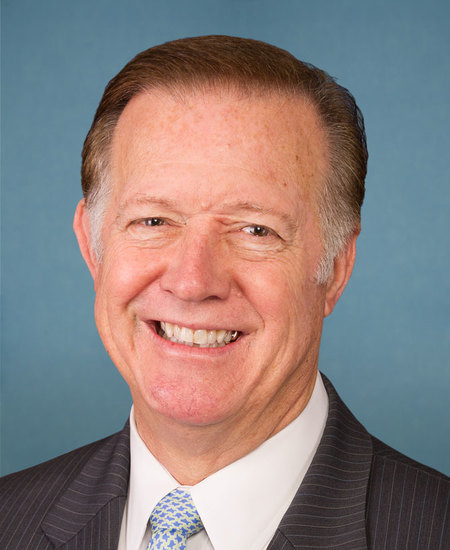
Rep. Randy K. Weber, Sr.
Sponsored bills
This resolution strongly condemns the ongoing violence, war crimes, crimes against humanity, and systematic human rights abuses being carried out by Russia's military and its proxies at the direction of Russian President Vladimir Putin. It also encourages the U.S. government and partner nations to use their influence and vote in international organizations to hold those responsible for such crimes and abuses accountable.
Direct Investigations on China, Take Action To Oppose Russia Act of 2022 or the DICTATOR Act of 2022 This bill requires the Department of State to report to Congress on entities in China that assist or have assisted Russia's efforts to evade sanctions imposed by the United States following Russia's invasion of Ukraine. The bill also requires the relevant federal agencies to brief Congress on U.S. efforts to (1) identify and sanction such entities, and (2) economically isolate Russia from outside support and economic assistance from China.
No Taxpayer Dollars for Communist China COVID Tests Act This bill prohibits the use of federal funds to procure at-home COVID-19 tests that are imported from or manufactured (in whole or in part) in China.
Israel Anti-Boycott Act This bill prohibits participation by certain entities and individuals in boycotts or requests for boycotts imposed by international governmental organizations (i.e., the United Nations and the European Union). Specifically, the bill applies to covered persons the prohibition of specified actions in compliance with or in support of a boycott against a country that is friendly to the United States and that is not itself the object of a U.S. boycott. The bill defines a covered person as a domestic concern, the U.S. government or a state government, or a representative or official of such domestic concern or government. The bill also adds to the list of specified prohibited actions the act of furnishing information to any foreign country or international governmental organization that furthers an imposed boycott. Under current law, a person who violates the prohibitions against such boycotts may be subject to a monetary fine or imprisonment; however, the bill removes imprisonment as a potential penalty for certain violations.
Prohibition on Imports of Russian Oil Act This bill requires the President to prohibit the importation of petroleum products from Russia. Petroleum product means crude oil, residual fuel oil, or any refined petroleum product, including natural gas liquid product. Further, the bill authorizes the President to (1) modify or remove the prohibition for some or all petroleum products if the President notifies Congress that such modification or removal is appropriate given the situation in Ukraine, and (2) use appropriate authorities to impose civil or criminal penalties as necessary to enforce the prohibition.
This concurrent resolution expresses the sense of Congress that the International Criminal Court should immediately proceed with prosecuting Russian President Vladimir Putin with war crimes should any harm befall Ukrainian President Volodymyr Zelenskyy as a result of actions taken or directed by any Russian entity or authority.
This resolution expresses that the House of Representatives does not recognize Russia as the inheritor of the Union of Soviet Socialist Republics' seat as a permanent member on the U.N. Security Council, and encourages the Biden Administration to take all necessary action at the United Nations to remove Russia from its position as a permanent member of the Security Council.
No Energy Revenues for Russian Hostilities Act of 2022 This bill prohibits, with some exceptions, the Department of the Treasury from authorizing certain energy-related transactions that would otherwise be blocked by an executive order barring transactions related to specified harmful foreign activities of the Russian government. The bill also revokes a license issued February 28, 2022, by the Office of Foreign Assets Control within Treasury that authorized certain transactions barred by the executive order. The bill allows a waiver from the limitation on an energy transaction if the transaction involves funds owed to a Russian person and the funds are to be used for the sale of agricultural commodities, food, medicine, or medical devices. The bill terminates on the earlier of five years after its enactment, or 30 days after the President reports to Congress that Russia has ceased activities destabilizing the sovereignty and territorial integrity of Ukraine.
Secure Our Ports Act of 2022 This bill prohibits an owner or operator of a U.S. port from entering into a contract with a Chinese, Russian, North Korean, or Iranian state-owned enterprise for the operation or management of such port. It also prohibits entering into a contract with any foreign entity for which a percentage is owned by one of those countries.