

Maddy summaryThe CLEAR Act (HR 4218) amends the Clean Air Act to streamline state compliance with air quality standards. It extends the review cycle for national air quality standards from five to ten years, requires states to consider economic feasibility alongside technical achievability when developing plans, and gives states up to three years (instead of two) to fix deficiencies before federal intervention. The bill also creates a new exception for wildfire mitigation actions like prescribed fires, allowing states to exclude wildfire-related air quality data from violation determinations. These changes primarily affect states responsible for implementing air quality plans under federal oversight.
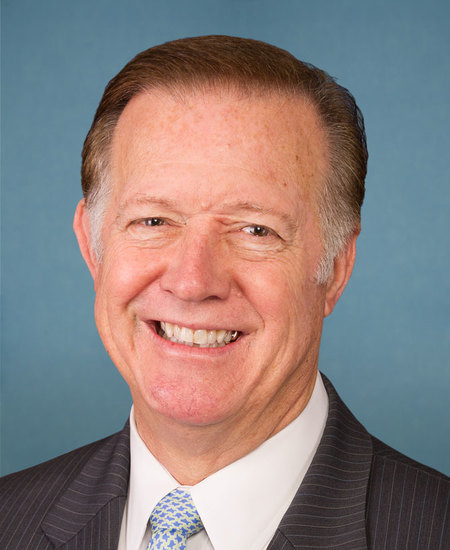
Rep. Randy K. Weber, Sr.
Sponsored bills
Maddy summaryHR 3307, the Eastern Mediterranean Gateway Act, directs the U.S. government to prioritize diplomatic and security cooperation with Egypt, Greece, Cyprus, and Israel to support their role as a strategic gateway for the India-Middle East-Europe Economic Corridor (IMEC). The bill requires the Secretary of State to institutionalize strategic dialogues with these countries, prioritize energy and defense cooperation in the region, and submit annual reports on implementation and multilateral initiatives. It also mandates studies on expanding U.S. bilateral programs (like those with Israel) to include Eastern Mediterranean partners and analyzing the Cyprus security center as a model. The bill does not create new funding but guides existing U.S. policy and coordination efforts.
Maddy summaryHR 7156, the SCAM Act, would expand grounds for revoking U.S. citizenship (denaturalization) for naturalized citizens who commit specific offenses within 10 years of becoming citizens. It targets individuals convicted of defrauding federal, state, or local governments (e.g., $10,000+ in public benefit fraud), affiliating with foreign terrorist organizations, or committing aggravated felonies or espionage. If convicted in these categories, the government could automatically revoke citizenship retroactively (as if it never existed) based on evidence that the person lacked good moral character or loyalty to the U.S. at the time of naturalization. This bill directly affects naturalized citizens who commit these offenses within a decade of gaining citizenship, with revocation triggering immediate deportability.
Maddy summaryThe Correctional Facility Disaster Preparedness Act of 2026 requires the Bureau of Prisons to annually report on the impacts of major disasters (like natural disasters or public health emergencies) at federal correctional facilities and contract prisons. The report must detail effects on inmate/staff safety, access to medical care, food, water, visitation, disability accommodations, and financial costs, along with a corrective action plan for improving emergency preparedness. It also mandates the National Institute of Corrections to hold a public hearing within one year to evaluate how facilities can better incorporate specific emergency planning measures - such as medical access, early release considerations, and visitation protocols - into their disaster response. This legislation directly affects federal prisons, contract facilities, and the 150,000+ inmates and staff within them, aiming to standardize transparency and response protocols during crises.
Maddy summaryThis symbolic House resolution expresses U.S. congressional support for Iranian protesters demanding democracy and human rights. It condemns the Iranian regime's violent suppression of protests, including killings, mass arrests, and internet restrictions, while urging the regime to release political prisoners and restore communication access. The resolution reaffirms the Iranian people's right to self-determination through free elections and echoes a 2023 resolution (HCR 7) that similarly praised protesters. As a non-binding expression of support, it does not impose new policies or alter U.S. government actions.
Maddy summaryHR 909, the Crime Victims Fund Stabilization Act of 2025, modifies how funds from the False Claims Act are deposited into the Crime Victims Fund. It specifies that from 2025 through 2029, certain False Claims Act proceeds (specifically those for qui tam plaintiff payments and government damage reimbursements) cannot be deposited into the fund. This change directly affects the composition of the Crime Victims Fund by excluding these specific revenue streams during the specified period. The bill does not create new benefits or alter victim services; it only adjusts fund allocation rules for existing False Claims Act revenues.
Maddy summaryThis bill clarifies and expands the definition of "public charge" for immigration purposes, affecting non-citizens applying for visas, admission, or adjustment of status. It defines a public charge as someone receiving certain government benefits (including SNAP, Medicaid, housing assistance, and income support programs) for more than 12 months within any 36-month period. The determination considers factors like age, health, assets, education, and family status in a holistic assessment, while exempting refugees, asylees, and military dependents. The bill requires the government to publish a comprehensive list of covered benefits within 180 days of enactment.
Maddy summaryHR 6972 (Reporting Accountability and Abuse Prevention Act of 2026) requires health centers receiving federal funds under Title X (which supports family planning services) to comply with all state and local laws requiring reporting of child abuse, sexual abuse, intimate partner violence, and human trafficking. It mandates that these centers create written compliance plans, provide annual training for staff on reporting obligations and safety protocols, screen minors for potential abuse when presenting with STIs or pregnancy, and document all reports. Centers must maintain detailed records of minor patients and reports, and allow federal officials to review these records. Failure to comply can result in corrective action, repayment of funds, or a 36-month ban on future Title X funding for repeat violations.
Maddy summaryHR 6876, the "Protecting Children from Foreign Mutilation Act," imposes visa bans on foreign medical professionals or facilities that provide certain gender-affirming treatments to U.S. minors under 18. It targets foreign physicians or clinics performing "chemical or surgical mutilations" (defined as puberty blockers, hormones, or surgeries altering physical sex characteristics for transgender youth), excluding medically necessary care for intersex conditions or injuries. The bill requires the President to revoke visas for qualifying foreign providers and mandates a report to Congress on enforcement within 180 days. It explicitly excludes detransition treatments and medically necessary care for conditions like intersex variations or trauma. The law applies solely to foreign providers, not U.S. healthcare.
Maddy summaryHR 6857 requires all colleges and universities receiving federal funds to prominently display a link to the Department of Education’s civil rights complaint portal on their website homepage and to post annual Title VI awareness materials in high-traffic campus locations (like student centers) and on campus websites. The bill mandates these institutions to annually report discrimination complaints (based on race, color, or national origin) to the Department of Education’s Inspector General. It also requires the Department to provide monthly congressional briefings on complaint volumes and resolution timelines, while the Inspector General must audit institutions with the highest complaint rates and study why some complaints go to schools versus the federal office. This directly affects every federally funded higher education institution in the U.S. by changing how they handle and report civil rights complaints.