

Maddy summaryHR 4321 prohibits the U.S. government from providing any federal loans, grants, or financial assistance to state or local governments that enact reparations programs based on slavery, race, ethnicity, national origin, or related historical practices. This bill directly affects state and local governments that pass such reparations laws by blocking access to federal funds for those specific programs. The key provision bans all forms of federal financial aid - including from the Federal Reserve and independent agencies - to the jurisdiction enacting the reparations program, without applying to other government functions. The bill focuses solely on restricting federal funding for these programs, not on creating or funding reparations themselves.
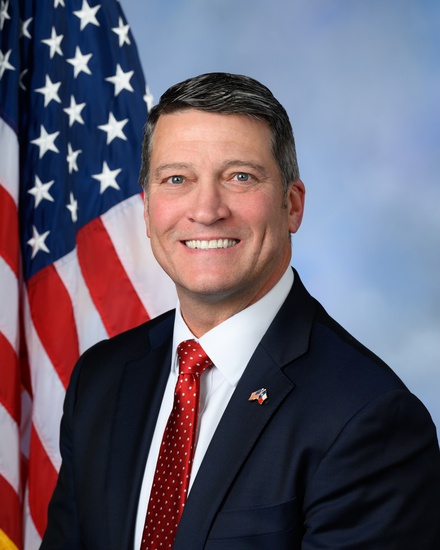
Rep. Ronny Jackson
Sponsored bills
Maddy summaryHR 3419 reauthorizes and increases mandatory funding for U.S. animal disease prevention programs through fiscal year 2028. It allocates $233 million annually from the Commodity Credit Corporation for three key areas: $10 million for disease prevention, $70 million for surveillance, and $153 million for rapid response. The bill also raises annual funding for the National Animal Health Laboratory from $30 million to $45 million. These provisions directly affect USDA programs that protect livestock and agricultural industries from foreign animal disease outbreaks. The funding increases extend existing programs through 2028, with reduced annual amounts starting in 2029.
Maddy summaryHJRES 44 is a congressional resolution seeking to block a 2021 rule by the Bureau of Alcohol, Tobacco, Firearms, and Explosives (ATF). The rule classified firearms with stabilizing braces as "short-barreled rifles," which would have required additional licensing and regulation. This resolution uses a specific legal process (under Title 5, U.S. Code) to formally disapprove the ATF rule, meaning the rule would no longer be in effect. It directly affects firearm owners, manufacturers, and dealers who would have been subject to the rule’s requirements.
Maddy summaryThis bill renames the U.S. Food for Peace program after Peter O'Brien and makes key changes to how agricultural aid is delivered. It prohibits using cash, food vouchers, or foreign-sourced food for aid (section 2d), requires that at least 50% of annual funds be used for procuring U.S. agricultural commodities (section 2b(5)), and mandates annual reports to Congress on fund usage (section 2b(6)). These changes directly affect U.S. farmers supplying aid and international recipients of food assistance. The bill focuses on strengthening domestic agricultural exports within the Food for Peace program while adding transparency requirements.
Maddy summaryHR 277 would require Congress to approve major federal regulations before they take effect. Major rules are defined as those with significant economic impact ($100 million+ annually), major cost increases for consumers or industries, or significant adverse effects on competition, employment, or innovation. Agencies must submit detailed information about these rules to Congress, including cost-benefit analyses, before they can take effect. Congress would have 70 session days to approve the rule with a joint resolution; if they don't act within that timeframe, the rule would not take effect. This would increase congressional oversight of federal regulations and require more detailed information about proposed rules before they become law.
Maddy summaryThis bill bans displaying any flag other than the U.S. flag on the exterior or in hallways of public buildings, including government offices, military installations, and embassies. Exceptions allow specific flags like POW/MIA memorials, visiting diplomats' national flags, a member of Congress's home state flag, military unit flags, tribal flags, or local jurisdiction flags. It directly affects how public buildings display flags, requiring exclusive use of the U.S. flag in designated areas. The bill applies to all public buildings under federal definition, with limited exceptions for historical, diplomatic, or local displays.
This bill requires the Department of Veterans Affairs (VA) to immediately rescind all guidelines relating to the COVID-19 pandemic. The VA must also ensure all signs and posted guidance related to COVID-19 are removed from its facilities (e.g., signage related to masking and social distancing).
Maddy summaryHR 288, the Separation of Powers Restoration Act of 2023, amends federal law to change how courts review agency actions. It requires federal courts to decide de novo (anew) all legal questions - including interpretations of laws and the Constitution - when reviewing agency decisions, rather than deferring to agency interpretations. This applies to all judicial reviews of agency actions under existing law, unless a specific law explicitly exempts such cases. The bill directly affects federal courts, agencies, and parties involved in litigation over agency rules or enforcement. It aims to shift interpretive authority from agencies to courts in administrative law cases.
Maddy summaryHJRES 69 is a resolution seeking to disapprove an Environmental Protection Agency (EPA) rule published on June 5, 2023, which established a "Federal Good Neighbor Plan" for the 2015 ozone air quality standards. The rule aimed to address ozone pollution crossing state lines, particularly affecting southeastern states and industries subject to the 2015 ozone standards. This resolution would block the rule from taking effect by invoking the Congressional Review Act, preventing it from being enforced. If enacted, it would directly stop the EPA from implementing this specific plan, impacting states and businesses that would have had to comply with the rule.
Foreign Adversary Gain-of-Function Research Prevention Act of 2023 This bill prohibits the use of federal funds by foreign adversaries for gain-of-function research involving pathogens that could cause a pandemic. ( Gain-of-function research is defined as research that enhances the pathogenicity or transmissibility of a pathogen in mammals.) Specifically, the bill prohibits federal funds from being used to support gain-of-function research involving potential pandemic pathogens by China, Russia, Iran, North Korea, or any other designated foreign adversary. Entities that violate the bill's requirements may not receive any funds from the Department of Health and Human Services (HHS) for three years and, for the following three years, may not receive any additional HHS funds unless they agree to give advance notice about how they intend to use the funds.