Maddy summaryHR 5507 prohibits the use of federal funds to establish a Disinformation Governance Board within the Department of Homeland Security. The bill directly affects the Secretary of Homeland Security by blocking any funding from being used for this specific board's creation. It is a straightforward funding restriction with no additional policy mechanisms or provisions beyond preventing the board's establishment.
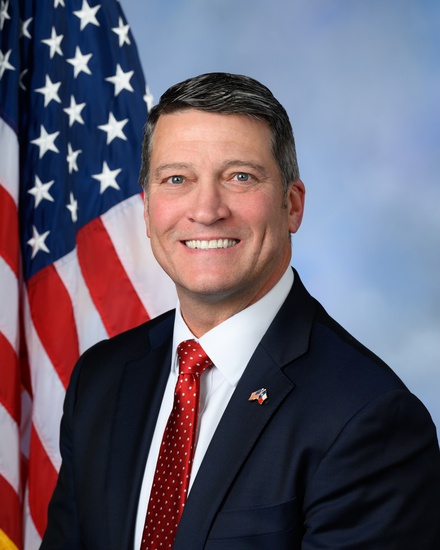
Rep. Ronny Jackson
Sponsored bills
Maddy summaryHR 3152, the "Fight CRIME Act," aims to maintain international restrictions on Iran's missile-related activities by requiring diplomatic efforts to extend these restrictions before they expire in October 2023. The bill mandates annual reports detailing U.S. diplomatic strategies, potential impacts of expiration, and measures to deter missile technology transfers to Iran. It establishes sanctions against foreign individuals or entities that knowingly support Iran's missile or drone programs, including asset freezes and visa restrictions. These sanctions apply regardless of whether UN restrictions remain in effect after their expiration, directly affecting foreign entities involved in these activities.
Rural Hospital Technical Assistance Program Act This bill provides statutory authority for the Rural Hospital Technical Assistance Program within the Department of Agriculture (USDA). Under the bill, USDA must establish and maintain (directly or by grant, contract, or cooperative agreement) a program to help eligible hospital facilities in rural areas with a population of 50,000 inhabitants or less. The program must provide tailored technical assistance and training to hospital facilities to identify development needs for maintaining essential health care services and support action plans for financial, operational, and quality improvement projects to meet these needs. Development needs include (1) constructing, expanding, and modernizing health care facilities; (2) increasing telehealth capabilities; and (3) acquiring or upgrading health care information systems (e.g., electronic health records). The program must also provide technical assistance and training to help hospital facilities to better manage their financial and business strategies and identify, and apply for assistance from, USDA loan and grant programs. In selecting eligible hospital facilities to participate in the program, USDA must give priority to borrowers and grantees of certain USDA rural assistance programs. USDA must also submit an annual report to Congress on the progress and results of the program.

Maddy summaryHR 5144, the GOT Act, prohibits all federal employees, elected officials, and judges from maintaining official government accounts on TikTok or any account operated by TikTok's parent company, ByteDance. It directly affects every member of the executive, legislative, and judicial branches of the U.S. government who uses TikTok for work-related purposes. The bill bans creating, establishing, or keeping such accounts on TikTok or equivalent platforms owned by ByteDance. This is a direct policy change to prevent federal personnel from using the platform for official business, citing national security concerns.
Maddy summaryHR 5130, the "Finish It Act," requires the Department of Defense to use stored border wall construction materials (valued at approximately $300 million) for building permanent barriers along the U.S.-Mexico border within 30 days of the bill's enactment. It mandates that states receiving materials certify they will use them exclusively for border barriers, with penalties for unused materials (requiring repayment of the original cost) and imposes a 1% budget cut for every two days of delay in implementation. The bill also demands a detailed report from the Department of Defense within 90 days, including internal communications about storage costs and contracts with private landowners. This legislation directly affects the Department of Defense and border states, focusing on redirecting existing resources rather than creating new funding or construction.
Maddy summaryHR 5084 designates the U.S. Postal Service facility at 1106 Main Street in Bastrop, Texas, as the "Sergeant Major Billy D. Waugh Post Office." This bill updates all official federal references - including laws, maps, and documents - to use the new name for the location. It directly affects the Bastrop post office and federal records referencing it, without altering postal services or policies. The change is purely ceremonial and procedural, honoring Sergeant Major Billy D. Waugh through the facility's name.
Maddy summaryHCONRES 57 is a non-binding concurrent resolution expressing Congress's support for Israel. It states three key points: (1) that Israel is not a racist or apartheid state, (2) that Congress rejects antisemitism and xenophobia, and (3) that the U.S. will remain a steadfast supporter of Israel. This resolution does not create new laws or alter policies - it simply records the expressed sentiment of Congress. It directly affects the U.S. government's public stance on Israel, with no legal effect on citizens or other entities.
This resolution condemns Iran for the 1988 massacre of political prisoners. It also urges the Biden Administration and U.S. allies to publicly condemn the massacre and to pressure Iran to provide information to the families of the victims.
Maddy summaryThis bill requires stricter background checks and monitoring for sponsors caring for unaccompanied migrant children. It mandates fingerprint checks, sex offender registry reviews, criminal history checks, and child abuse screenings for all adult household members before a child can be placed with them. The bill also prohibits placing children with undocumented sponsors (except biological parents or legal guardians), requires pre-release home visits, and mandates multiple unannounced post-release visits over two years. Additionally, it requires monthly reports to Congress tracking child placements, vetting status, and missing children cases since January 2021. These changes directly affect unaccompanied migrant children and their sponsors, aiming to prevent trafficking through enhanced safety protocols.
Build the Wall and Fight Fentanyl Act of 2023 This bill establishes accounts to fund the construction of physical barriers along the U.S. southern border and to provide grants to address fentanyl abuse. These accounts shall be funded from the sale of assets belonging to cartels that have been seized by the Drug Enforcement Administration, U.S. Immigration and Customs Enforcement, or U.S. Customs and Border Protection. The bill defines cartel as (1) an organization with operations in Mexico and the United States designated as a significant transnational criminal organization; (2) certain named organizations, such as the Sinaloa Cartel and the Juarez Cartel; and (3) other organizations as designated by the President.