

Maddy summaryThe Highway Formula Fairness Act (HR 10462) changes how federal highway funds are distributed to states starting in fiscal year 2024. It requires the federal government to calculate each state's share based on that state's proportion of highway user tax payments to the Highway Trust Fund (excluding mass transit funds) relative to all states. The bill ensures states receive at least 95% of the amount they would get under this new formula, preventing any state from receiving less than this threshold. This directly affects all states receiving highway funds under specified programs (sections 119, 133, 148, 149, 167, 175, 176(c), and 134). The change aims to make funding more reflective of each state's contribution to the Highway Trust Fund.
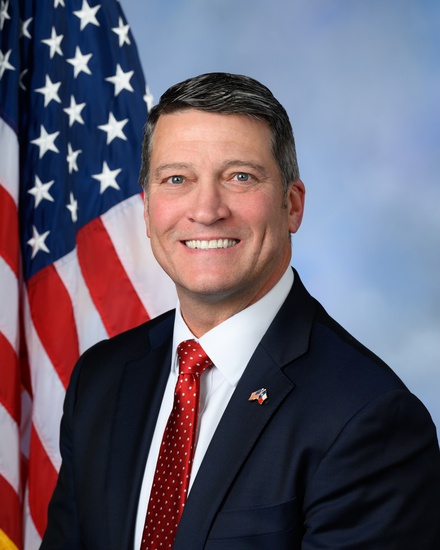
Rep. Ronny Jackson
Sponsored bills
Maddy summaryThis bill removes a requirement for ambulatory surgical centers participating in Medicare to report the COVID-19 vaccination status of their healthcare workers. Specifically, it directs the Secretary of Health and Human Services to revise Medicare regulations (42 CFR §§ 416.300-416.330) within 45 days of enactment to eliminate this reporting mandate. The change directly affects ambulatory surgical centers that receive Medicare funding, removing a specific administrative burden related to employee vaccination data. The bill focuses solely on modifying existing reporting rules, with no new funding or program requirements.
Maddy summaryThe Preserving Seniors’ Access to Physicians Act of 2023 increases the Medicare payment adjustment rate for physicians from 1.25% to 4.62%, directly affecting doctors who treat Medicare patients (primarily seniors). It also reduces the funding for the Medicaid improvement fund from $5,796,117,810 to $3,973,117,810. These changes impact Medicare providers and Medicaid programs, with the Medicare adjustment aimed at supporting physicians adjusting to payment changes. The bill does not specify how the Medicaid funding reduction relates to its stated goal of preserving seniors' access to physicians.
Maddy summaryThis bill updates Medicare physician payment rules to improve stability and accuracy. It raises the budget neutrality threshold from $20 million (pre-2025) to $53 million in 2025, with annual indexing after 2026, to prevent excessive payment adjustments. The bill requires the Medicare program to correct budget neutrality payments based on actual service utilization data (not estimates) starting in 2025, and mandates updating direct cost inputs (like staff wages and equipment prices) every 5 years. It also caps annual changes to the physician payment conversion factor at 2.5% to limit sudden payment shifts, directly affecting Medicare physicians and healthcare providers receiving these payments.
Maddy summaryThe Maximum Pressure Act (HR 6114) is a legislative proposal that would maintain and expand U.S. sanctions against Iran. The bill would codify existing sanctions, require Iran to meet 12 specific conditions before sanctions could be lifted (including ending support for terrorism, releasing hostages, and ending nuclear enrichment), and expand sanctions on Iran's Revolutionary Guard Corps and missile programs. It also establishes new reporting requirements for the U.S. government to monitor Iran's activities and the impact of sanctions. The legislation would require congressional review before any sanctions could be lifted or modified, preventing the executive branch from unilaterally easing restrictions.
Maddy summaryHR 5967, the Unemployment Integrity Act of 2023, requires unemployment claimants to participate in job-seeking activities to maintain benefits. Specifically, it mandates that claimants respond to work-related requests, attend reemployment interviews, and comply with reasonable requests like drug testing or skills assessments. The bill also requires states to conduct a study on increasing random audits of unemployment claims and mandates that states adopt these new requirements to receive federal funds for extended unemployment benefits. These changes apply to weeks beginning one year after the bill's enactment, with adjustments for states holding biennial legislative sessions. The law directly affects individuals claiming unemployment benefits by linking eligibility to active job-seeking participation.
Maddy summaryHR 5912 (PUNISH Act of 2023) maintains existing U.S. sanctions against Iran by preventing the President from lifting them without new certification. It requires the State Department to submit every 180 days a report confirming Iran has not engaged in targeted violence (such as assassinations of U.S. citizens, Iranian residents in the U.S., or politically motivated abuse) over the past five years. This certification must be provided before sanctions can be waived, suspended, or reduced under current laws like the Iran Sanctions Act. The bill directly affects the President’s authority to ease sanctions, Iranian entities subject to existing sanctions, and U.S. agencies responsible for reporting. It does not create new sanctions but extends the duration of current measures until a specific certification date.
Maddy summaryThe DRA of 2023 adjusts Medicare payment rates for specific durable medical equipment (DME) items that were part of the 2021 competitive bidding program but for which no supplier contracts were finalized. It directly affects DME suppliers and Medicare beneficiaries by establishing a new 2024 payment formula: 90% of the adjusted payment amount plus 10% of the unadjusted fee schedule for eligible items. The bill also extends a temporary transition rule for non-rural areas through December 31, 2024, while delaying a regulatory change until 2025. These provisions aim to stabilize payments for DME items that did not transition to standard pricing under prior rules.
Maddy summaryThis bill amends the Affordable Care Act and Medicaid/CHIP programs to deny health insurance subsidies, coverage, and related benefits to individuals with Deferred Action for Childhood Arrivals (DACA) status. Specifically, it excludes people lawfully present only due to the 2012 DHS memo granting deferred action from eligibility for ACA subsidies, Medicaid, and the State Children's Health Insurance Program (CHIP). The bill requires states to remove DACA recipients from enrollment in health plans and rescind any existing waivers that allowed such coverage. It directly affects approximately 800,000 DACA recipients who currently qualify for ACA subsidies and Medicaid/CHIP under existing rules.
Maddy summaryHR 3748, the SAFE Act of 2023, requires U.S. agricultural agencies to proactively negotiate trade agreements with foreign governments to minimize export disruptions caused by animal disease outbreaks. It directs the Secretary of Agriculture, in coordination with the U.S. Trade Representative, to establish regionalization, zoning, or compartmentalization agreements with key export markets for U.S. livestock and animal products. The bill also mandates that the Food Safety and Inspection Service notify state agricultural departments and producer groups within three days if export-related information is removed from official libraries. This directly affects livestock producers and exporters by aiming to stabilize access to international markets during disease events. The law amends the Animal Health Protection Act to formalize these negotiation and notification requirements.