

Migrant Facility Transparency Act of 2021 This bill allows a municipality or county to block the establishment of a temporary influx facility within its borders and addresses other related issues. (Generally, these temporary facilities provide shelter capacity when there is a large increase in the number of migrants arriving into the United States.) Specifically, the Department of Health and Human Services (HHS) must, at least seven days before selecting a site for such a facility, provide certain information about the planned facility to specified federal, state, and local officials, including officials for the municipality or county where the facility will be located. If the municipality or county notifies HHS of its opposition to the facility within three days of receiving the information, HHS may not establish the facility at that location. HHS must also notify the relevant federal, state, and local officials of (1) certain changes related to such a facility's operations, and (2) any major security or safety incident at the facility. Within 14 days of this bill's enactment, HHS must report to Congress certain information about the safety of temporary influx facilities. If HHS does not meet this deadline, HHS must immediately pause all intake processing at such facilities until the report is submitted.
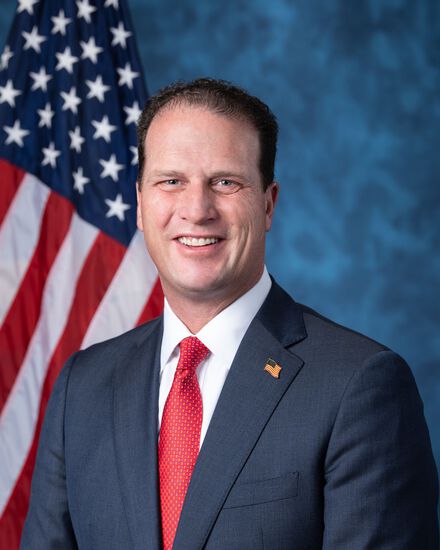
Rep. August Pfluger
Sponsored bills
Our Veterans Earned It Act This bill prohibits members of the Armed Forces who refuse to receive a COVID-19 vaccination from being denied a federal benefit they are entitled to by reason of their service in the Armed Forces.
Truckers Responding At National Shipping Ports Overcoming Retail Turmoil Act or the TRANSPORT Act This bill requires the Department of Transportation (DOT) to award grants to motor carriers and motor private carriers for transporting goods from ports during declared national emergencies or when DOT determines a port is at least 50% congested. DOT may use unobligated funds available under specified COVID-19 relief laws for the grants.
Equal Treatment of Public Servants Act of 2021 This bill phases in a new funding formula for determining benefit amounts under the windfall elimination provision (WEP). The WEP reduces Social Security retirement and disability benefits for those who receive pensions for certain non-covered employment. The new formula adjusts an individual's total lifetime earnings based on the proportion of those earnings subject to Social Security payroll taxes. It applies to individuals who (1) become eligible for Social Security benefits after 2061, and (2) have earnings from non-covered service performed in a year after 1977. Beneficiaries who become eligible for benefits between 2023 and 2061 receive the higher of their benefit calculated under the existing WEP or the new formula. In addition, certain beneficiaries currently impacted by the WEP receive an additional payment. The Social Security Administration must include non-covered earnings in Social Security account statements and must study the feasibility of partnering with certain pension systems to address data sharing issues related to non-covered pensions.
Maddy summaryHRES 754 is a non-binding resolution expressing the House of Representatives' opposition to proposed "punitive natural gas taxes" on U.S. businesses, families, and workers. It cites claims that such taxes would raise average energy bills by 17%, reduce GDP by $9 billion, and eliminate 90,000 jobs, while disproportionately harming low-income households. The resolution argues that opposing these taxes supports U.S. energy security, national security, and continued leadership in reducing emissions through domestic natural gas production. As a procedural resolution, it does not create law but formally states the House's position against this policy approach.
This bill provides statutory authority for the rule published on December 18, 2020, by the U.S. Fish and Wildlife Service entitled Endangered and Threatened Wildlife and Plants; Regulations for Designating Critical Habitat. The rule set forth a process for excluding areas from critical habitat designations under the Endangered Species Act of 1973.
This bill prohibits the use of federal funds to require a member of the Armed Forces to receive a COVID-19 vaccination. The bill also prohibits adverse action (e.g., punishment) being taken against a member of the Armed Forces because the member refuses to receive a COVID-19 vaccination.
Safeguarding Children's Privacy in Schools Act This bill revises the standards for parental consent with respect to the online collection, use, and disclosure of the personal information of a child. First, it revises the definition of verifiable parental consent to require websites and online services to obtain consent by a parent before collecting a child's personal information. Currently, websites and online services must make a reasonable effort to ensure that a parent authorizes the collection, use, and disclosure of such personal information before collecting it. The bill also prohibits elementary and secondary school employees from acting as the agent of a child enrolled in such school for the purpose of providing verifiable parental consent.
Captain James C. Edge Gold Star Spouse Equity Act This bill addresses restrictions on benefits for surviving spouses of service members. Specifically, the bill prohibits the termination of the payment of an annuity under the Survivor Benefit Plan for certain surviving spouses of service members who died while on active duty solely because the surviving spouse remarries. The Department of Defense must resume payment of an annuity to surviving spouses who remarried before the age of 55 and before the enactment of this bill. The remarriage of a surviving spouse of a veteran does not bar the provision of dependency and indemnity compensation, regardless of their age when they remarried. The Department of Veterans Affairs must resume payment of dependency and indemnity compensation to surviving spouses who remarried before the age of 57 prior to the enactment of this bill.
Lower Costs, More Cures Act of 2021 This bill establishes and modifies several programs and requirements to address prescription drug prices. The bill modifies provisions under Medicare and Medicaid relating to prescription drug coverage and price transparency. Among other changes, the bill requires the Centers for Medicare & Medicaid Services to publish certain information, as reported by pharmacy benefit managers (PBMs), relating to generic dispensing rates, drug discounts and rebates, and payments between PBMs, health plans, and pharmacies; caps annual out-of-pocket spending under the Medicare prescription drug benefit; allows prescription drug plan sponsors under the Medicare prescription drug benefit to offer additional plans in a region; requires pass-through pricing models, and prohibits spread-pricing, for payment arrangements with PBMs under Medicaid; and allows states to include in the Medicaid Drug Rebate Program covered outpatient drugs that are provided as part of physician or outpatient hospital services. The bill also generally modifies other provisions relating to the regulation and costs of generic and brand-name drugs. Among other changes, the bill prohibits the manufacturer of a brand-name, generic, or biosimilar drug from entering into certain agreements to resolve or settle a patent infringement claim in connection with the sale of a drug or biological product; permanently allows high deductible health plans to waive deductibles for insulin and associated products; and establishes the position of Chief Pharmaceutical Negotiator in the Office of the U.S. Trade Representative.