

This resolution urges the U.S. government, European Union, and other transatlantic partners to increase cooperation and support for Moldova's democratic development, economic and energy independence, and efforts to root out corruption. The resolution reaffirms that it is U.S. policy to support the sovereignty, independence, and territorial integrity of Moldova. The resolution affirms Moldova's right to determine its own partnerships and its right to associate with the European Union or any regional organization. The resolution commends Moldova's efforts to take in Ukrainian refugees and urges increased assistance by the United States and other allies and partners to Moldova to assist with those efforts. The resolution reaffirms the importance of free, fair, and transparent elections in Moldova. The resolution calls upon the government of Russia to fulfill its commitments made at the Istanbul summit of the Organization for Security and Cooperation in Europe in 1999, withdraw its military forces and munitions from Moldova, refrain from issuing military and economic threats or exerting pressure against Moldova, and cease any and all actions that support separatists in the region of Transnistria. The resolution supports efforts to resolve the Transnistria conflict through a comprehensive settlement that secures Moldova's sovereignty and territorial integrity. Finally, this resolution affirms that lasting stability and security in Moldova is in the strategic interest of the United States and can only be achieved if the territorial integrity and sovereignty of Moldova and all other European countries are respected.
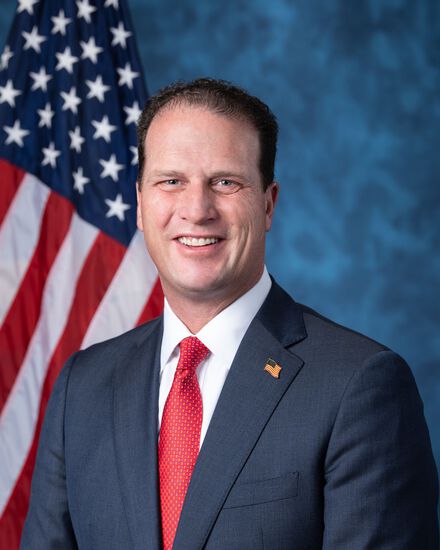
Rep. August Pfluger
Sponsored bills
This resolution demands that Russia present credible evidence of wrongdoing against U.S. citizen Paul Whelan or immediately release him. It also demands that Russia provide unrestricted consular access to Whelan and to ensure that he and all other political prisoners are afforded due process and universally recognized human rights.
Defense Budget Transparency Act of 2022 This bill requires research and specified action related to pass-through budgeting for military departments. Pass-through budgeting refers to the practice by which certain funds allocated for a military department are subject to the authority of other departments and agencies of the federal government but are included in the overall budget of the military department despite the department's lack of authority over the funds. Specifically, the bill requires the Department of Defense (DOD) to seek to enter a contract with an independent research organization to conduct a study on the effects of pass-through budgeting on the Department of the Air Force and other DOD organizations and elements. For each fiscal year beginning with FY2024, the budget justification materials submitted in support of the DOD budget must include separate line items for each military department to clearly identify any amounts requested that are subject to pass-through budgeting.
Protection of Women and Girls in Sports Act of 2021 This bill makes it a violation of federal law for a recipient of federal funds who operates, sponsors, or facilitates athletic programs or activities to permit a person whose sex is male to participate in an athletic program or activity that is designated for women or girls. The bill specifies that sex shall be recognized based solely on a person's reproductive biology and genetics at birth.
DHS Rural and Remote Hiring and Retention Strategy Act of 2022 This bill requires the Office of the Chief Human Capital Officer of the Department of Homeland Security (DHS), U.S. Immigration and Customs Enforcement (ICE), and U.S. Customs and Border Protection (CBP) to issue a strategy and implementation plan to improve the hiring and retention of individuals by ICE and CBP in rural or remote areas. DHS must periodically report to Congress and the Government Accountability Office (GAO) on the extent that the strategy and implementation plan has improved hiring and retention. After receiving each DHS report, the GAO must submit to Congress an assessment of the effectiveness of the actions described in the DHS report.
Public Health and Border Security Act of 2022 This bill requires the Department of Health and Human Services (HHS) to meet conditions related to notification and planning before terminating certain restrictions on imports and individuals entering the United States. Current law authorizes HHS to restrict entries and imports from foreign countries to prevent the introduction of communicable diseases. HHS exercised this authority as part of its COVID-19 response, including to allow for the expulsion of undocumented migrants at the border without any asylum processing. Under this bill, HHS may not terminate the restrictions for (1) at least 60 days after it notifies Congress of the end of the COVID-19 emergency, and (2) at least 30 days after it submits to Congress a plan for addressing the possible influx of migrants or imports resulting from lifting the restrictions.
The Real Emergencies Act This bill denies the President authority to declare a national emergency, an emergency or major disaster, or a public health emergency on the premise of climate change.
This resolution condemns any calls made by a Member of the House of Representatives to defund the police and expresses the sense of the House of Representatives that any member who advocates for such defunding should not be permitted to use federal funds to contract with a private entity for security personnel support.
This resolution supports the preservation of the stepped-up basis tax rule that allows recipients of inherited assets such as land, equipment, or buildings to adjust the cost basis of the assets to reflect their fair market value. The resolution opposes any efforts to impose new taxes on family farms or small businesses and recognizes the importance of generational transfers of farm and family-owned businesses.
COVID-19 American History Project Act This bill directs the American Folklife Center at the Library of Congress to establish a history project to be known as the COVID-19 American History Project to collect and make publicly available individual stories and records of experiences during the COVID-19 pandemic in the United States. The bill includes a requirement to collect video and audio recordings of personal histories and testimonials of those who were affected by the pandemic. The Librarian of Congress may solicit and accept donations of funds and in-kind contributions to carry out the project, subject to this bill.