

Maddy summaryThis bill directs the U.S. Treasury to mint commemorative coins marking the Marine Corps' 250th anniversary in 2025. It authorizes three coin types: $5 gold coins (max 50,000), $1 silver coins (max 400,000), and half-dollar coins (max 750,000), with surcharges of $35, $10, and $5 respectively. The surcharge proceeds will fund the Marine Corps Heritage Center's educational programs, with no net cost to taxpayers as the Treasury must recover all minting costs through the surcharges. The coins can only be issued during 2025, and the Treasury must ensure all costs are covered before distributing funds to the Heritage Foundation.
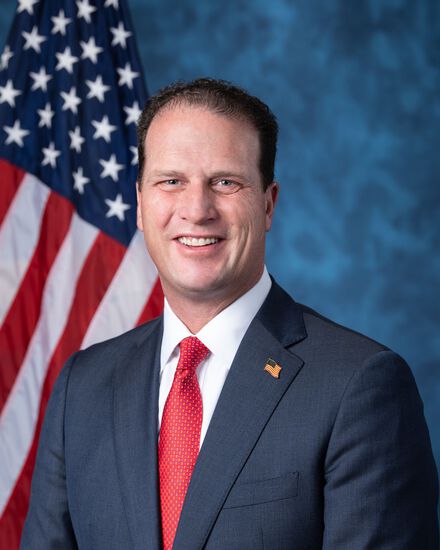
Rep. August Pfluger
Sponsored bills
Maddy summaryHR 4721, the Main Street Tax Certainty Act, makes a permanent the 20% tax deduction for eligible small business owners under Section 199A of the tax code. This provision directly affects pass-through business owners (like S-corps, partnerships, and sole proprietorships) who qualify for the deduction. The bill achieves this by removing the temporary expiration language (subsection (i)) from the existing tax code provision. The key change is ending the need for annual congressional extensions of this deduction, providing long-term tax certainty for small businesses.
Maddy summaryThis bill, HR 1282 (Major Richard Star Act), expands benefits for certain military retirees by allowing them to receive both veterans' disability compensation and military retirement pay simultaneously. It specifically affects combat-related disabled retirees under Chapter 61 of the military retirement system who have fewer than 20 years of service. The key change removes the automatic reduction of military retirement pay when these retirees also receive disability compensation, as amended in Section 1413a(b)(3) of Title 10. Technical updates to the law’s structure and effective date (starting after enactment) complete the provisions.
Maddy summaryHR 4690, the Gray Zone Defense Assessment Act, requires the U.S. government to assess and improve its capacity to counter "gray zone" state-led actions - such as disinformation, cyberattacks, or economic coercion - below the threshold of military conflict. The bill mandates two key reports: a presidential review within 180 days evaluating U.S. interagency capabilities to identify and respond to such campaigns, and a State Department report detailing its capacity to coordinate responses to adversaries like China, Russia, and Iran. These reports must include recommendations for better coordination, resources, and thresholds for action, with classified and unclassified summaries for Congress. The law aims to strengthen the U.S. government’s whole-of-government approach to countering gray zone tactics that challenge national interests without triggering direct military conflict.
Protecting Kids from Fentanyl Act of 2023 This bill permits the use of the Preventive Health and Health Services Block Grant to address fentanyl in educational institutions. Specifically, grant funds may be used to (1) purchase naloxone or other opioid overdose reversal drugs for educational institutions, (2) train school nurses and other personnel on how to administer them, and (3) provide fentanyl awareness classes or materials to students.
Maddy summaryHR 4610 amends federal tax law by changing a specific date in the Tax Reform Act of 1984 from October 9, 1969, to March 1, 1985. This adjustment aligns federal tax rules with the Texas Constitution, allowing the State of Texas to continue leveraging the Permanent University Fund (PUF) for public university funding without triggering federal tax penalties. The PUF, which supports Texas public universities, has historically benefited from a special tax rule enabling its financial investments, and this bill maintains that benefit. The change takes effect upon the bill's enactment.
Maddy summaryHR 3358, the Mission not Emissions Act, prohibits federal contractors from being required to report greenhouse gas emissions or climate-related financial risks. The bill blocks compliance with the proposed Federal Acquisition Regulation rule that would have mandated contractors to disclose Scope 1, Scope 2, and Scope 3 emissions, create emissions inventories, or set emissions reduction targets for validation. It directly affects businesses holding federal contracts by removing these specific reporting obligations. The law focuses solely on eliminating disclosure requirements, not on changing emissions standards or reduction efforts.
Maddy summaryHR 4558, the LIZARD Act, directs the U.S. Fish and Wildlife Service to immediately withdraw a proposed rule that would have listed the dunes sagebrush lizard as endangered. This bill stops the federal government from finalizing or implementing that specific rule or any substantially similar rule regarding the lizard's status. The legislation directly affects the regulatory process for the dunes sagebrush lizard under the Endangered Species Act. It does not change current protections for the species but halts a specific proposed regulatory action.
Maddy summaryThe Digital Economy Cybersecurity Advisory Act of 2023 establishes a new 5- to 25-member advisory board within the National Telecommunications and Information Administration (NTIA). The board, composed of cybersecurity experts from government, private sector businesses, network operators, and technology vendors (excluding lobbyists), will provide recommendations on securing networks, supply chains, and fostering innovation in digital infrastructure. It focuses on practical policies like protecting critical protocols (e.g., Border Gateway Protocol) and removing barriers to trust in information networks. The board will serve for up to 4 years before terminating, with members appointed by the NTIA Assistant Secretary without pay.
Maddy summaryHR 4343, the Organ Donation Clarification Act of 2023, amends the National Organ Transplant Act to permit limited noncash reimbursements for organ donors, such as medical costs, lost wages, travel expenses, and dependent care. It allows federal or state pilot programs to test these reimbursements under strict ethical oversight, aiming to increase donation rates without enabling financial incentives. The bill directly affects potential organ donors and transplant recipients by addressing financial barriers to donation, such as costs of medical care and lost income, while prohibiting cash payments or tradable benefits. These pilots must measure impacts on donation rates, donor demographics, and fairness in organ distribution, with reports to Congress after three years.