

Maddy summaryThis bill requires the President's annual budget submission and congressional budget resolutions to include the ratio of public debt to estimated gross domestic product (GDP). It amends existing laws (31 U.S.C. §1105(a) and the Congressional Budget and Impoundment Control Act of 1974) to mandate this specific metric be reported. The change would standardize the inclusion of this ratio in federal budget documents, making it a formal part of fiscal planning. It is a procedural update to reporting requirements, not a policy change affecting debt levels or spending.
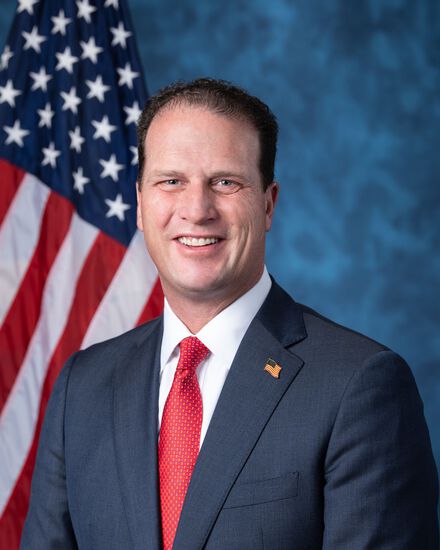
Rep. August Pfluger
Sponsored bills
Maddy summaryHR 6986 limits patent holders from asserting multiple patents in infringement lawsuits against companies developing generic drugs or biosimilars. Specifically, it allows only one patent per "Patent Group" (commonly owned patents related through certain legal filings) to be claimed against such companies in a single lawsuit. This directly affects drug/biosimilar manufacturers submitting applications under FDA approval pathways (21 U.S.C. 355 or 42 U.S.C. 262) or selling approved versions of these products. The rule applies to new applications filed after the bill's enactment, aiming to reduce complex patent litigation tactics.
Maddy summaryHRES 941 is a non-binding House resolution condemning the final agreement from the December 2023 UN Climate Change Conference in Dubai, which includes language urging a "transitioning away from fossil fuels." The resolution states that Congress believes the U.S. should not promote policies discouraging fossil fuels and urges the Biden administration not to implement policies aligned with the UN agreement. It references U.S. energy exports and economic benefits from fossil fuel production as context for its position. This resolution has no legal effect and serves only as a symbolic expression of congressional sentiment.
Maddy summaryHR 1147, the Whole Milk for Healthy Kids Act of 2023, allows schools participating in the National School Lunch Program to offer whole milk as an option during lunch. It amends the school lunch law to explicitly permit schools to serve flavored and unflavored whole milk alongside reduced-fat, low-fat, and fat-free milk choices for students. The bill also requires the Secretary of Agriculture to adjust meal regulations to account for saturated fat from whole milk, ensuring it doesn't count against meal fat limits. This change directly affects participating schools and the students who receive school lunches, expanding their milk beverage options.
Maddy summaryThe 988 Lifeline Location Improvement Act of 2023 establishes a federal advisory committee to study how location information is transmitted for 988 calls. The committee, composed of representatives from telecom providers, mental health organizations, crisis centers, and government agencies, will examine privacy concerns, technical standards, and funding needs for improving location data accuracy during 988 Suicide and Crisis Lifeline calls. It must submit a report within one year to Congress and the FCC with recommendations for potential policy changes. This bill does not enact new requirements but directs a study to address challenges in connecting callers to local crisis services. The committee will terminate 30 days after submitting its report.
Maddy summaryThis bill reauthorizes and extends funding for programs addressing substance use disorders and opioid addiction, including residential treatment for pregnant and postpartum women, first responder training, and community recovery initiatives. It increases funding levels for these programs, adds xylazine to Schedule III of controlled substances, and requires a study on remote monitoring for patients prescribed opioids. The bill also expands Medicaid coverage requirements for medication-assisted treatment and mandates reporting on mental health condition data alongside substance use disorder data, directly affecting individuals with substance use disorders, healthcare providers, and state and tribal governments.
Maddy summaryHR 6619, the PATROL Act, prevents the federal government from suing states for building border barriers. It specifically blocks the Attorney General from filing civil lawsuits under the 1899 Act against states that construct physical barriers (like walls, fences, or buoys) along the border to stop illegal entry or protect state territory. The law directly affects states building such barriers and the federal government’s legal authority to challenge those actions. This is a procedural change that removes a legal obstacle for states pursuing border security measures.
Maddy summaryThe Innovative FEED Act of 2023 defines and regulates "zootechnical animal food substances" - substances added to animal feed to affect digestion, reduce foodborne pathogens, or alter gut microbiome without providing nutrition. It requires these substances to be approved as food additives by the FDA under existing rules, with specific data on intended effects and mandatory labeling stating "Not for use in the diagnosis, cure, mitigation, treatment, or prevention of disease in animals." The bill excludes drugs, hormones, ionophores, and other substances from this category. This directly affects animal feed manufacturers, the FDA’s regulatory process, and the labeling requirements for these products.
Maddy summaryHR 6600, "Tyler’s Law," requires the Secretary of Health and Human Services to study how often hospital emergency departments test for fentanyl during overdose cases, along with the costs, benefits, risks, and patient privacy impacts. The study must be completed within one year of the bill’s enactment, followed by guidance issued within six months on whether fentanyl testing should become routine. This guidance will address how hospitals can inform clinicians about testing protocols and how fentanyl testing might affect future overdose risks and patient health outcomes. The bill directly affects hospitals and emergency departments treating overdose patients, focusing on improving data-driven practices for fentanyl detection.
Maddy summaryHR 4468, the Choice in Automobile Retail Sales Act of 2023, blocks the Environmental Protection Agency (EPA) from finalizing or enforcing a specific proposed rule setting emissions standards for 2027+ light-duty vehicles. It amends the Clean Air Act to prevent future EPA regulations from mandating specific vehicle technologies or limiting the availability of new vehicles based on engine type (e.g., gasoline vs. electric). The bill directly affects EPA rulemaking authority and automakers' compliance with emissions standards, ensuring new vehicle options remain diverse without technology mandates. This is a procedural change to federal emissions regulations, not a direct consumer or industry mandate.