

Maddy summaryHR 1417 establishes a new program within the U.S. Department of Agriculture to provide tailored technical assistance to rural health care facilities. The program directly supports facilities like hospitals, clinics, and health centers in rural areas by helping them identify operational needs, improve financial management, and access USDA loan and grant programs. Key provisions include prioritizing facilities in medically underserved areas or facing financial vulnerability, with a $2 million annual funding limit for fiscal years 2026-2030. The program requires annual reports on outcomes and effectiveness to Congress, focusing on preventing facility closures and strengthening rural health care delivery.
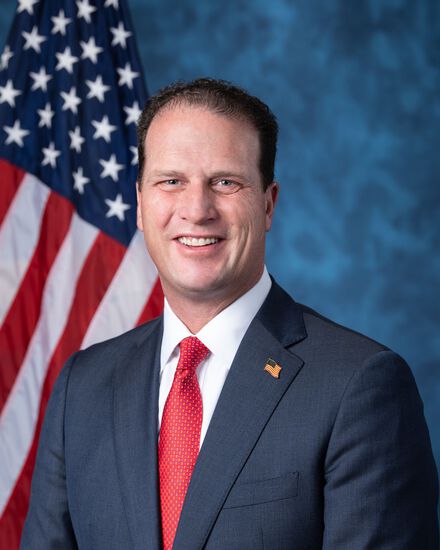
Rep. August Pfluger
Sponsored bills
Maddy summaryThe SHORT Act (HR 2395) redefines federal firearm definitions to exclude antique and collector firearms from being classified as firearms, and removes distinctions between short-barreled rifles and shotguns in federal regulations. It prevents state laws from imposing taxes or registration requirements on short-barreled rifles and shotguns, requiring state rules to align with federal compliance instead. The bill also mandates the federal government to destroy specific records related to these firearms within one year of enactment.
Maddy summaryThe Freedom from Unfair Gun Taxes Act of 2025 would prohibit states and local governments from imposing taxes on the sale of firearms, ammunition, or firearm parts during interstate or foreign commerce. This bill directly affects state tax policies and manufacturers or dealers selling these items across state lines. It explicitly states that the bill does not change the existing federal tax on firearms and ammunition that funds wildlife conservation programs. The key provision bans state-level taxes for these sales in interstate transactions while preserving current federal funding mechanisms.
Maddy summaryHR 2362, the VA Home Loan Awareness Act of 2025, requires lenders using the standard Uniform Residential Loan Application to add a specific disclaimer below the military service question. The disclaimer states: "If yes, you may qualify for a VA Home Loan. Consult your lender regarding eligibility." This affects all lenders nationwide that use this common mortgage application form. The bill also mandates a Government Accountability Office (GAO) study within 18 months to check if at least 80% of lenders are including the required disclaimer on the form.
Maddy summaryHR 2138, the Veterans’ Compensation Cost-of-Living Adjustment Act of 2025, requires the Department of Veterans Affairs to increase disability compensation and survivor benefits for veterans and their families on December 1, 2025. It directly affects veterans receiving disability compensation (including wartime rates), dependents, and survivors (spouses and children) who currently qualify for benefits under specific provisions of Title 38, U.S. Code. The bill mandates that these payments increase by the same percentage as the annual cost-of-living adjustment (COLA) for Social Security benefits effective December 2025. This ensures veterans' benefits rise with inflation, aligning with Social Security’s automatic adjustment mechanism.
Maddy summaryThe United States Leadership in Immersive Technology Act of 2025 creates a federal advisory panel to guide U.S. leadership in immersive technologies like augmented reality (AR) and virtual reality (VR). The panel, made up of federal agency heads and outside experts, will study how these technologies impact the economy, national security, and ethical issues such as privacy. Within two years, the panel must complete a detailed study and submit a report to Congress with recommendations to boost U.S. competitiveness and coordination between government and industry. This bill does not impose new regulations but aims to strengthen federal coordination in a growing technology sector.
Fairness for High-Skilled Americans Act of 2025 This bill eliminates the Optional Practical Training Program or any successor program, unless Congress expressly authorizes such a program. (The program provides an F-1 student visa holder temporary employment authorization before or after completion of the student's studies, or both.)
Maddy summaryThis bill would cancel a specific Environmental Protection Agency (EPA) rule finalized in March 2024 that reconsidered national air quality standards for particulate matter. It directly affects the EPA’s regulatory authority and would prevent the implementation of that rule, impacting industries and communities subject to particulate matter air quality standards. The key mechanism is a direct nullification of the EPA’s final rule (89 Fed. Reg. 16202), declaring it "shall have no force or effect." This policy change would revert to prior air quality standards without altering the broader regulatory framework.
Maddy summaryHR 2273, the UPRISERS Act, would require the revocation of student visas for international students on F-1, J-1, or M-1 visas who are convicted of assaulting a police officer or committing specific riot-related offenses. These offenses include inciting riots, organizing or participating in riots, committing violence during riots, or aiding others in such acts. The bill adds these convictions as automatic grounds for deportation under existing immigration law. It directly affects international students holding these specific visa types who face criminal convictions for the listed violent or disruptive conduct. The policy change would make visa revocation and deportation mandatory for these offenses, rather than leaving it to discretionary enforcement.
Maddy summaryHR 2272, titled the "FAFSA Act of 2025" (though unrelated to the FAFSA application), would terminate federal student aid eligibility for individuals convicted of specific violent offenses. It directly affects students convicted of assault against police officers or certain riot-related crimes (like inciting violence or participating in riots), requiring them to repay any grants received under the Higher Education Act and converting those grants into unsubsidized loans. Key provisions include automatic loss of future aid, repayment of past grants as loans, and exclusion from all loan forgiveness or discharge programs. The bill takes effect for the first aid year after its enactment, impacting only those with convictions meeting its defined criteria.