

Maddy summaryHR 2139 requires the Department of Homeland Security to develop training for state, local, Tribal, campus, and territorial law enforcement to identify and respond to foreign government actions targeting U.S. persons (e.g., coercion, harassment, or threats for exercising constitutional rights). The training covers recognizing transnational repression tactics, collecting and sharing relevant data with communities, and providing personal safety guidance for victims. It also includes community awareness briefings to help affected individuals identify threats and access support services like victim assistance programs. The program will be delivered through federal training centers and coordinated with fusion centers, aiming to strengthen local capabilities without changing existing laws.
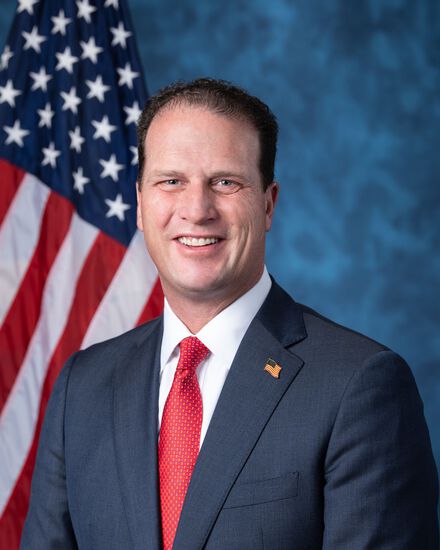
Rep. August Pfluger
Sponsored bills
Maddy summaryThis bill requires the Department of Homeland Security to launch a public service campaign educating the public and international allies about transnational repression - when foreign governments harass, threaten, or retaliate against people in the U.S. to coerce them or punish exercise of rights. The campaign must provide resources for victims, including anonymous FBI reporting options, and operate in relevant languages. It also mandates research into technologies to help law enforcement counter these threats while respecting privacy and civil liberties. The bill directly affects victims of transnational repression and federal, state, local, tribal, and territorial law enforcement agencies.
Maddy summaryHR 1793, the Veterans Readiness and Employment Transparency Act of 2025, requires the Department of Veterans Affairs (VA) to improve access to vocational rehabilitation services for veterans with service-connected disabilities. The bill mandates a dedicated VA hotline, updated regional office websites with contact details, and requires VA counselors to hold monthly staff Q&A sessions and provide in-person briefings at local educational institutions (or virtual briefings for institutions over 150 miles away). It also requires the VA to submit an annual report detailing the number of veterans requesting, receiving, and being denied extensions to their rehabilitation program periods. These provisions directly affect veterans using VA vocational rehabilitation programs and VA regional office staff responsible for delivering those services.
Maddy summaryHR 1423, the Guard and Reserve GI Bill Parity Act of 2025, expands GI Bill benefits to National Guard members who serve on full-time National Guard duty or active duty under Title 32. It removes previous exclusions by counting this service toward eligibility for Post-9/11 educational benefits, just like active-duty service. The change applies retroactively to service performed since September 11, 2001, allowing affected veterans to access benefits they were previously denied. This policy adjustment directly affects National Guard members who completed qualifying full-time duty since 2001.
Nuclear Family Priority Act This bill imposes limits on various types of family-sponsored immigration visas. The non-U.S. national ( alien under federal law) parents of U.S. citizens shall not qualify for visas for immediate relatives, which are not subject to any direct numerical limits. Currently, the spouses, unmarried children under 21, and parents of citizens are considered immediate relatives. The bill also creates a nonimmigrant visa for such parents of citizens. Such non-U.S. nationals shall not be eligible for employment or any public benefits. The bill also reduces the baseline annual cap for family-sponsored visas from 480,000 to 88,000, and revises the methods for calculating the cap. Currently, the 480,000 cap may be adjusted depending on various factors but shall not be less than 226,000. The bill eliminates preference allocations (visa categories subject to various annual caps) for various family-sponsored visas, including those for the siblings and married children of citizens. The bill provides for a preference allocation for the unmarried children under 21 and spouses of permanent residents, subject to the 88,000 annual cap.
Maddy summaryThis bill amends immigration law to expand mandatory detention for non-citizen immigrants convicted of specific property crimes. It adds trespassing, vandalism, and arson to the list of offenses that trigger detention under Section 236(c) of the Immigration and Nationality Act, alongside burglary and serious bodily injury. Non-citizen immigrants convicted of these crimes would now face automatic detention without bond, rather than potentially being released pending removal proceedings. The key change modifies existing detention criteria to include these three property crimes as grounds for mandatory immigration detention.
Maddy summaryHR 1039, the Clear Communication for Veterans Claims Act, requires the Department of Veterans Affairs (VA) to commission an independent assessment of notices sent to veterans filing claims. Within 30 days of enactment, the VA must partner with a federally funded research center to evaluate these notices, focusing on making them clearer, more concise, and better organized while reducing paper use and government costs. The assessment, developed with input from veterans' groups and experts, must be submitted to Congress within 90 days, and the VA must implement feasible recommendations within one year. This bill directly affects veterans navigating claims processes and aims to improve their experience through clearer communication. The bill also includes a minor technical change to housing loan fee deadlines.
Maddy summaryThis bill, HR 2102 (Major Richard Star Act), allows veterans with combat-related disabilities to receive both full military retired pay and veterans' disability compensation simultaneously, without the previous offset that reduced retired pay. It directly affects veterans already eligible for both benefits due to combat-related injuries, removing the requirement that their retired pay be reduced by the disability compensation amount. The key provision amends Title 10 and Title 38 to eliminate the offset rule (sections 5304 and 5305 of Title 38) for these veterans. The change applies to payments starting after the bill’s enactment date, effective for all qualifying veterans. This is a policy change to increase financial support for affected veterans, not a new benefit.
Maddy summaryHR 2644, the "Love Them Both Act of 2025," prohibits the Equal Employment Opportunity Commission (EEOC) and the Office of Congressional Workplace Rights from finalizing, implementing, or enforcing any regulations related to abortion or abortion-related services under the Pregnant Workers Fairness Act. This bill directly affects federal agencies responsible for workplace regulations, blocking them from creating rules about abortion coverage in employment contexts. The key mechanism is a specific restriction on regulatory actions, preventing agencies from developing policies on abortion-related services under the existing Pregnant Workers Fairness Act. It does not alter the core protections of the Pregnant Workers Fairness Act but limits how its regulations can address abortion coverage.
Maddy summaryHR 2608 permanently removes seven specific species - including Arabian oryx, banteng, and Grevy’s zebra - from the federal endangered and threatened species lists under the Endangered Species Act. It also prohibits the U.S. Fish and Wildlife Service from listing the Bukharan markhor as threatened or endangered in the future. This change ends federal legal protections for these species under the Act. The bill applies only to the named species and the Bukharan markhor’s future status.