

Maddy summaryHR 1286, the Simplifying Forms for Veterans Claims Act, requires the Department of Veterans Affairs (VA) to simplify forms sent to veterans filing claims. Within 30 days of enactment, the VA must hire an independent research center (FFRDC) to assess these forms, working with veterans' groups, legal experts, and the VA itself. The VA must then report the assessment to Congress within 90 days and implement approved changes - like clearer language or better organization - within two years. This directly affects veterans navigating VA claims by aiming to reduce confusion in the application process.
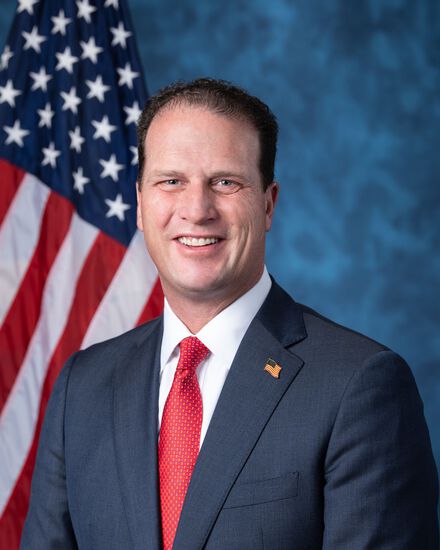
Rep. August Pfluger
Sponsored bills
Maddy summaryHR 3464 creates two federal funds to support state and local border security efforts. The DHS fund ($11 billion) provides grants for constructing border barriers, surveillance systems, and relocating undocumented immigrants along the southern border. The DOJ fund ($3.5 billion) funds state efforts to locate, apprehend, prosecute, and detain undocumented immigrants for crimes, including gang activity and human trafficking. Both funds cover eligible expenses from 2021 onward and expire on January 20, 2029, with unused funds returned to the Treasury.
Maddy summaryHR 3463 (COUNTER Act) expands the U.S. military's authority to counter drone threats by allowing the Department of Defense and Coast Guard to neutralize unmanned aircraft systems without being restricted by certain federal laws. It exempts related technology, procedures, and protocols from public disclosure requirements under federal and state laws, and permits military commanders to delegate these actions. The bill applies to both domestic and overseas operations, clarifying that other federal laws do not apply to U.S. military or Coast Guard activities mitigating drone threats abroad. Key changes include broadening legal authority beyond previous restrictions and extending reporting deadlines for related activities.
Maddy summaryThe Conscience Protection Act of 2025 would protect health care providers, facilities, and insurers that choose not to provide, refer for, or cover abortion services. It prohibits discrimination against such entities by the federal government, states, or any recipient of federal funds. The bill creates a private right of action allowing affected individuals or entities to sue for violations of conscience protections. It also establishes administrative enforcement mechanisms through the Department of Health and Human Services' Office for Civil Rights. This would strengthen existing conscience protections like the Weldon Amendment by ensuring entities can maintain religious or moral objections without facing penalties.
Maddy summaryHR 3392, the STOP Screwworms Act, requires the U.S. Department of Agriculture to build modular facilities for rearing sterile New World screwworm flies within 180 days of enactment. These facilities will disperse sterile flies into at-risk agricultural areas - identified based on migratory patterns and suitability for dispersal - to prevent infestations that threaten livestock. The bill authorizes $300 million in funding for construction, operation, and annual reporting to Congress on threat assessments and effectiveness. It directly affects livestock producers and agricultural regions vulnerable to screwworm fly migration, using sterile insect technique as a preventive measure.
Maddy summaryThe ETHIC Act (HR 3269) limits how many patents pharmaceutical companies can assert in lawsuits against generic drug and biosimilar manufacturers. Specifically, it prohibits a company from claiming more than one patent per "Patent Group" (commonly owned patents linked through disclaimers) in an infringement case involving a generic drug applicant or biosimilar product. This directly affects generic drug makers (under FDA's 505(b)(2) or 505(j) pathways) and biosimilar developers (under the Public Health Service Act), reducing the ability of brand-name companies to use stacked patents to delay competition. The law applies to applications submitted after its enactment date.
Maddy summaryHR 3294, the "Justice for Victims of Illegal Alien Murders Act," amends federal murder sentencing to mandate the death penalty or life imprisonment for first-degree murder, and life or long-term imprisonment for second-degree murder, committed by non-citizens classified as inadmissible (e.g., due to prior criminal convictions) or deportable under specific immigration laws. The bill directly affects non-citizens who fall under these immigration categories and are convicted of murder in the U.S. It changes sentencing provisions under Title 18, U.S. Code, by adding these mandatory penalties for such offenses. The law focuses solely on modifying criminal penalties for specific convicted non-citizens, not on immigration enforcement or new legal standards. It does not alter immigration status requirements or create new procedures.
Maddy summaryHR 2623, the Innovative Therapies Centers of Excellence Act of 2025, directs the Department of Veterans Affairs to establish at least five specialized medical centers focused on treating veterans with specific conditions like PTSD, depression, chronic pain, and substance use disorders using innovative therapies. These centers must meet strict criteria, including academic partnerships with medical schools, research capabilities, veteran advisory committees, and data-sharing systems for evaluating treatment effectiveness. The bill authorizes $30 million annually for these centers' research and education activities and requires the VA to submit annual reports to Congress on their operations and findings. It directly affects veterans seeking advanced treatments for covered conditions through VA facilities and establishes a peer review process to select designated centers based on scientific merit.
Maddy summaryHR 881, the DHS Restrictions on Confucius Institutes and Chinese Entities of Concern Act, restricts Department of Homeland Security (DHS) funding for colleges and universities that maintain relationships with China-funded Confucius Institutes or specific Chinese entities deemed "of concern." It prohibits DHS funding for institutions with ties to Confucius Institutes, the Thousand Talents Program, or Chinese universities involved in military-civil fusion, defense work, Uyghur persecution, election interference, or other activities listed in the bill. Institutions must terminate such relationships within one year of enactment to regain eligibility for DHS funds. The bill requires the DHS Secretary to report to Congress on any institutions violating this funding restriction. (3 sentences)
Maddy summaryThis bill creates a new system for recognizing and regulating individuals who help veterans file benefit claims. It requires the VA to provide veterans with information about free assistance options and maintain a public list of accredited representatives. The bill sets a maximum fee limit of $12,500 or 5 times the monthly benefit increase for representatives, and establishes penalties for unaccredited representatives who charge improper fees. The law aims to protect veterans from unscrupulous representatives while ensuring they have access to quality assistance with their benefit claims.