

Maddy summaryHR 5580, the Charlie Kirk Commemorative Coin Act, authorizes the U.S. Mint to produce 400,000 $1 silver coins in 2026 to honor Charlie Kirk, founder of Turning Point USA, who died in 2025. The coins must feature Kirk's image on the obverse and "well done, good and faithful servant" on the reverse, with standard minting specifications. They will be sold at face value plus production costs to collectors, with no net cost to the government. This bill has no policy impact beyond commemoration; it affects only the U.S. Mint and coin collectors.
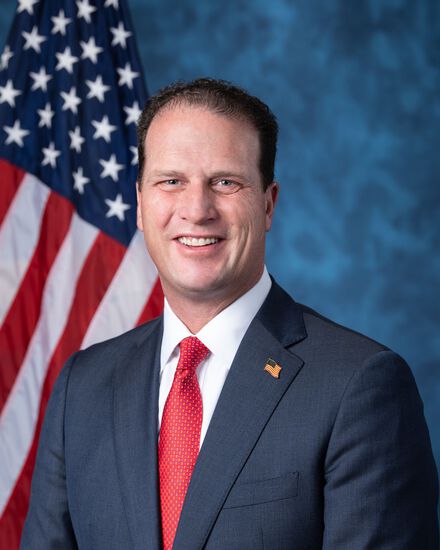
Rep. August Pfluger
Sponsored bills
Maddy summaryThe LAUNCH Act streamlines licensing for commercial space companies by creating a digital tracking system to monitor application status and reduce delays in approvals. It requires the Transportation Secretary to evaluate current regulations (part 450), establish a dedicated Commercial Space Transportation Administration, and assign specialized staff to assist applicants. The bill also modifies remote sensing licensing rules to minimize review timelines and clarify which instruments (e.g., safety-focused cameras) don’t require full remote sensing permits. These changes directly affect commercial launch providers, satellite operators, and remote sensing companies by aiming to speed up approvals and reduce bureaucratic hurdles.
Maddy summaryThe SAVES Act (HR 2605) creates a 5-year pilot program where the Department of Veterans Affairs (VA) awards competitive grants to nonprofit organizations to provide service dogs to veterans with specific disabilities. It directly affects veterans with covered conditions like blindness, mobility impairments, PTSD, traumatic brain injury, or other disabilities deemed appropriate for service dog assistance by the VA. Key provisions include: grants capped at $2 million per nonprofit (with $10 million annually authorized), no fees charged to veterans, VA-provided lifetime veterinary insurance for the dogs, and requirements for nonprofits to train veterans and maintain humane animal standards. The program aims to expand access to service dogs as a support tool for veterans managing qualifying disabilities.
Maddy summaryHR 5548, the Fraud Accountability and Recovery Act, blocks U.S. foreign aid to countries that fail to extradite individuals convicted of defrauding the U.S. or assist in recovering stolen federal funds. The bill directly affects foreign governments that do not take legal action to identify, freeze, seize, or repatriate funds fraudulently obtained from U.S. programs. Key provisions require the President to withhold aid under the Foreign Assistance Act if a country neglects these measures, and mandate annual reports listing non-compliant countries along with the value of unrecouped fraud funds. The bill cites examples like a $250 million pandemic food fraud scheme in Minnesota to highlight the scale of losses (estimated $233-$521 billion annually), but focuses on preventing future fraud by denying safe havens abroad. It includes a presidential waiver option for national security reasons, requiring prior congressional notification.
Maddy summaryHRES 719 is a House resolution honoring Charles "Charlie" James Kirk, the founder of Turning Point USA who was assassinated on September 10, 2025. The resolution condemns his assassination and all political violence, extends condolences to his family, and calls on Americans to reject violence while promoting civil discourse. It specifically recognizes Kirk's legacy as a defender of constitutional principles and his role in inspiring youth through free speech and faith-based civic engagement. As a commemorative resolution, it does not enact policy changes but formally expresses the House's stance on honoring his life and legacy.
Maddy summaryHR 5526, the Biosimilar Red Tape Elimination Act, streamlines the U.S. Food and Drug Administration’s (FDA) process for approving biosimilar drugs that can be used interchangeably with brand-name biologic medications. It establishes a 60-day transition period after enactment to clarify when biosimilars are deemed "interchangeable" with reference drugs, preserving existing exclusivity periods for products licensed before the law’s passage. This affects pharmaceutical manufacturers developing biosimilars, the FDA (which must update its guidance within 18 months), and healthcare systems seeking lower-cost treatment options. The bill removes redundant language from existing laws and ensures the FDA’s approval standards for biosimilars remain unchanged, focusing on regulatory clarity rather than altering drug safety or efficacy requirements.
Maddy summaryHRES 744 is a non-binding House resolution supporting the designation of September 21-27, 2025, as "Gold Star Families Remembrance Week." It honors families who lost members in military service (Gold Star Families) and families of veterans, recognizing their sacrifices. The resolution encourages Americans to observe the week through community service and by celebrating the lives of those who died defending the U.S. It does not create new laws or policies but formally recognizes these families annually. This is a commemorative measure, not a legislative change.
Maddy summaryThis federal bill requires abortion providers to inform patients about potential reversal of mifepristone-based chemical abortions (the two-drug process) at least 24 hours before the procedure. After the first drug is dispensed, providers must give written instructions stating that reversal may be possible if the second pill hasn't been taken. Facilities must post visible signs about reversal options, and the government must maintain a website with reversal resources. Violations allow affected patients or family members to sue for damages.
Maddy summaryHR 5454, the Medicare Advantage Prompt Pay Act, requires Medicare Advantage plans to pay 95% of valid claims (with complete data) within 14 days for electronic claims or 30 days for paper claims, starting January 1, 2027. Plans that miss these deadlines must pay interest at standard government rates and face $25,000 civil penalties per violation. The bill also mandates annual reports showing payment rates for in-network versus out-of-network claims and interest paid. This directly affects Medicare Advantage insurers and healthcare providers (like doctors and hospitals) who bill these plans.
Maddy summaryThis bill permanently bans nitazenes and all structurally related synthetic opioids under federal law, creating a broad definition that covers numerous chemical variations designed to evade current restrictions. It directly affects anyone manufacturing, distributing, or possessing these substances without authorization, including illicit drug producers and users. The key mechanism is a class-wide Schedule I classification that includes specific structural features (like modified benzimidazole rings) and excludes new analogs from legal loopholes. This approach aims to prevent new nitazene variants from entering the illegal market and addresses their role in overdose deaths. Substances previously temporarily banned under similar rules will now be permanently prohibited as of the bill's enactment.