

Maddy summaryThis bill clarifies liability for payroll tax errors when third-party payroll services (like professional employer organizations) rely on employer certifications. It allows these services to depend on employer-provided information unless they knew or should have known of an error. If an error is discovered, the employer bears full liability unless the third party had "constructive knowledge" of the error, in which case liability is shared based on the portion of the error the third party knew about. The bill also prevents the IRS from delaying payroll tax credits or auditing employers solely because a third party relied on an erroneous certification from that employer. It directly affects third-party payroll services and the businesses that use their services for tax filings.
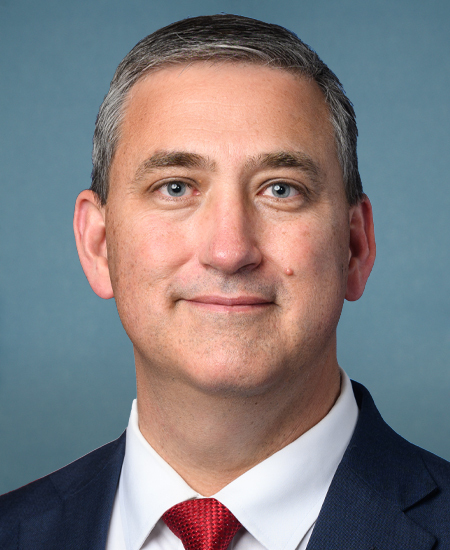
Rep. Nathaniel Moran
Sponsored bills
Maddy summaryHR 3206, the Protecting America's Property Rights Act, requires Fannie Mae and Freddie Mac (the "Enterprises") to use third-party insurance products regulated by state authorities for mortgage lien and title protection. It mandates that any mortgage purchased by these entities must involve products regulated by state insurance or financial authorities, as defined in existing federal law. To enforce this, the bill adds a 1.00% capital requirement on the unpaid principal balance of mortgages that don’t meet this standard. The Director of the Federal Housing Finance Agency must issue implementing regulations within 180 days of the bill’s enactment.
Maddy summaryThis bill creates a new system for recognizing and regulating individuals who help veterans file benefit claims. It requires the VA to provide veterans with information about free assistance options and maintain a public list of accredited representatives. The bill sets a maximum fee limit of $12,500 or 5 times the monthly benefit increase for representatives, and establishes penalties for unaccredited representatives who charge improper fees. The law aims to protect veterans from unscrupulous representatives while ensuring they have access to quality assistance with their benefit claims.
Maddy summaryThis bill prohibits U.S. State Department and USAID funds from supporting any program, contract, or policy that knowingly uses goods made in Xinjiang, China - including products from entities listed under existing U.S. sanctions. It requires contractors to provide written assurances they won’t use Xinjiang-made goods and mandates the Secretary of State to notify Congress before authorizing exceptions. Annual reports to Congress must detail violations, enforcement challenges, and improvement plans for the policy. The law defines "forced labor" using existing U.S. tariff law (19 U.S.C. 1307) and applies to all U.S. foreign aid activities involving Xinjiang-sourced goods.
Maddy summaryHR 3134, the Emergency Care Improvement Act, allows Medicare and Medicaid to reimburse freestanding emergency centers (FECs) for specific emergency services. The bill defines FECs as 24/7 facilities meeting state emergency care standards, with physician staffing, hospital referral agreements, and quality programs - currently operating in over 118 locations, primarily in Texas. It amends coverage rules to include FECs under Medicare Part B and Medicaid for "specified emergency services" (excluding certain evaluation codes), sets payment rates based on outpatient department standards, and extends EMTALA emergency care laws to cover these centers. This policy change directly affects FECs and Medicare/Medicaid beneficiaries by enabling reimbursement for emergency care previously excluded from coverage.
Maddy summaryThe PREVAIL Act (HR 3160) reforms U.S. patent procedures to strengthen patent protection and reduce inefficiencies in the patent system. It requires 3-member panels for patent reviews, establishes a code of conduct for Patent Trial and Appeal Board members, and introduces new certification requirements for petitioners to prevent frivolous challenges. The bill also aims to eliminate repetitive patent challenges by requiring transparency about financial contributors to patent challenges and preventing duplicate proceedings across courts. This affects patent owners, challengers, and the USPTO, with the goal of making the patent system more reliable for innovators. Additionally, it changes how patent fees are handled, creating a dedicated fund to support patent and trademark operations.
Maddy summaryHR 3118, the "No Tax on Overtime Act," creates a new tax deduction for workers who earn overtime pay under the Fair Labor Standards Act (FLSA). It allows taxpayers to deduct up to $100 per 100 hours of overtime (capped at 300 hours yearly) from their taxable income, with a phaseout for higher earners ($100 reduction for every $1,000 over $100,000 AGI). Employers must report overtime amounts on W-2 forms, and taxpayers must include the recipient’s Social Security number to claim the deduction. The deduction applies to tax years beginning after December 31, 2024.
Maddy summaryThis bill expands access to employee ownership by modifying the Small Business Act to allow S corporations owned by employee stock ownership plans (ESOPs) to retain small business status, even when an ESOP owns over 49% of the company. It creates a new Treasury Department office to provide education and technical assistance for S corporations establishing ESOPs, and establishes a Labor Department Advocate for Employee Ownership to coordinate outreach and resolve disputes. These changes directly affect S corporations transitioning to ESOP ownership and their employees, who gain retirement benefits through ESOP accounts. The bill aims to increase employee ownership by removing eligibility barriers and improving support for businesses adopting this model.
Maddy summaryThe Clean Slate Act of 2025 automatically seals federal criminal records for individuals convicted of nonviolent marijuana offenses (under 21 U.S.C. 844) or arrested without conviction, after they complete all sentence requirements. It also creates a petition process for individuals convicted of other nonviolent federal offenses who have completed their sentences, requiring courts to balance public safety concerns against the individual's rehabilitation when deciding whether to seal records. Sealed records cannot be accessed for most background checks, employment, or housing applications, with limited exceptions for law enforcement, national security positions, or firearm-related employment. The bill directly affects individuals with certain nonviolent federal convictions or arrests who have completed their sentences, excluding those with violent offenses, sex offenses, or national security convictions.
Maddy summaryThis bill temporarily allows doctors to prescribe and dispense certain Medicare-covered medications directly to seniors in their offices from 2026 to 2030, under specific conditions. It requires prior in-person visits, limits dispensing to group practices, and mandates billing through the physician’s practice. The bill also directs the GAO to study whether physician-owned pharmacies are becoming common and how such arrangements might affect prescribing. It directly affects seniors receiving Medicare Part D drugs and physician practices participating in these arrangements. The exception expires in 2030, with no changes to Medicare Part D program rules.