

Maddy summaryThe Protect Working Musicians Act of 2026 allows independent musicians and small music businesses to collectively negotiate licensing terms with large online music streaming platforms without fear of antitrust lawsuits. To qualify for this protection, creators must own their own copyrights and earn less than $1 million in licensing revenue annually, while the platforms targeted must generate over $100 million in music-related revenue. The law explicitly permits these groups to coordinate on pricing and licensing strategies, provided the negotiations remain fair and do not involve outside parties. Additionally, the bill extends similar collective bargaining protections to negotiations with companies developing generative artificial intelligence systems.
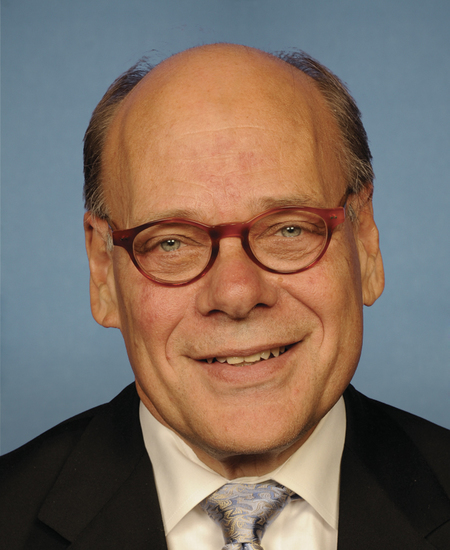
Rep. Steve Cohen
Sponsored bills
Maddy summaryThis bill, titled the No Presidential Self-Serving Lawsuits Act of 2026, prevents the current or former President of the United States from filing civil lawsuits against the federal government. It specifically invalidates an existing settlement agreement between a former President and the Internal Revenue Service and bars the use of federal funds to create compensation for such lawsuits. Additionally, the legislation authorizes the Treasury Secretary to recover any money already spent in violation of these new restrictions. The primary goal is to stop a President from using taxpayer money to settle legal disputes with the government they lead.
Maddy summaryThis bill would add pharmacist services to Medicare Part B coverage for beneficiaries, specifically covering pharmacist-led testing and treatment for illnesses like flu, COVID-19, or strep throat during public health emergencies. It defines covered services as those performed under state law, often requiring collaboration with a physician, and sets payment at 80% of the lesser of the actual charge or 85% of physician payment rates. Pharmacists would be prohibited from balance billing for these services, ensuring Medicare beneficiaries pay only their standard copayment. The changes would take effect January 1, 2026.
Maddy summaryThe Smithsonian American Women’s History Museum Act authorizes the creation of a new Smithsonian museum dedicated to women’s history, to be located within the National Mall Reserve in Washington, D.C. If the site is managed by another federal agency, the bill requires that agency to transfer the land after notifying Congress and relevant committees. The museum must ensure exhibits and programs accurately represent diverse women’s experiences by consulting a broad range of experts and community voices. The Smithsonian will submit biennial reports to Congress detailing how the museum meets these representation standards.
Maddy summaryThis concurrent resolution directs the President to withdraw U.S. military forces from active hostilities with Iran. The measure relies on the War Powers Resolution, requiring the President to end combat operations unless the forces are needed to defend the United States or its allies from an immediate attack. Any continued use of troops in such defensive scenarios must still follow specific reporting and notification rules, and full military engagement is only permitted if Congress explicitly authorizes it through a formal declaration of war or a specific authorization for force.
Maddy summaryThis bill nullifies a specific decision made by the Endangered Species Committee regarding oil and gas operations in the Gulf of America. It immediately cancels any exemptions previously granted to these activities under the Endangered Species Act and bars federal agencies from using funds to enforce the canceled order. For a three-year period starting when the bill is enacted, the committee is prohibited from issuing any new exemptions for Gulf oil and gas projects. Consequently, all standard environmental protections required by the Endangered Species Act will continue to apply fully to these activities.
Maddy summaryThe No Taxpayer-Funded Settlement Slush Funds Act of 2026 prohibits the use of federal money to pay specific settlements involving high-ranking government officials and their close associates. It bars payments to the President, Vice President, their immediate families, cabinet members, senior executive staff, political appointees, and individuals connected to these roles, as well as any entity owned by the President or Vice President. Additionally, the bill restricts settlements related to claims about the January 6 Capitol attack, foreign election interference, or previously dismissed lawsuits, while requiring Treasury reports for large settlements and allowing the government to seek repayment if rules are broken.
Maddy summaryThis bill increases federal reimbursement for states operating summer nutrition programs. It requires the Secretary of Agriculture to pay states 90% of monthly administrative costs for two programs: the summer electronic benefits transfer program for children (under the School Lunch Act) and the Supplemental Nutrition Assistance Program (SNAP). This directly affects states that administer these programs, providing them with significantly more federal funding to cover operational expenses. The key change is raising the reimbursement rate from previous levels to 90% for both programs' administrative costs during fiscal years they are operated.
Maddy summaryThis bill amends federal law to allow non-supervisory attorneys at the Board of Veterans' Appeals (BVA) to be promoted to the GS-15 pay grade, a higher career level typically reserved for supervisory roles. It directly affects BVA attorneys by creating a clearer career advancement path to improve retention. The key mechanism is the new promotion provision added to Section 7101A(b) of Title 38, U.S. Code. The bill aims to address staffing challenges at the BVA, which handles veterans' appeals, though it does not specify additional backlog reduction measures beyond this personnel change.
Dental Care for Veterans Act This bill expands eligibility for veterans for dental care provided by the Department of Veterans Affairs (VA). Specifically, the bill makes all veterans who are enrolled in the VA health care system eligible for VA-provided dental services. Currently, only veterans who have a service-connected dental issue or meet other narrow criteria are eligible for certain dental services. The bill phases in eligibility over four years based upon existing eligibility, degree of service-connected disability or other disability, prisoner of war status, award of a Purple Heart, financial need, or VA health care eligibility.