Maddy summaryThis bill amends the TAIPEI Act to clarify that UN Resolution 2758 does not address Taiwan's representation in international organizations or Taiwan's sovereignty. It directs U.S. officials in international bodies to actively resist China's efforts to distort policies affecting Taiwan's participation and to advocate for Taiwan's meaningful engagement. The bill also requires the U.S. government to report on China's attempts to undermine Taiwan's international partnerships and observer status. These provisions aim to strengthen Taiwan's ability to participate in global organizations without altering its political status.
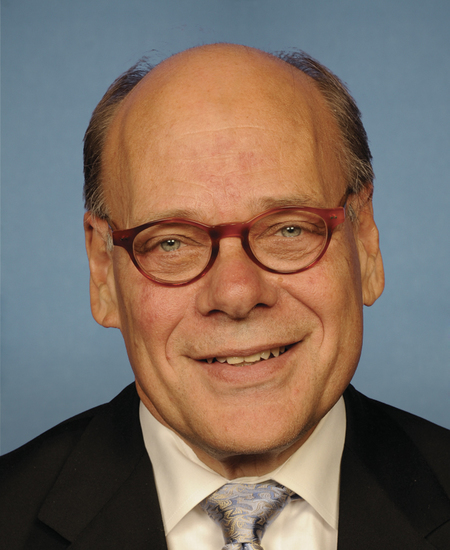
Rep. Steve Cohen
Sponsored bills
Maddy summaryThe MEGOBARI Act (HR 36) is a U.S. legislative proposal that aims to strengthen Georgia's democratic development and Euro-Atlantic integration. It directs the U.S. Secretary of State to suspend the U.S.-Georgia Strategic Partnership Commission until Georgia meets specific democratic standards, including respecting citizens' democratic wishes and advancing EU/NATO membership. The bill establishes potential sanctions against Georgian officials who block Euro-Atlantic integration or undermine Georgia's sovereignty, requiring the President to determine if officials have engaged in significant corruption or actions against Georgia's territorial integrity. Additionally, it mandates reports on Russian intelligence assets in Georgia and a 5-year U.S. strategy for bilateral relations, with the Act set to sunset after 5 years from enactment.
Maddy summaryHR 3199, the Captive Primate Safety Act of 2025, bans the import, export, sale, breeding, and possession of certain nonhuman primates (including chimpanzees, gorillas, and lemurs) in interstate or foreign commerce. It directly affects pet owners, breeders, zoos, and wildlife facilities that currently handle these primates. The bill allows limited exceptions for existing owners who register their primates with the U.S. Fish and Wildlife Service within 180 days, agree to stop breeding/selling, and prevent public contact. It amends the Lacey Act to implement these restrictions, with enforcement beginning immediately regardless of regulatory timelines.
Affordable and Safe Prescription Drug Importation Act of 2025 This bill expands the categories of prescription drugs that may be imported into the United States and the countries from which such drugs may be imported. Current law allows the Department of Health and Human Services (HHS) to authorize importation of certain eligible prescription drugs from Canada if HHS certifies that doing so would pose no additional risk to public health and safety, among other requirements. HHS long declined to make the requisite certification, citing safety concerns (e.g., contamination, counterfeiting), but ultimately made the certification in 2020 and has since approved one state plan to import drugs. The bill removes the certification requirement and requires HHS to issue regulations that permit importation of qualifying prescription drugs from the United Kingdom, Switzerland, and member states of the European Union, in addition to Canada. After one year, if HHS determines that importation of drugs from these countries has been conducted safely, HHS may authorize importation from other countries that meet certain requirements. The bill also expands the types of prescription drugs eligible for importation to include, for example, biologics such as insulin. Further, the bill allows individuals to use an eligible licensed foreign pharmacy to fill a U.S.-issued prescription for a qualifying drug for personal use. Currently, an individual seeking to import a prescription drug generally must acquire a waiver from HHS. Finally, the bill imposes criminal penalties for websites that sell counterfeit drugs or dispense drugs without a required prescription.
Maddy summaryThis bill amends the tax code to limit corporate tax deductions for certain executive compensation. It expands the definition of "covered individual" to include former top executives (like former CEOs or CFOs) who received high pay before 2021, as well as current executives whose compensation was reported to shareholders. The key change prevents companies from deducting excessive pay packages - such as multimillion-dollar bonuses - from taxable income for these covered individuals. The policy applies to publicly traded corporations and takes effect for tax years starting in 2025.
Maddy summary# Summary of the SHIPS for America Act This comprehensive legislation focuses on strengthening the U.S. maritime industry, shipbuilding capacity, and maritime workforce to enhance national security and economic competitiveness. ## Key Areas of Focus 1. **Shipbuilding & Maritime Infrastructure** - Establishes a United States Center for Maritime Innovation to accelerate adoption of commercial technologies - Creates a National Shipbuilding Research Program - Requires an annual survey of anticipated commercial vessel construction - Includes provisions for streamlined environmental reviews of maritime infrastructure 2. **Workforce Development** - Establishes the United States Merchant Marine Career Retention Program to maintain mariner qualifications - Creates Centers of Excellence for Domestic Maritime Workforce Training and Education - Implements military-to-maritime transition programs - Establishes a Maritime Career and Technical Education Advisory Committee 3. **Education & Training** - Expands educational assistance for merchant mariners - Creates eligibility for Naval Postgraduate School for merchant mariners - Establishes maritime education programs from K-12 through higher education - Provides for international exchanges for mariners and naval architects 4. **National Security & Strategic Readiness** - Requires reports on National Defense Reserve Fleet utilization - Includes measures to de-risk the maritime sector from Chinese influence - Enhances shipbuilding capacity for national security needs - Establishes programs to ensure sufficient mariner workforce for national defense 5. **Funding Mechanisms** - Authorizes appropriations from the Maritime Security Trust Fund - Includes funding for workforce programs, education, and shipbuilding initiatives - Establishes specific funding levels for various programs over multiple fiscal years The legislation aims to create a sustainable domestic maritime industrial base that supports both commercial shipping and national defense requirements, with a particular emphasis on developing and retaining a skilled U.S. maritime workforce.
Maddy summaryHR 3112, the Better CARE for Animals Act of 2025, strengthens enforcement of the federal Animal Welfare Act by requiring dealers and exhibitors to hold valid licenses for animal sales or transport (Section 4). It expands enforcement authority by allowing the Attorney General to sue violators for up to $10,000 per day, seize animals, and seek injunctions (Section 20), while clarifying that courts can address violations of related rules and regulations. The bill directly affects animal dealers, exhibitors, the USDA, and the Department of Justice, creating clearer pathways for holding violators accountable. Key provisions include updating definitions, broadening inspection powers to cover all regulations, and directing penalty funds toward temporary animal care costs during legal proceedings.
Maddy summaryHR 3094, the PREP Act, shortens probationary periods for new federal employees. It reduces the standard 1-year probation to 6 months for individuals who previously worked in the executive branch civil service, and to 12 months for all other new hires. This applies to competitive service positions (most federal jobs), excepted service roles, and the Senior Executive Service. The bill directly affects new federal employees by accelerating their transition to permanent status based on prior federal experience. It makes no changes to current employees or existing probationary terms.
Assault Weapons Ban of 2025 This bill makes it a crime to knowingly import, sell, manufacture, transfer, or possess a semiautomatic assault weapon (SAW) or large capacity ammunition feeding device (LCAFD). The prohibition does not apply to a firearm that is (1) manually operated by bolt, pump, lever, or slide action, except for certain shotguns; (2) permanently inoperable; (3) an antique; (4) only capable of firing rimfire ammunition; or (5) a rifle or shotgun specifically identified by make and model. The bill also exempts from the prohibition the following, with respect to a SAW or LCAFD: importation, sale, manufacture, transfer, or possession related to certain law enforcement efforts, or authorized tests or experiments; importation, sale, transfer, or possession related to securing nuclear materials; and possession by a retired law enforcement officer. The bill permits continued possession, sale, or transfer of a grandfathered SAW, which must be securely stored. A licensed gun dealer must conduct a background check prior to the sale or transfer of a grandfathered SAW between private parties. The bill permits continued possession of, but prohibits sale or transfer of, a grandfathered LCAFD. Newly manufactured LCAFDs must display serial number identification. Newly manufactured SAWs and LCAFDs must display the date of manufacture. The bill also allows a state or local government to use Edward Byrne Memorial Justice Assistance Grant Program funds to compensate individuals who surrender a SAW or LCAFD under a buy-back program.

Maddy summaryHR 3124 establishes a National Science Foundation grant program to increase participation of women, underrepresented minorities (including Black, Hispanic, Native American, Pacific Islander, and Asian subgroups), LGBTQ+ individuals, and people with disabilities in STEM fields. The bill authorizes $15 million annually for grants to organizations that implement activities like mentoring programs, STEM internships, online workshops, and outreach to K-12 students. These grants specifically target efforts to improve recruitment, retention, and workforce representation for groups facing documented underrepresentation in STEM education and careers. The program directly affects educational institutions, nonprofits, and community organizations working to support these underrepresented groups through evidence-based initiatives.