

Maddy summaryThe Expanding Access to Mental Health Services in Schools Act of 2025 creates a federal grant program to help high-need schools hire and retain mental health professionals like counselors, psychologists, and social workers. It targets schools in the top 15% of need (based on student poverty or counts) that lack required staff ratios, such as one counselor per 250 students. Grants fund recruitment incentives (e.g., student loan repayment), retention programs, and evidence-based mental health services, with recipients required to contribute 25% of costs from non-federal funds. Schools must report annually on staff numbers, student-to-staff ratios, and retention rates to track progress toward improved mental health access.
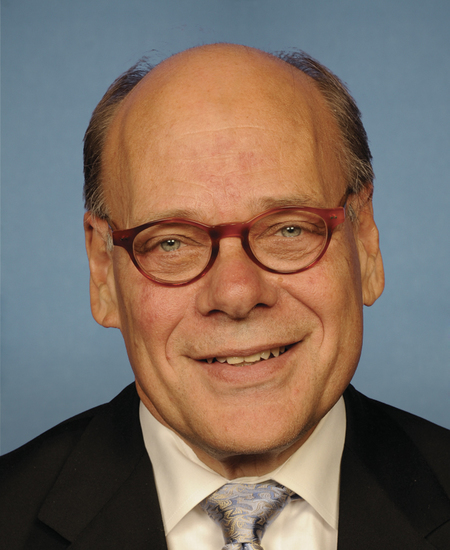
Rep. Steve Cohen
Sponsored bills
Maddy summaryHR 4265, the Reproductive Health Travel Fund Act of 2025, would provide $350 million annually (2026-2030) in federal grants to cover travel and logistical costs for people seeking abortion care in states with bans or severe restrictions. The bill directly affects individuals who must travel across state lines for abortion services, particularly those facing systemic barriers like Black, Indigenous, and low-income people. Grants can cover round-trip travel, lodging, childcare, meals, translation, and lost wages, but cannot fund the abortion procedure itself. Eligible recipients are community-based abortion funds meeting specific criteria, with priority given to organizations serving those impacted by state abortion bans.
Maddy summaryHRES 557 is a ceremonial resolution honoring Frederick W. Smith, founder of FedEx, for his life and contributions. It recognizes his military service (including medals from Vietnam), founding FedEx which revolutionized package delivery, and his dedication to Memphis, Tennessee. The resolution formally "honors" his legacy as an entrepreneur and community leader and requests that a copy be sent to his family. This is a symbolic tribute with no policy changes or funding impacts.
Maddy summaryHR 4244 prohibits Medicaid from covering conversion therapy, defined as any paid practice attempting to change a person's sexual orientation or gender identity. This applies to all Medicaid enrollees and providers starting in the first quarter after the law takes effect. The bill explicitly excludes supportive services like gender transition assistance or counseling focused on acceptance and coping. It directly affects Medicaid-funded healthcare providers who offer conversion therapy and enrollees who might otherwise access such services through Medicaid.
Maddy summaryThe GLOBE Act of 2025 aims to advance global LGBTQI human rights by requiring the U.S. State Department to document and report on violence and discrimination against LGBTQI people worldwide. It establishes a permanent Special Envoy for LGBTQI rights at the State Department and creates an interagency group to coordinate U.S. government responses to threats against LGBTQI populations. The bill authorizes sanctions against foreign individuals responsible for human rights violations against LGBTQI people, including banning them from entering the United States. It also includes provisions to improve U.S. foreign assistance programs to better protect LGBTQI rights and makes changes to immigration policy to better protect LGBTQI asylum seekers.
Treat and Reduce Obesity Act of 2025 This bill expands Medicare coverage of intensive behavioral therapy for obesity. Specifically, the bill allows coverage for therapy that is provided by (1) a physician who is not a primary care physician; or (2) other health care providers (e.g., physician assistants and nurse practitioners) and approved counseling programs, if provided upon a referral from, and in coordination with, a physician or primary care practitioner. Currently, such therapy is covered only if provided by a primary care practitioner. The bill also allows coverage under Medicare's prescription drug benefit of drugs used for the treatment of obesity or for weight loss management for individuals who are overweight.
Maddy summaryThis bill clarifies the Holocaust Expropriated Art Recovery Act of 2016 by preventing courts from dismissing claims based on time-related defenses (like laches or adverse possession) or other non-merits arguments (such as the act of state doctrine or forum non-conveniens). It specifically bars these defenses for claims seeking recovery of art looted by Nazis during World War II, ensuring cases are resolved on their merits. The bill applies to all pending cases and new claims filed after enactment, regardless of the victim's nationality. It strengthens the original law's purpose of enabling victims' heirs to pursue rightful recovery without procedural barriers.
Maddy summaryThe No Secret Police Act of 2025 requires U.S. Immigration and Customs Enforcement (ICE) and other Department of Homeland Security officers working on border security or immigration enforcement to visibly display their official badges or uniforms and provide identification during detentions or arrests. It prohibits officers from wearing face coverings that conceal their face during these interactions. The bill also mandates that the Department report to Congress about tactical gear policies and research technology to improve badge visibility in different conditions like weather or lighting. These changes aim to increase transparency in immigration enforcement encounters.
Maddy summaryThe CONNECT for Health Act of 2025 expands Medicare telehealth coverage by removing geographic restrictions that limited where patients could receive care, expanding the types of health care providers who can offer telehealth services, and eliminating the requirement for an in-person visit before receiving telemental health services. The bill includes specific provisions to support telehealth use for Native American health facilities, rural health clinics, and Federally Qualified Health Centers. It requires the Centers for Medicare & Medicaid Services to collect and publish data on telehealth usage and impacts, and to develop resources to improve accessibility for people with disabilities and limited English proficiency. Program integrity measures are added to monitor telehealth billing practices and prevent fraud while maintaining coverage for telehealth services during public health emergencies.
Maddy summaryHR 4212, the SHADE Act, establishes a federal grant program to plant trees in historically underserved urban areas. It directly affects cities and communities in "redlined areas" (low-income neighborhoods historically denied loans) or "intra-urban heat islands" (city zones with high temperatures and low tree cover). The bill authorizes $50 million annually (2026-2036) for grants to states, local governments, tribes, or qualifying nonprofits to fund tree planting, maintenance for 5 years, and community engagement plans. Grants prioritize projects that avoid displacing residents and require planting non-invasive tree species suited to the local environment.