

States Afforded Funding Extensions To Oppose Driving Recklessly In Vehicular Engagements Act or the SAFE TO DRIVE Act This bill requires the Department of Transportation to use up to 25% of the amounts available for national priority safety program grants to award grants to any state that certifies it has enacted a distracted driving statute that (1) is applicable to drivers of all ages, (2) makes a violation of the statute a primary offense, and (3) prohibits texting or all non-navigational viewing of a personal wireless communications device.
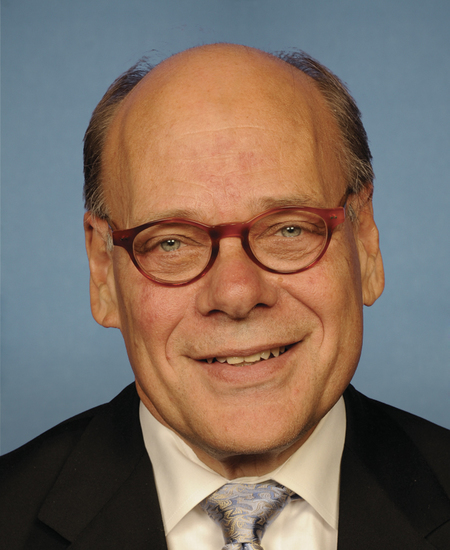
Rep. Steve Cohen
Sponsored bills
FEMA Climate Change Preparedness Act This bill requires the Federal Emergency Management Agency (FEMA) to (1) revise its 2018-2022 Strategic Plan to ensure that the plan explicitly mentions climate change and addresses the implications of climate change on homeland security and near- and long-term national disaster risk, and (2) ensure that future strategic plans do likewise. The Department of Homeland Security must establish, as a subcommittee of the National Advisory Council, the Climate Change Subcommittee, which shall advise FEMA on how to best incorporate climate change, including risk assessments and strategies for adaptation and mitigation, into and throughout FEMA's policies, plans, programs, and operations. FEMA must publish as a report, submit to specified congressional committees, and make available to Congress and the public, a comprehensive assessment of climate change risks and preparedness.
Safe And Friendly for the Environment Streets Act or the SAFE Streets Act This bill revises the Highway Safety Improvement Program to create special rules for vulnerable road users. The bill defines vulnerable road user as a nonmotorist such as a pedestrian, pedalcylcist, bicyclist, other cyclist, or person on personal conveyance. Specifically, the bill requires states and metropolitan planning organizations (MPOs) with above the median rate of vulnerable road user fatalities and serious injuries to dedicate at least 75% of funds under the program for projects to improve safety for such users, and states and MPOs to create vulnerable road user safety assessments that include locations and corridors where serious injuries and fatalities occur and strategies to reduce safety risks for such users in the corridors.
Transportation Alternatives Enhancements Act This bill revises the surface transportation block grant program (Transportation Alternatives Program) of the Department of Transportation (DOT). The bill requires DOT to set aside 10% of apportioned funds under the program each fiscal year for states, and allows states to allocate funds to counties, metropolitan planning organizations (MPOs), regional transportation planning organizations, and local governments. Funds may be used for certain projects or activities, including the construction, planning, and design of infrastructure-related projects and systems that will provide safe routes for nondrivers, such as children, older adults, and individuals with disabilities, to access daily needs. MPOs that serve an urbanized area with a population of 200,000 or fewer are eligible for funding under the program. The bill also adjusts funding limits for states to improve the ability of applicants to access funding in an efficient and expeditious manner.
Safe Routes to School Expansion Act This bill expands eligibility under the Highway Safety Improvement Program to include certain safety projects related to safe routes to school infrastructure improvements such as sidewalks, crosswalks, signage, bus stop shelters or protected waiting areas. The bill increases the federal share for the Department of Transportation (DOT) to fund improvements for pedestrian or bicyclist safety, safety of people with disabilities, and safe routes to school infrastructure. DOT must also carry out a safe routes to school program for the benefit of children in primary, middle, and high schools.
Health Care Affordability Act of 2021 This bill revises the tax credit for health care premium assistance to expand the eligibility of low-income taxpayers for such credit and reduce the cost of health care premiums.
Child and Animal Abuse Detection and Reporting Act This bill requires the Children’s Bureau of the Administration for Children and Families to disseminate information through the National Clearinghouse on Child Abuse and Neglect Information about the incidence of cases of child abuse that involve abuse to animals.
Fair Access to Credit Scores Act of 2021 This bill requires certain consumer reporting agencies to disclose, upon request, as part of a consumer's free annual disclosure (1) the consumer's current credit score, (2) other information in the consumer's file regarding risk scores or predictors, and (3) any other consumer information the Consumer Financial Protection Bureau considers appropriate with respect to consumer financial education. Consumer reporting agencies must maintain these scores or predictors in a consumer's file for at least one year after the data is generated.
Medical Debt Relief Act of 2021 This bill modifies requirements related to the reporting of medical debt. Specifically, a consumer reporting agency is prohibited from adding medical debt information to a consumer credit report if the debt was fully paid or settled, or is less than a year old. Additionally, a debt collector must notify the consumer prior to reporting medical debt to a consumer reporting agency.
Keep Our Promise to America's Children and Teachers Act or the Keep Our PACT Act This bill provides funding through FY2031 for grant programs operated by local educational agencies to provide supplementary educational and related services to low-achieving students and other students who attend elementary and secondary schools with relatively high concentrations of students from low-income families. Additionally, the bill permanently reauthorizes the grant program to assist states and outlying areas in providing special education and related services to children with disabilities.