

Microloan Improvement Act of 2021 This bill revises the microloan program through which the Small Business Administration (SBA) provides, through designated intermediaries, certain financial assistance to small businesses. Specifically, the bill authorizes an intermediary to offer a line of credit to a small business, and it increases the average amount for loans from an intermediary to participating small businesses that makes the intermediary eligible for a reduced interest rate on SBA loans. The bill also places limits on the repayment term for a microloan, and it prohibits the SBA from imposing any additional limitation on the term for repayment of a microloan. Further, the SBA must (1) reserve 15% of new loan funds that are made available for disbursement as microloans to designated underutilized states and make the remaining 85% available for any state, (2) establish a process for an intermediary to provide the major credit reporting agencies with information about a borrower that is relevant to credit reporting, and (3) include information regarding equitable distribution of loan funds in its annual report.
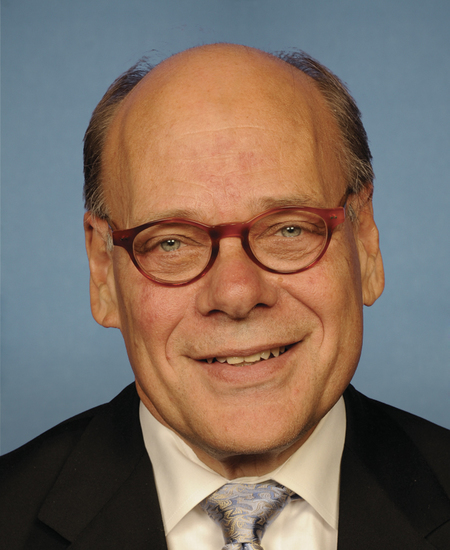
Rep. Steve Cohen
Sponsored bills
504 Credit Risk Management Improvement Act of 2021 This bill revises the duties of the Office of Credit Risk Management to include oversight of a certified development company (CDC) that participates in the 504 Loan Program of the Small Business Administration (SBA), and it requires the SBA to issue rules related to certain environmental requirements. The 504 Loan Program provides a small business with SBA financing—through a CDC intermediary—for expansion or modernization. Specifically, the bill requires the office to oversee any CDC that participates in the program and to conduct file reviews with respect to loan closings under the program. Further, the bill authorizes the office to take formal and informal enforcement actions against a CDC for specified violations and to charge each CDC a fee. The SBA must issue rules to clarify the procedures necessary for an eligible CDC to comply with certain environmental requirements.
504 Modernization and Small Manufacturer Enhancement Act of 2021 This bill modifies the Small Business Administration (SBA) 504 Loan Program, which provides a small business with SBA financing—through a certified development company (CDC) intermediary—for expansion or modernization. Specifically, the bill adds policy goals, at least one of which a CDC must demonstrate to be eligible for assistance. These include (1) enhancing the ability of a small business to reduce costs by using energy efficient products and generating renewable energy, and (2) aiding the revitalization of any area for which a disaster has been declared or determined. The bill also authorizes a CDC to take specified actions to facilitate the closing of a 504 loan, such as correcting borrower or lender information on loan documents or reallocating up to 10% of the cost of a project. For small manufacturers, the bill (1) increases the maximum loan amount from $5.5 million to $6.5 million, (2) reduces the amount that they must contribute to project costs, (3) increases job retention requirements, and (4) revises collateral requirements and debt refinancing considerations. Further, each SBA district office must partner with a resource partner to provide certain training for small manufacturers.
Colorectal Cancer Payment Fairness Act This bill eliminates Medicare coinsurance requirements with respect to colorectal cancer screening tests, regardless of the code billed for a resulting diagnosis or procedure, beginning in 2023 (rather than 2030).
FDA Modernization Act of 2021 This bill allows an applicant for market approval for a new drug to use methods other than animal testing to establish the drug's safety and effectiveness. Under this bill, these alternative methods may include cell-based assays, organ chips and microphysiological systems, sophisticated computer modeling, and other human biology-based test methods.
Master Sergeant Roddie Edmonds Congressional Gold Medal Act This bill provides for the posthumous award of a Congressional Gold Medal to Roddie Edmonds in recognition of his achievements and heroic actions during World War II.
Family Medical Leave Modernization Act This bill expands who is permitted to take qualifying family and medical leave and provides additional leave for parents and family caregivers. The bill grants leave to private sector and federal employees to care for a domestic partner and any individual whose close association with such employees is like a family relationship, regardless of biological or legal relationship, if (1) such individual has a serious health condition, or (2) there is a qualifying exigency due to such employees' active duty in the Armed Forces. The bill entitles an employee who is a domestic partner, next of kin of a member of the Armed Forces, or any individual whose close association is like a family relationship, regardless of biological or legal relationship, to take leave to care for the service member. The bill entitles private sector and federal employees to take additional leave to participate in or attend their children's and grandchildren's school or community organization activities, meet routine family medical care needs, or care for their elderly relatives.
Fire Fighters and EMS Employer-Employee Cooperation Act This bill requires the Federal Labor Relations Authority to determine whether a state substantially provides fire and emergency medical services (EMS) personnel the right to form and join a labor organization; recognition by fire and EMS employers of the employees' labor organization, agreement to bargain with the organization, and reduction of any agreements to writing in a contract or memorandum of understanding; the right to bargain over hours, wages, and terms and conditions of employment; and arbitration or other mechanisms to resolve an impasse in collective bargaining negotiations. The bill makes the authority responsible for (1) determining the appropriateness of units for labor representation; (2) supervising elections; (3) conducting hearings and resolving complaints of unfair labor practices; and (4) protecting the right of employees to form, join, or assist any labor organization, or to refrain from doing so. An employer, fire and EMS personnel, or labor organization may not engage in a lockout, sickout, work slowdown, strike, or any other organized job action that will measurably disrupt the delivery of emergency services and is designed to compel an employer, fire and EMS personnel, or labor organization to agree to the terms of a proposed contract.
Tax Fairness for Workers Act This bill allows an above-the-line tax deduction for union dues and expenses. (An above-the-line deduction is subtracted from gross income and is available whether or not a taxpayer itemizes other deductions.) The bill also reinstates the miscellaneous itemized tax deduction for unreimbursed expenses attributable to the performance of services as an employee (Under current law, all miscellaneous itemized deductions are suspended through 2025).
Affordable Housing Credit Improvement Act of 2021 This bill revises provisions of the low-income housing tax credit and renames it as the affordable housing credit . The bill increases the per capita dollar amount of the credit and its minimum ceiling amount beginning in 2021 and extends the inflation adjustment for such amounts. The bill modifies tenant income eligibility requirements and the average income formula for determining such income. It also revises rules for student occupancy of rental units and tenant voucher payments, and prohibits any refusal to rent to victims of domestic abuse. The bill further modifies the credit to increase state allocations of the credit; repeal the qualified census tract population cap; prohibit local approval and contribution requirements; increase the credit for certain projects designated to serve extremely low-income households; increase the credit for certain bond-financed projects designated by state agencies; eliminate the basis reduction for properties that receive certain energy-related tax benefits; and increase the population cap for difficult development areas (i.e., areas with high construction, land, and utility costs relative to area median gross income). The bill also includes Indian and rural areas as difficult development areas and modifies other requirements relating to casualty losses, acquisition credits, and foreclosures.