

Maddy summaryHRES 1047 designates January 2026 as "National Mentoring Month" to highlight the importance of mentoring relationships for youth development. The resolution does not create new laws or allocate funding but encourages public awareness and support for existing mentoring programs that help young people build skills, confidence, and educational opportunities. It emphasizes mentoring's role in improving academic performance, career readiness, and mental health outcomes without imposing any new obligations on individuals or organizations.
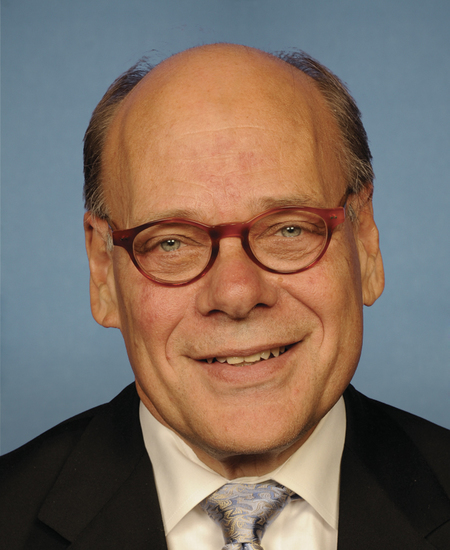
Rep. Steve Cohen
Sponsored bills
Maddy summaryThe HARM Act 2.0 requires the U.S. government to identify and designate successor groups of the Wagner mercenary force (such as Africa Corps, Redut PMC, and Patriot PMC) as terrorist organizations under existing law. It mandates the Secretary of State to submit a report listing these groups, their leaders, and related entities, followed by a review by the Comptroller General. If designated, these groups and individuals would face sanctions including asset freezes and transaction bans under Executive Order 13224. The bill also requires annual reports for five years detailing the groups' activities, human rights abuses, financial networks, and the effectiveness of sanctions.
Maddy summaryHRES 1040 is a symbolic resolution recognizing the Greensboro Four sit-in during Black History Month. It commemorates the 66th anniversary of the February 1, 1960, sit-in at a Greensboro Woolworth's lunch counter, where four Black students challenged racial segregation. The resolution encourages states to include the Greensboro Four's history and contributions in school curricula. As a non-binding resolution, it has no legal effect but formally honors this pivotal civil rights moment.
Maddy summaryHR 7391, the Community Health Center Drug Pricing Protection Act, requires that Federally Qualified Health Centers (FQHCs) pay the discounted 340B ceiling price for covered drugs **at the time of purchase**, not later through rebates or adjustments. This directly affects FQHCs, which rely on 340B discounts to provide affordable care to low-income patients. The bill amends the Public Health Service Act to prohibit manufacturers from entering agreements where FQHCs initially pay more than the ceiling price, with later reimbursement. It takes effect immediately upon enactment for all new drug purchases and applies to existing agreements starting then.
Maddy summaryThis bill requires the National Highway Traffic Safety Administration to establish new safety standards for side underride guards on trucks and trailers within 18 months, with full compliance required within two years. The standards mandate that these guards prevent passenger vehicles from sliding under trucks during collisions, improve safety for vulnerable road users like motorcyclists, and include aerodynamic features to aid fuel efficiency. The bill also creates an advisory committee to monitor underride safety and mandates studies to better understand and prevent these crashes. It aims to reduce the thousands of deaths and injuries from underride crashes that have occurred over the past 50 years, as documented by the National Transportation Safety Board.
Maddy summaryHR 7363, the ICE Out of Our Faces Act, prohibits U.S. Customs and Border Protection (CBP) and U.S. Immigration and Customs Enforcement (ICE) officers from using facial recognition, voice recognition, or other biometric surveillance technology for immigration enforcement. It directly affects CBP and ICE officers, including those deputized under Section 287(g), by banning the acquisition, possession, or use of such technology within the U.S. The bill requires immediate deletion of all existing biometric data collected by these agencies within 30 days of enactment and makes illegally obtained data inadmissible in court. Individuals harmed by violations can sue the federal government for damages, while officers violating the law face retraining, suspension, or termination.
Maddy summaryHRES 1039 is a symbolic resolution supporting National Black HIV/AIDS Awareness Day observed annually on February 7. It highlights that Black Americans account for disproportionate HIV impacts (e.g., 39% of new diagnoses despite representing 12% of the U.S. population) and urges state/local health agencies to promote HIV testing, reduce stigma, and prioritize minority-led HIV services. The resolution encourages alignment with the National HIV/AIDS Strategy and emphasizes culturally competent care, but does not create new funding or enforceable requirements. It serves as a non-binding endorsement of existing efforts to address racial disparities in HIV prevention and treatment.
Maddy summaryHRES 1002 is a symbolic House resolution recognizing the Older Americans Act (OAA) nutrition program, which provides meals and social services to seniors aged 60+. It directly affects millions of older adults - particularly those who are homebound, isolated, or facing hunger, malnutrition, or chronic health conditions - by highlighting how the program reduces hospital visits, lowers healthcare costs, and improves quality of life. Key provisions include acknowledging the program’s role in preventing falls and institutionalization, emphasizing volunteer support as its "backbone," and urging Congress to secure sustained federal funding. As a non-binding resolution, it does not change policy but formally endorses the program’s value and calls for community and legislative support.
Maddy summaryHR 7385 establishes a federal grant program to expand access to HIV prevention through PrEP (pre-exposure prophylaxis) for uninsured individuals at high risk of HIV infection. The bill authorizes $400 million annually (2027-2031) to fund grants for eligible entities like clinics, community organizations, and tribal governments to cover PrEP-related costs - including medication, testing, counseling, and transportation - without requiring patient payment. Priority is given to programs serving rural areas, uninsured populations, or high-risk demographic groups, with grantees required to contribute 10% of program costs (except for certain health centers). The program also mandates a "PrEP Pass" card system to streamline access and requires annual reports tracking usage by race, gender, age, and location to measure impact on HIV prevention disparities.
Maddy summaryThis bill creates new funding eligibility for Historically Black Colleges and Universities (HBCUs) and Predominantly Black Institutions (PBIs) that offer approved master's degree programs. It amends existing law to add specific categories (subsections S for HBCUs and F for PBIs) allowing these institutions to access federal funds previously restricted to certain program types. The key mechanism expands funding access by adjusting how remaining funds are allocated after initial disbursements. Directly affects qualifying HBCUs and PBIs meeting both the institution type and master's program criteria.