Illegal Immigrant Payoff Prohibition Act This bill prohibits the payment of a settlement to an alien for a civil action brought against the United States in connection with the alien's inadmissibility to, or unlawful presence in, the United States.
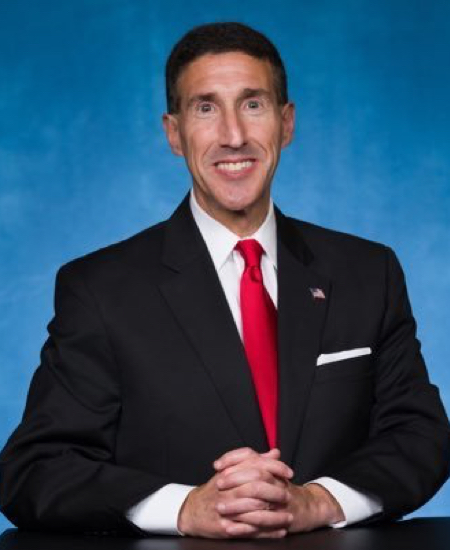
Rep. David Kustoff
Sponsored bills
Empowering Law Enforcement Act of 2021 This bill addresses issues relating to immigration enforcement. The bill declares that state and local law enforcement have inherent authority to investigate and arrest individuals to assist federal immigration enforcement. (Currently, state and local law enforcement may take certain immigration enforcement actions upon entering into an agreement with U.S. Immigration and Customs Enforcement.) The Department of Homeland Security (DHS) must reimburse state and local law enforcement for the costs of holding or transporting a detained alien. DHS may detain an alien beyond the removal period (generally the window in which DHS must remove an alien after a final order of removal) upon making certain certifications, such as a certification that the alien's release would threaten community safety. DHS may renew this certification every six months after giving the alien an opportunity to request reconsideration of the certification. An alien challenging such detention may only do so by filing an application for a writ of habeas corpus. Certain aliens subject to mandatory detention may be held without time limitation while removal proceedings are pending. DHS must detain an alien who is present in the United States without lawful status if the alien has been convicted for driving while intoxicated. DHS must establish a process to determine whether an alien not subject to mandatory detention and who has tried to comply with a removal order should be detained or released with conditions. The Department of Justice must include information about immigration law violations in the National Crime Information Center database.
Preserving Safe Communities by Ending Swatting Act of 2021 This bill makes it a crime to intentionally convey false or misleading information in circumstances where the information may reasonably be expected to cause an emergency response and the information indicates the occurrence of criminal conduct or a threat to health or safety.
Securing the Homeland from International Entrants with Life-threatening Diseases Act or the SHIELD Act This bill suspends for one year the admission and parole into the United States of certain categories of individuals who are from or were recently in a country that fails to meet certain criteria related to COVID-19. This restriction applies to certain individuals entering the United States from Mexico or Canada through a port of entry or U.S. Border Patrol station and (1) whose country of origin has not been categorized by the Centers for Disease Control and Prevention as a low-risk country for COVID-19, or (2) who was in such a country at any time in the 30 days before arriving in the United States. The bill exempts certain individuals from this restriction, including U.S. citizens and lawful permanent residents, members of the Armed Forces, and persons from a foreign country who arrive at a designated port of entry with valid travel documents. The Department of Homeland Security shall transport barred individuals to a foreign location, such as an individual's country of origin, to the extent practicable.
Firearm Due Process Protection Act This bill expands the grounds for pursuing judicial remedies related to certain firearm transfers. Additionally, the bill establishes procedural rules applicable to actions for judicial remedies. Current law authorizes judicial remedies for an individual who is erroneously denied a firearm (e.g., an individual is denied a firearm but the individual is eligible to receive or possess a firearm). This bill authorizes remedies for an individual who experiences an extended delay (i.e., a delay of more than 60 days) on a firearm transfer. Additionally, the bill requires an expedited hearing on an action for judicial remedies and places the burden of proof on the respondent to show by clear and convincing evidence that the individual was ineligible to receive or possess a firearm.

Preventing Anti-Semitic Hate Crimes Act This bill requires a designated officer or employee of the Department of Justice (DOJ) to facilitate the expedited review of anti-Semitic hate crimes and reports of anti-Semitic hate crimes. Further, the bill requires DOJ to issue guidance for state, local, and tribal law enforcement agencies on expanding public education campaigns to raise awareness of anti-Semitic hate crimes. Finally, the bill increases the statutory maximum prison term for an individual who is convicted of a federal hate crime offense after a prior conviction for a hate crime offense under federal law or a hate crime felony under state law.
Major Richard Star Act This bill provides that combat-disabled uniformed services retirees with fewer than 20 years of creditable service may concurrently receive, without reduction, veterans' disability compensation and retired pay or combat-related special compensation.
Credit Union Board Modernization Act This bill revises the frequency of meetings required to be held by a credit union's board of directors. Specifically, the bill requires monthly meetings for new credit unions during their first five years and for credit unions with a low soundness rating. All other credit unions must hold at least six meetings annually, with at least one meeting held during each fiscal quarter. Currently, all credit union boards must meet at least once a month.
This bill prohibits the use of additional funds appropriated to the Internal Revenue Service under the Inflation Reduction Act of 2022 for audits of taxpayers with taxable incomes below $400,000.
Russia and Belarus SDR Exchange Prohibition Act of 2022 This act prohibits the Department of the Treasury from engaging in any transaction involving the exchange of Special Drawing Rights (SDRs) held by Russia or Belarus and requires Treasury to take actions to oppose financial assistance to Russia or Belarus. The SDR is an international reserve asset maintained by the International Monetary Fund (IMF) based on contributions from IMF member countries. SDRs may be exchanged between member countries and may also be exchanged for currencies. Treasury must also (1) vigorously advocate for IMF member countries to prohibit transactions involving the exchange of SDRs held by Russia or Belarus, and (2) direct U.S. representatives to each international financial institution to oppose providing financial assistance to Russia or Belarus except to address the basic human needs of their civilian populations. The act's provisions shall be in effect until the earlier of (1) five years after this act's enactment, or (2) 30 days after the President reports to Congress that the governments of Russia and Belarus have ceased destabilizing activities directed at Ukraine's sovereignty and territorial integrity. The President may also waive the provisions upon reporting to Congress that doing so is in the national interest of the United States.