

Maddy summaryHR 7477, the CERTS Tax Exemption Act, ensures that grants provided under the Coronavirus Economic Relief for Transportation Services Act are tax-free for eligible transportation service providers. The bill directly affects companies and organizations providing transportation services that receive these specific federal grants. Key provisions state that grant amounts cannot be counted as taxable income, deductions related to grant-funded costs cannot be denied, and tax attributes (like basis increases) must be treated as tax-free for partnerships and S corporations. This change simplifies tax treatment for recipients by preventing unintended tax liabilities on relief funds.
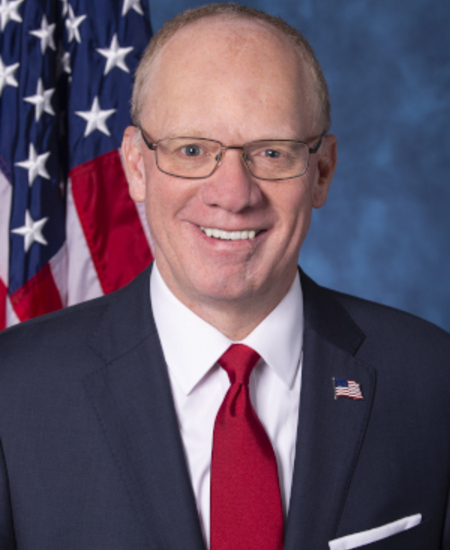
Rep. John W. Rose
Sponsored bills
Transparency in CFPB Cost-Benefit Analysis Act This bill sets forth information required to be included in a rulemaking made by the Consumer Financial Protection Bureau (CFPB). Specifically, the CFPB must publish a justification of the proposed rulemaking; a quantitative and qualitative assessment of all anticipated direct and indirect costs and benefits; alternatives to the proposed rulemaking; impacts on small businesses; and any assumptions, data, or studies used in preparing this information.
Preventing Labor Union Slowdowns Act of 2022 or the PLUS Act of 2022 This bill makes it unlawful for a labor organization or its agents while representing, or seeking to represent, employees engaged in maritime employment to engage in a labor slowdown at any time, including when a collective-bargaining agreement is in effect. It also prohibits a labor organization from impeding (1) modernization efforts at a port, or (2) the servicing of any automated vessel. The bill allows a party injured by such conduct to recover two times the amount of damages sustained and reasonable attorney fees and expert witness fees.
Ensuring Lasting Smiles Act This bill requires private health insurance plans to cover diagnosis and treatment of congenital anomalies and birth defects, such as reconstructive services and items. Coverage must include services and items that functionally improve, repair, or restore any body part that is medically necessary for normal bodily functions or appearance, as determined by the treating physician. Coverage limits and cost-sharing requirements for such services and items may not be more restrictive than those applicable to all medical and surgical benefits under the plan.
Stop Fentanyl Border Crossings Act This bill authorizes the Department of Health and Human Services (HHS) to restrict migration and imports from foreign countries to prevent the introduction of illicit drugs into the United States. Current law authorizes HHS to restrict migration and imports from foreign countries to prevent the introduction of communicable diseases. Under this bill, HHS may also restrict migration and imports from a country if HHS determines that the existence of substantial illicit drug smuggling from that country poses a risk to public health.
Protecting Rural Renters Act of 2022 This bill prevents the reallocation of unspent funding that states and territories received through the Emergency Rental Assistance program. This program provides funding to assist low-income households affected by the COVID-19 pandemic with covering unmet rent and utility expenses. Cities and counties with populations over 200,000 may elect to receive funding directly, while states and territories receive the funding to administer assistance in all other areas. Under current law, if a jurisdiction fails to spend a minimum portion of its funds by a statutory deadline, the Department of the Treasury must reallocate those funds among jurisdictions that spent more than a specified portion of their initial allocation. The bill prohibits Treasury from reallocating unspent funds received by states and territories and requires Treasury to return to a state or territory any funds previously reallocated.
This resolution supports the preservation of the stepped-up basis tax rule that allows recipients of inherited assets such as land, equipment, or buildings to adjust the cost basis of the assets to reflect their fair market value. The resolution opposes any efforts to impose new taxes on family farms or small businesses and recognizes the importance of generational transfers of farm and family-owned businesses.
Securing a Strong Retirement Act of 2022 This bill makes various changes with respect to employer-sponsored retirement plans, including providing for the automatic enrollment of employees in certain plans and increasing the age at which participants are required to begin receiving mandatory distributions.
COI Elimination Act This bill limits U.S. contributions to the United Nations pertaining to the U.N. Independent International Commission of Inquiry on the Occupied Palestinian Territory, including East Jerusalem, and Israel. Current law imposes a cap on the annual U.S. contribution to the U.N. budget. The bill lowers that cap by 25% of the amount budgeted for the commission. The bill also states that it shall be U.S. policy to seek the abolition of the commission and combat systemic anti-Israel bias in international bodies.
Ensuring Sound Guidance Act This bill generally requires investment advisors and fiduciaries of employer-sponsored retirement plans to make investment decisions based only on pecuniary factors (i.e., factors that a fiduciary prudently determines are expected to have a material effect on the risk and return of an investment based on appropriate investment horizons consistent with the plan's policies and objectives). The bill allows nonpecuniary factors to be considered in certain situations, such as when a customer specifically requests that these factors be considered or when selecting investment options for certain participant-directed retirement plans.