

287(g) Program Protection Act This bill requires the Department of Homeland Security (DHS) to allow qualified state and local law enforcement agencies to perform certain immigration enforcement activities if the agency requests such authority. DHS may refuse to grant the request only if there is a compelling reason. Currently, DHS is authorized to grant such authority but is not required to do so.
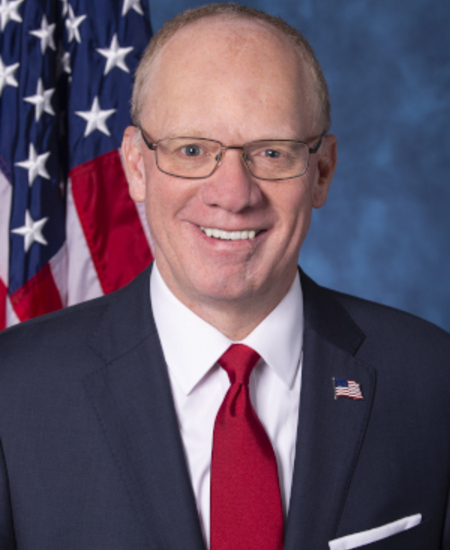
Rep. John W. Rose
Sponsored bills
Protecting Pain-Capable Unborn Children from Late-Term Abortions Act This bill establishes a new criminal offense for performing or attempting to perform an abortion if the probable gestational age of the fetus is 15 weeks or more. A violator is subject to criminal penalties—a fine, a prison term of up to five years, or both. The bill provides exceptions for an abortion (1) that is necessary to save the life of the pregnant woman, or (2) when the pregnancy is the result of rape or incest. A physician who performs or attempts to perform an abortion under an exception must comply with specified requirements. A woman who undergoes a prohibited abortion may not be prosecuted for violating or conspiring to violate the provisions of this bill.
Sanctioning Supporters of Slave Labor Act This bill expands existing sanctions on foreign individuals and entities responsible for human rights abuses (e.g., such as torture or forced labor) against members of Muslim minority groups or other persons in the Xinjiang Uyghur Autonomous Region in China. Specifically, this bill requires sanctions on foreign individuals and entities that knowingly (1) provide material support to the parties subject to the existing sanctions for human rights abuses in Xinjiang, or (2) engage in a significant transaction relating to such human rights abuses.
National Education Association Charter Repeal Act This bill repeals the federal charter granted to the National Education Association of the United States.
No User Fees for Gun Owners Act This bill prohibits a state or local government from imposing any insurance requirement, tax, user fee, or similar charge as a condition of the manufacture importation, acquisition, transfer, or continued ownership of a firearm or ammunition, with the exception of a proportionate sales tax. The bill imposes the same prohibition under the Internal Revenue Code for firearms, pistols, or revolvers, but allows for the assessment of a proportionate sales tax.
No Retaining Every Gun In a System That Restricts Your Rights Act This bill modifies the retention requirements for firearm transaction records of federal firearms licensees (FFLs) that go out of business. Current law generally requires FFLs that go out of business to deliver their firearm transaction records to the Bureau of Alcohol, Tobacco, Firearms and Explosives (ATF). This bill removes the requirement for FFLs that go out of business to deliver their firearm transaction records to the ATF. Further, the bill requires the ATF to destroy all out-of-business records it has collected from FFLs.
Immigration Transparency and Transit Notification Act of 2022 This bill requires notifications to certain officials before an unaccompanied alien child or a non-U.S. national ( alien under federal law) without lawful immigration status may be placed in or transported to a state or local jurisdiction. The bill also authorizes the office of the governor of the relevant state to prohibit the placement or transportation. At least seven calendar days before taking such an action, the Department of Homeland Security (DHS) or the Department of Health and Human Services (HHS) must notify (1) the relevant state governor's office, (2) the state attorney general's office, (3) the county or municipal government, (4) local law enforcement, and (5) federal and state legislators representing the relevant jurisdiction. The action may not take place if the state governor's office objects no later than three calendar days after receiving the notification. This authority to object shall not apply if the action is to place an unaccompanied child with, or transport the child to, a family member.
Prenatal Nondiscrimination Act of 2022 or the PRENDA Act of 2022 This bill creates new federal crimes related to the performance of sex-selection abortions (i.e., abortions based on the sex or gender of an unborn child). It subjects a violator to criminal penalties—a fine, a prison term of up to five years, or both. It also authorizes civil remedies, including damages and injunctive relief. A woman who undergoes a sex-selection abortion may not be prosecuted or held civilly liable.
Upholding the Law at Our Border Act This bill requires the Office of Inspector General of the Department of Homeland Security (DHS) to periodically investigate and report on certain issues until there have been fewer than 35,000 apprehensions at the southwest border for three consecutive months. When required, the reports must address certain issues, including (1) the vetting procedures applicable to aliens seeking entry into the United States who were apprehended along the southwest border, (2) the total number of individuals not lawfully present who have been processed and released into the United States, (3) the number of such individuals who have received parole, and (4) an audit of the parole applications. The office must submit such reports (and provide briefings on the reports) to the President, Congress, DHS, and the Department of Justice.
Keep Food Local and Affordable Act of 2021 This bill freezes the minimum wage for H-2A (temporary agricultural workers) in certain states through December 31, 2022. Specifically, the bill prohibits an increase to the adverse effect wage rate for H-2A workers in any state (1) that had an unemployment rate of not more than 5% in the Bureau of Labor Statistics' August 2021 report; or (2) where the food price index, according to bureau reports, increased by more than 3% between December 2020 and September 2021 and the governor requests a freeze to the adverse effect wage rate. (Generally, the minimum wage for an H-2A worker is the highest of the adverse effect wage rate, the prevailing hourly wage or piece rate, the federal minimum wage, or the applicable state minimum wage.)