

Maddy summaryHR 620, the FARM Act, expands the Committee on Foreign Investment in the United States (CFIUS) to review foreign investments in U.S. agriculture. It requires CFIUS to assess transactions where foreign entities gain control of U.S. agricultural businesses (including those using agricultural products defined under 7 U.S.C. 451) and adds agricultural supply chains to the list of critical infrastructure and critical technologies. The bill mandates annual reports from the Secretary of Agriculture and the Comptroller General to Congress, detailing foreign investments in U.S. agriculture, potential threats to supply chains, and espionage risks targeting agricultural research or data. This directly affects foreign investors seeking to acquire U.S. agricultural assets and reshapes CFIUS review processes for the sector.
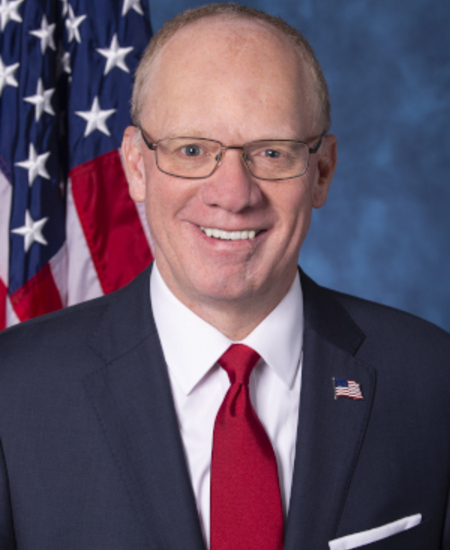
Rep. John W. Rose
Sponsored bills
Maddy summaryHR 1668 prohibits the Federal Emergency Management Agency (FEMA) from using funds to support sheltering programs or facility improvements for U.S. Customs and Border Protection (CBP) short-term holding facilities. It specifically cancels unused funds from two 2023 and 2024 appropriations acts that were previously allocated to FEMA for this purpose. The bill directly affects FEMA's budget authority and prevents the agency from funding non-Federal entities providing such support. This is a procedural funding change, not a new immigration policy.
Maddy summaryHR 1675, the Protecting Horses from Soring Act of 2025, amends the Horse Protection Act to combat the cruel practice of "soring" (deliberately injuring horses to create a high-stepping gait). It requires horse shows, exhibitions, sales, and auctions to disqualify horses found sore through science-based "objective inspections" (using swabbing and blood testing validated by peer review) for 30 days (first offense) or 90 days (repeat offenses). The bill establishes a new "Horse Industry Organization" to manage inspections, set licensing standards for inspectors, and ensure inspectors avoid conflicts of interest with the horse industry. This directly affects horse show management, inspectors, and participants in horse shows, sales, and exhibitions involving Tennessee Walking Horses, Spotted Saddle Horses, and Racking Horses.
Maddy summaryThis bill, HR 1761, would require the U.S. Treasury to print $250 Federal Reserve notes featuring a portrait of Donald J. Trump within one year of enactment, primarily to commemorate the 250th anniversary of the United States. It amends the Federal Reserve Act (Section 3) to mandate this specific currency denomination and attempts to modify existing law (Section 4) to allow living presidents on currency. The bill directly affects the U.S. Treasury's currency printing authority and would override current practices, as $250 bills do not exist in circulation and the Constitution prohibits denominations above $100. This is a symbolic procedural measure with no practical implementation under current U.S. currency law.
Maddy summaryH.Res. 167 establishes uniform rules for flag displays in House of Representatives facilities, including office buildings, leadership offices, and committee spaces, but excludes personal offices of Members. It permits only the U.S. flag, House flags, a Member’s state flag next to their office, military service flags, the POW/MIA flag, and flags of visiting foreign dignitaries during official visits. The House Administration Committee and Sergeant of Arms will oversee implementation, requiring compliance within 30 days of enactment.
Maddy summaryHRES 166 is a non-binding House resolution expressing U.S. support for the Iranian people's desire for a democratic, secular, and nonnuclear republic. It condemns the Iranian regime's terrorism, regional proxy wars, internal suppression of ethnic and religious minorities, and human rights abuses - including executions and repression of women-led protests. The resolution calls for holding the regime accountable through sanctions, supports the Ten-Point Plan for Iran’s democratic transition, and urges protection for Iranian political refugees in Albania. It does not create new laws but affirms U.S. policy alignment with Iranian protesters' demands.
Maddy summaryThis bill awards a Congressional Gold Medal to the 761st Tank Battalion (known as the "Black Panthers"), the first predominantly Black armored unit in World War II's European Theater. It recognizes their combat service from 1944-1946, including key roles in the Battle of the Bulge and breaking the Siegfried Line, despite facing racial prejudice during and after the war. The medal will be displayed at the National Museum of African American History and Culture, with bronze duplicates available for sale to cover costs. The bill commemorates the battalion's 130,000 enemy casualties inflicted, 50% casualty rate, and their 1978 Presidential Unit Citation. It does not create new laws or affect current policies.
Maddy summaryHR 1631, the Safe Access to Cash Act of 2025, amends federal robbery law to clarify that all network-connected ATMs and cash in transit (being loaded/unloaded) are considered under the care of banks, credit unions, or savings associations. This directly affects financial institutions by expanding their legal responsibility for ATM security, regardless of whether the ATM is on their premises or owned/operated by another entity. The bill defines "ATM" broadly to include any terminal used for withdrawals, deposits, or balance inquiries via a bank-issued card. Key provisions ensure these locations and cash are treated as part of the institution's protected property under robbery statutes. This creates a clear legal standard for holding financial institutions accountable for ATM security.
Maddy summaryThis bill requires the U.S. Department of Agriculture (USDA) to join the Committee on Foreign Investment in the United States (CFIUS) for reviews of certain transactions involving foreign adversaries. It specifically targets acquisitions of U.S. agricultural land, biotechnology, or agriculture-related infrastructure (like transportation, storage, or processing) by entities from China, North Korea, Russia, or Iran. The USDA must notify CFIUS about reportable transactions, prompting the committee to determine if a full review is needed. The provisions expire for any country removed from the official list of foreign adversaries in federal regulations.
Maddy summaryHR 1575, the "No American Land for Communist China Act," prohibits the People's Republic of China government and businesses with 25% or more Chinese government ownership from purchasing real estate adjacent to specific federal lands. The bill directly affects Chinese government agents and Chinese-affiliated businesses seeking to buy property near lands managed by the Departments of Interior, Defense, Agriculture (Forest Service), and Energy, as well as Indian country. Key provisions require the President to take necessary actions to block such purchases, defining "covered Federal lands" broadly to include national parks, military bases, and tribal lands. The law aims to prevent foreign government influence over land near sensitive U.S. properties through a clear purchase restriction.