Maddy summaryThis bill blocks the Federal Housing Finance Agency (FHFA) and mortgage enterprises (like Fannie Mae and Freddie Mac) from implementing specific mortgage fee changes announced in January 2023. It specifically revokes the FHFA's updated single-family mortgage pricing framework and related guidance documents. The bill does not affect the existing practice of risk-based pricing for mortgage credit fees, which remains permitted. It directly impacts mortgage lenders and borrowers by halting the 2023 fee changes without altering current risk-based fee structures.
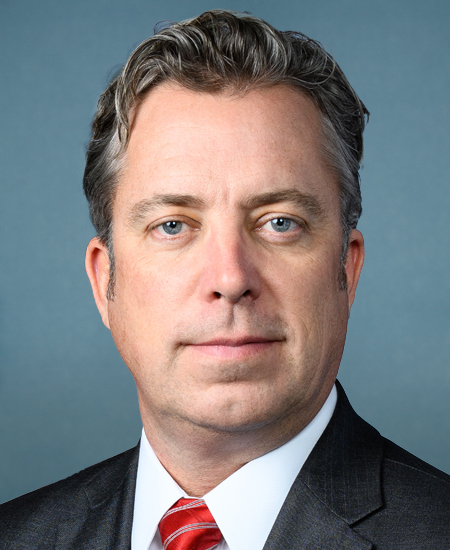
Rep. Andrew Ogles
Sponsored bills
Maddy summaryHR 54, the WHO Withdrawal Act, directs the U.S. President to withdraw the United States from the World Health Organization (WHO) Constitution upon enactment and prohibits all federal funding for U.S. participation in the WHO or any successor organization. The bill repeals the 1948 law that established U.S. membership and funding for WHO participation. This legislation directly affects all federal departments and agencies that handle international health funding and diplomatic engagement, ending U.S. financial and legal ties to the WHO.
Maddy summaryHR 24, the Federal Reserve Transparency Act of 2025, mandates a comprehensive audit of the Federal Reserve Board and Federal Reserve banks by the Government Accountability Office (GAO) within 12 months of enactment. The bill requires the GAO to submit a detailed report to Congress within 90 days of completing the audit, including findings, conclusions, and recommendations for legislative or administrative action. This audit replaces current limitations on reviewing Federal Reserve operations, particularly regarding entities like special purpose vehicles not previously subject to standard audits. The bill directly affects the Federal Reserve System by increasing congressional oversight of its financial activities and reporting mechanisms.
Maddy summaryHR 69, the Freedom to Petition the Government Act, amends a District of Columbia law to clarify that meetings between tax-exempt nonprofits (501(c) organizations) and federal officials held on federal property do not count as "doing business" in the District. This specifically affects 501(c) nonprofits that meet with federal representatives on government-owned or leased premises. The bill adds a new provision to the District code explicitly excluding these meetings from business activity definitions, removing potential regulatory barriers. It is a procedural clarification, not a new policy, aimed at streamlining nonprofit engagement with federal officials.
Stopping Border Surges Act This bill modifies immigration law provisions relating to unaccompanied alien minors and to asylum seekers. The bill requires the Department of Homeland Security (DHS) to repatriate certain unaccompanied, inadmissible alien children, generally those not at risk of being trafficking victims nor having a fear of persecution. Currently, only inadmissible unaccompanied aliens from neighboring countries are subject to repatriation, and DHS has discretion whether to repatriate. When the Department of Health and Human Services releases an unaccompanied child to an individual, it shall provide DHS with certain information about that individual, including Social Security number and immigration status. The bill requires a stricter standard to find a credible fear of persecution and imposes additional rules on credible fear interviews. If an alien is granted asylum because of fear of persecution in a country, the alien shall be deemed to have renounced asylum status by returning to that country, if there has been no change in the country's conditions. The bill also (1) expands the definition of what constitutes a frivolous asylum application, (2) imposes additional limitations on eligibility for asylum, (3) shortens the deadline for applying for asylum, and (4) extends the time period an alien seeking asylum must wait before receiving employment authorization. Any individual who knowingly and willfully makes materially false statements or uses fraudulent documents in asylum-related proceedings shall be fined or imprisoned up to 10 years, or both.

Maddy summaryHR 162, the First Amendment Accountability Act, creates a legal right for individuals to sue federal employees who violate their First Amendment rights (such as free speech or assembly) while acting under government authority. It directly affects citizens whose rights are infringed and federal employees (excluding the President/Vice President) who may face lawsuits. The bill allows victims to seek redress through court action, with courts having discretion to award attorney fees to the winning party. It explicitly excludes lawsuits against the federal government or employer for conduct within the scope of employment.
Maddy summaryHR 191, titled "Inflation Reduction Act of 2025," is a procedural bill that repeals the Inflation Reduction Act of 2022 (Public Law 117-169) and rescinds its unobligated funds. It directly affects the implementation of the 2022 law by nullifying its provisions and redirecting any remaining unspent budget authority. The bill contains no new policy mechanisms or direct impacts on citizens or programs; its sole action is to undo the previous legislation. This is a straightforward repeal measure with no new funding or regulatory changes. The title is misleading, as the bill does not create a new inflation reduction policy but instead reverses the prior law.
Maddy summaryThis bill prohibits the federal government from awarding new contracts under the SmartPay Program (used for government payment systems) to payment processors that handle transactions for gun retailers. It specifically bans contracts for systems using processors that have designated merchant codes for gun retailers, affecting federal agencies and payment processors participating in the SmartPay Program. The restriction applies only to new contracts awarded after the bill's enactment, leaving existing contracts unaffected.
Maddy summaryHR 52, the Stop Woke Investing Act, limits shareholder proposals on corporate proxy materials based on company size. Public companies must exclude proposals that do not have a "material" financial impact on the business, defined as directly affecting investment returns or risks. This excludes proposals focused on non-financial social, environmental, or political goals (like diversity initiatives or climate action) from being included in voting materials. The bill caps the number of proposals companies must include: 2 for small firms, 4 for mid-sized firms, and 7 for large firms, with companies deciding which proposals meet the financial impact requirement.
Maddy summaryThis bill (HR 190) would require the expedited removal of individuals who entered the U.S. illegally on or after January 20, 2021, regardless of whether they claimed asylum or feared persecution. It directly affects noncitizens who entered without inspection after that date, removing standard asylum processing for them. The key provision mandates faster deportation without court hearings for this group, except for current U.S. military members as of January 1, 2025. The bill changes immigration enforcement procedures by bypassing asylum eligibility checks for a specific cohort of recent arrivals. It does not address broader immigration policy or provide new pathways for legal status.